REVIEW · BEIJING
Beijing Culture Event: Tradition Music, Tea Ceremony, Calligraphy
Book on Viator →Operated by ChiNice Travel · Bookable on Viator
Some evenings slow time down. This one pairs tea ceremony, guqin music, and hands-on calligraphy into a single 2–3 hour cultural session. I like that the experience is both structured and interactive, so you’re not just watching. I also like that it’s small-group and led in English, which keeps the mood relaxed. The main thing to consider is the pacing: it’s quiet and focused, so if you want big-city energy and fast sightseeing, this may feel too slow.
You’ll start at Huagong Road and move through the session step by step—tea tasting and etiquette, a live guqin performance (with a chance to try a simple melody), then basic brushwork to write your own character or phrase. A Beijing Guqin Association expert leads the music portion, and the English guide helps translate the “why” behind the form. For a low price point, that’s a lot of cultural real estate in one sitting, with a max group size of 12.
If you’re planning your trip around standout activities, this is the kind of evening that fits well when you want something meaningful without a huge commitment. And if you care about dress-up, note that some participants have mentioned hanfu in their experience—so if that’s a must, ask the provider ahead of time.
In This Review
- Quick hits: what makes this session special
- A Small-Group Cultural Session on Huagong Road
- Tea Ceremony Etiquette and Tasting: calm, rules, and real flavor
- Guqin Music: scholar-sound, live teaching, and trying it yourself
- Calligraphy Workshop: brush basics and writing something meaningful
- How this $15 price turns into real value
- Who should book this evening (and who might skip it)
- Practical tips for a smooth 2–3 hour experience
- Should you book this Beijing Culture Event?
- FAQ
- How long does the experience last?
- What is the price per person?
- What’s included in the session?
- Do I need any prior experience for the music or calligraphy?
- What’s the group size?
- Where do we meet?
- Is the ticket mobile?
- When will I receive confirmation after booking?
- Can I cancel for a refund?
Quick hits: what makes this session special
- Tea ceremony with tasting: you learn the etiquette and philosophy, not just how to hold a cup
- Beijing Guqin Association master: live music plus beginner-friendly learning
- Try a melody from Crouching Tiger, Hidden Dragon: you won’t need prior experience
- Calligraphy workshop with expert guidance: write your own meaningful word or phrase
- Small group size (max 12): calmer pace, less pressure, better questions
- All-in-one value at $15: three distinct cultural practices in one ticket
A Small-Group Cultural Session on Huagong Road
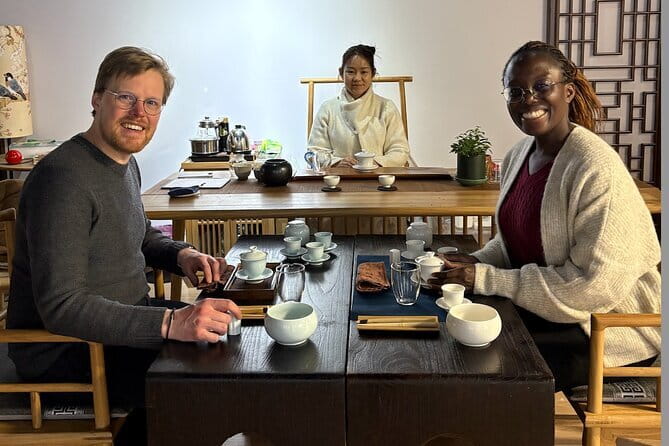
This experience runs at one main meeting point: Huagong Road (Hua Gong Lu) in the Chaoyang District of Beijing, and it returns you back there at the end. That matters more than it sounds. One location means you don’t lose time changing venues, and the whole evening can feel like one continuous flow instead of three separate stops.
The session lasts about 2 to 3 hours, with a small group limit of 12 travelers. That small cap shows up in the vibe. You’re not stuck in a big room where questions die in the noise. Instead, you can pay attention to the details—how the tea is prepared, how the guqin sounds are shaped, how the brush moves in calligraphy.
You’ll have an English guide, and the ticket is a mobile ticket, which is convenient if you’re trying to keep your trip simple. You’ll also have confirmation within 48 hours of booking (subject to availability), which helps if you’re building a flexible week.
One more practical note: it’s described as near public transportation. That’s useful in Beijing, where transit time can quietly eat your evening if you’re not careful.
You can also read our reviews of more tours and experiences in Beijing.


Tea Ceremony Etiquette and Tasting: calm, rules, and real flavor
The tea ceremony is where the session sets its tone. You begin with guided instruction—what the ceremony is about, how it’s done with etiquette, and what to pay attention to while tasting. The value here is that tea isn’t treated like a prop. It’s framed as a cultural practice with its own logic: patience, attention, and respectful pacing.
In your cup, you’re tasting tea while learning how the ceremony works. That combination is what makes this portion more than a short explanation. You’re training your senses while also building context for what you’re seeing. If you’ve ever wondered why traditional practices can feel so “serious” in a good way, this is the part that answers it.
Also, don’t assume you’ll be rushed. A tea ceremony tends to invite a slower rhythm, and that’s exactly what people appreciate most about this session’s atmosphere. Even if you’re not the type to talk much, you can still follow along and participate without feeling put on the spot.
Possible drawback: tea ceremonies can feel meditative. If you’re after a high-output, talk-all-the-time experience, this may feel too quiet. But if you want to lower your volume level after a day of moving around Beijing, it’s a smart choice.
Guqin Music: scholar-sound, live teaching, and trying it yourself
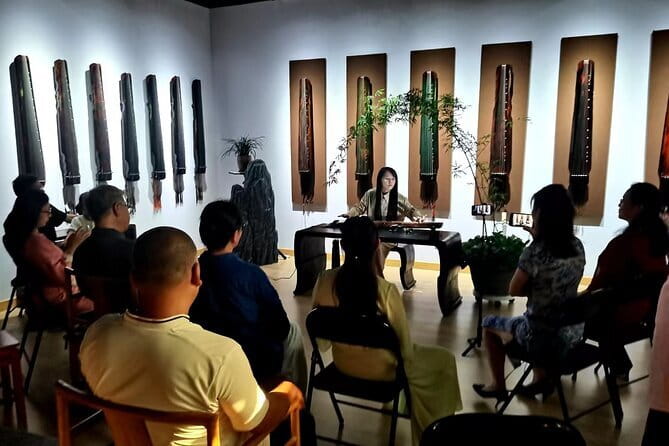
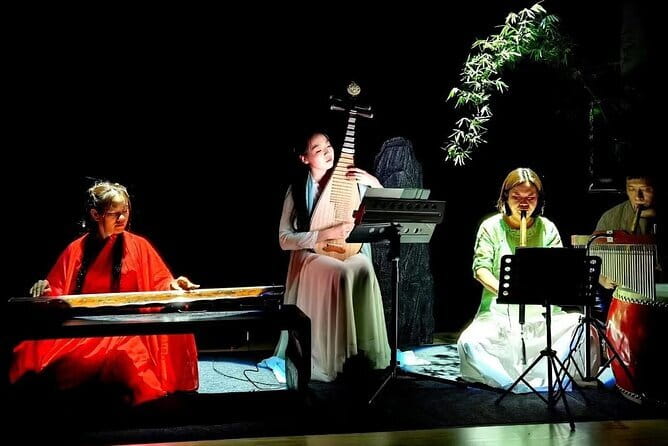
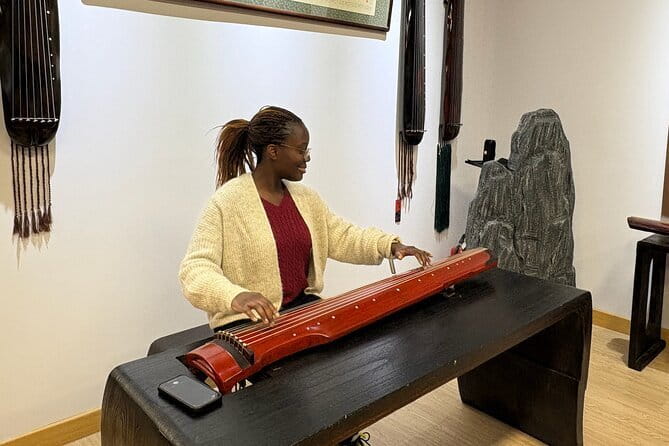
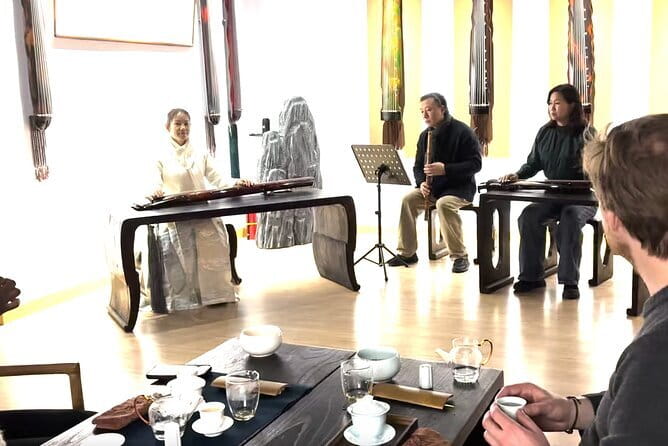
Then comes the guqin. This instrument is described as having a long tradition—often associated with scholars and courtly elegance—and it’s treated here with real respect. What I like about this setup is that the guqin performance isn’t just a “watch me” moment. It’s also a learning experience.
You’ll have a live performance by a guqin master from the Beijing Guqin Association. That’s important because the guqin world is full of different standards. Having a recognized association performer gives you a better shot at hearing it in a style that’s taken seriously.
The hands-on part is beginner friendly. You’ll learn to play a simple melody, described as from Crouching Tiger, Hidden Dragon. That’s a smart teaching choice for first-timers. Familiar melodies reduce intimidation. And learning basics here gives you the satisfaction of producing sound, not just listening.
If you care about the “why,” this also connects well to Chinese culture through the way the music is written and taught. People have found it fascinating that ancient music scores relate to Chinese characters, not just western-style notation. Even if you don’t geek out on notation, the point lands: language and art aren’t separate boxes in this tradition.
What to expect in practice: the guide and performer will help you move from listening to trying. The group size helps again—there’s room for you to get guidance rather than being swept along.
Possible consideration: guqin is subtle by nature. The sound is mellow and controlled, so it’s not background music. It’s something you focus on. If you want loud spectacle, you might find it too gentle.
Calligraphy Workshop: brush basics and writing something meaningful

After tea and music, you shift to calligraphy. You’ll practice basic brush techniques, and you’ll write your own meaningful word or phrase. That last part is the key. Calligraphy can feel like copying if you don’t have a personal anchor. Here, you get to make it yours.
The instruction is described as guided by experts, so you’re not just handed a brush and a blank sheet. You learn how to move the brush, how characters are formed, and how to approach strokes with control. That’s the real payoff: even if your final piece isn’t perfect, you leave with skills you can use again.
This portion also fits the tone of the evening. Tea is calming. Guqin is quiet. Calligraphy continues that rhythm. So the session ends in a place where you can actually feel like you participated, instead of just consuming an event.
Possible drawback: you might get a little messy, depending on how you handle the brush and paper. Bring patience for the learning curve. This is craft training, not a timed exam.
Tip for comfort: wear something you can sit and write in without worrying about spills, and be ready to slow down your movement. Good calligraphy is never rushed.
How this $15 price turns into real value

At $15 per person, it’s tempting to assume the experience must be a “taste” version of everything. But the structure argues the opposite. You get three distinct cultural practices in one ticket: tea ceremony plus tasting, guqin performance plus guided learning, and calligraphy with hands-on practice.
The best value part is the connection between elements. Tea, music, and calligraphy all come from the same cultural mindset: attention, discipline, and aesthetic expression. When those are taught in one continuous session, it feels less like a bundle and more like a single coherent lesson.
Small-group size is also part of the pricing equation. A max of 12 people means you’re more likely to get real guidance during the parts where you do things—especially calligraphy and learning the melody.
You also get an English guide, which can make a huge difference in China where cultural details can be easy to miss if you only know the visuals. With the guide explaining etiquette and meaning, you’re not just collecting photos. You’re collecting understanding.
Finally, the session is described as premium-feeling by people who felt the quality exceeded what they expected at this price. That’s not just hype. For most visitors, the hardest expense isn’t admission—it’s time and the cost of separate activities. This combines them into one evening, saving both money and logistics stress.




Who should book this evening (and who might skip it)
This is a great fit if you want a quieter, more thoughtful activity in Beijing. If you’re the type who likes small group learning, enjoys hands-on crafts, and doesn’t mind a paced schedule, you’ll probably enjoy it a lot.
It’s also a strong choice for:
- Date nights that don’t revolve around dinner and shopping
- Music lovers who want to hear guqin up close and learn something simple
- People new to Chinese culture who want a guided entry point with context
- Introverts who prefer calm participation over performance-style interaction
It might be less ideal if you:
- Want fast, high-energy attractions all evening
- Don’t enjoy arts-and-crafts pacing
- Prefer large group experiences with lots of spectacle
One more angle: the session’s format can work well when you’re traveling with clients or friends who need an “impressive but not complicated” cultural moment. The mix of performance plus participation does the job.
Practical tips for a smooth 2–3 hour experience
Here’s how to make your evening go smoothly with the details you know you’re getting.
First, plan your schedule around the full 2–3 hour block. Because this is a quiet, focused experience, it’s not the best add-on to a day already packed with back-to-back stops.
Second, keep your expectations aligned. You’ll be participating in tea, music, and calligraphy, but this is still a short session. Think of it as a guided taste of three crafts, with enough instruction to leave with something real—especially your calligraphy.
Third, bring a flexible mindset about learning. The guqin portion is described as beginner friendly, and the calligraphy portion teaches basic brush techniques, but first attempts rarely look like mastered work. Your goal is progress and participation, not perfection.
Fourth, if you’re hoping for hanfu or dress-up, it’s not explicitly listed in the core included items. Since participants have mentioned it, you can ask ChiNice Travel directly whether hanfu is offered for your specific session.
Finally, keep an eye on timing. The meeting point is fixed at Huagong Road. Since the tour ends back at the same point, you can plan an easy post-activity plan nearby, rather than rushing across town.
Should you book this Beijing Culture Event?

Yes, you should book it if you want a calm, high-signal cultural evening that’s hands-on and reasonably priced. For $15, you’re getting a rare three-part combo—tea ceremony with tasting, live guqin music with beginner learning, and calligraphy practice with your own written result. The small group (max 12) and English guide make it easier to understand what you’re doing and why you’re doing it.
Book it especially if you’re the kind of traveler who values authenticity over novelty. This isn’t just “see and move on.” It’s structured to teach you etiquette, instrument basics, and brush technique in a way that connects the disciplines.
If, instead, you’re after loud spectacle, long wandering time, or nonstop action, you might find it too quiet. But if you’re craving a meaningful evening—something you can slow down for—this one makes a lot of sense.
FAQ
How long does the experience last?
It lasts about 2 to 3 hours.
What is the price per person?
The price is $15.00 per person.
What’s included in the session?
It includes tea ceremony performance and experience, guqin use for the music portion, a traditional instrument performance, and an English guide. Coffee and/or tea are also included.
Do I need any prior experience for the music or calligraphy?
No prior experience is needed for the guqin part described. You’ll learn basic brush techniques for calligraphy during the workshop.
What’s the group size?
The maximum group size is 12 travelers.
Where do we meet?
The meeting point is Huagong Road (Hua Gong Lu, Chaoyang Qu, Bei Jing Shi, China), and the activity ends back at the same meeting point.
Is the ticket mobile?
Yes, the experience uses a mobile ticket.
When will I receive confirmation after booking?
Confirmation is received within 48 hours of booking, subject to availability.
Can I cancel for a refund?
Yes. You can cancel up to 24 hours in advance for a full refund. If you cancel less than 24 hours before the start time, no refund is offered.