REVIEW · BEIJING
Beijing:Customizable Temple and Religious Sites Private Tour
Book on GetYourGuide →Operated by Fun Beijing Travel · Bookable on GetYourGuide
A single afternoon, five faiths, no crowds.
This private Beijing tour lets you stitch together the religious sites you actually care about, from Lama Temple to Niujie Mosque, with an English-speaking guide and optional private car convenience. You don’t get forced into a one-size-fits-all route, so you can balance big landmark moments with quieter, less-mass-processed stops.
I especially like the full customization of 4–7 hours, because you’re choosing what fits your curiosity rather than copying someone else’s itinerary. I also like having a private guide who can explain what you’re seeing in plain terms, including rituals, artwork, and why each faith left such a clear mark on Beijing.
One thing to consider: you won’t visit every site mentioned, because logistics make that impossible. Add in weekday limits like Temple of Heaven and Confucius Temple being closed on Mondays, plus Niujie Mosque areas that can be affected by prayer times—so your best results come from picking your top priorities early.
In This Review
- Key things that make this tour feel worth it
- Why this private temple-and-religion tour works in Beijing
- Customization rules: how to pick 4–8 hours of sacred stops
- Lama Temple: Tibetan Buddhism inside an imperial-style setting
- Taoist highlights at Temple of Heaven and Baiyunguan (White Cloud Temple)
- Temple of Heaven: UNESCO-level symbolism for emperors and harvest prayers
- Baiyunguan / White Cloud Temple: old Taoism with intact ritual practice
- Niujie Mosque: Beijing’s Islam story in courtyards
- Christian and Confucian contrasts: St. Joseph’s and the Confucius Temple
- St. Joseph’s Church (Xuanwumen area listing calls it Xuanwumen Church/St. Joseph’s): Gothic Revival in a Chinese setting
- Confucius Temple: for scholars, exams, and the power of ideas
- Getting around with your guide: pickup, car or subway, and pacing
- Price and value for a private multi-faith day
- Who this tour is for, and when to plan differently
- Should you book this tour?
- FAQ
- What sites can I visit on this private tour?
- How long is the tour?
- Are any of the sites closed on certain days?
- Do I need to arrange transport?
- Are entry tickets included?
- Is there a line to wait in at the ticket gates?
- What language is the guide?
- What’s the hotel pickup like?
- Can I cancel or pay later?
Key things that make this tour feel worth it
- Real pick-and-choose freedom for a 4–7 hour window, so your day matches your interests.
- Skip-the-ticket-line entry for the chosen sites, which helps when you’re juggling multiple locations.
- English private guide with history-minded explanations, not just quick captions.
- Off-the-beaten-path options within the “religious sights” theme, so you can avoid the biggest crush when you plan smart.
- Optional private car on car-included packages, which can cut down wasted time between scattered sites.
Why this private temple-and-religion tour works in Beijing
Beijing can feel like two trips at once: the city you see from the street, and the layered city you only understand when you stop at the gates—temples, mosques, churches, and ritual spaces that have shaped how people think for centuries.
This tour is interesting because it treats those places as living culture, not just photo stops. Your guide is there to connect the symbols in the buildings to the practices inside them. That means you’ll spend more time noticing details that most people miss: how a temple’s layout supports worship, what specific religious art is meant to teach, and why certain architectural choices are repeated across centuries.
I also like the “less-crowded religious gems” angle. Beijing’s biggest sights can be fun, but if you only see the top one or two, you miss how the city’s faith landscape actually works. With this format, you can balance a flagship site (like Lama Temple) with another stop that feels calmer and more local.
And it’s private, so you can ask the annoying-but-important questions: Why is this statue here? What does this plaque mean? How do locals treat this space? In interviews from guide experiences like Lucy and Ms. Duan (both praised for clear, patient explanations), the common theme is simple: they don’t rush, and they answer what you’re curious about.
You can also read our reviews of more tours and experiences in Beijing.
Customization rules: how to pick 4–8 hours of sacred stops
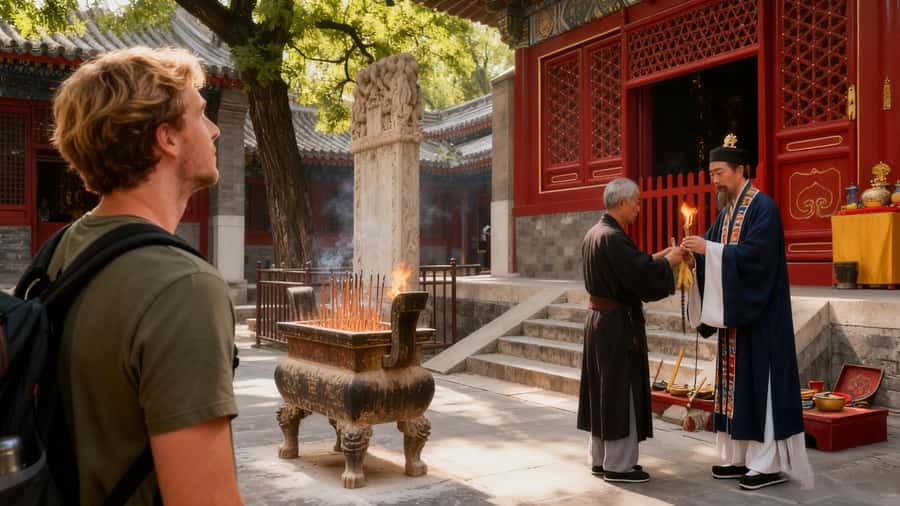
Your “4–7 hours” window is the key to why this works. If you try to cram too much into one day, you’ll end up tired, and your guide will be forced into a checklist approach. With a flexible package, you can build a route that matches energy and interest.
Here’s how I’d think about choosing your stops:
1) Pick your faith theme, then add one contrast.
If you’re leaning Buddhist/Tibetan, start with Lama Temple and then choose either a Taoist site for contrast (Temple of Heaven or Baiyunguan/White Cloud Temple) or a completely different tradition like Niujie Mosque. If you’re more into philosophy and texts, Confucius Temple pairs well with either Islamic or Christian architecture.
2) Choose based on day-of-week limits.
Temple of Heaven is closed on Mondays. Confucius Temple is also closed on Mondays. If your trip includes a Monday, that single detail can decide the whole day’s route. Meanwhile, Lama Temple and Baiyunguan/White Cloud Temple are open daily, which gives you more options for that weekday.
3) Plan around Niujie Mosque and service times at churches.
Niujie Mosque is open daily, but some areas may be restricted by prayer times. St. Joseph’s Church is open daily, but mass times apply. Your guide will help you choose a route that still makes sense even when a specific area is limited.
Practical tip: If you like a more relaxed pace, you’re usually better off choosing fewer sites and letting the guide slow down for explanation. That’s where the “private” part matters most.
Lama Temple: Tibetan Buddhism inside an imperial-style setting
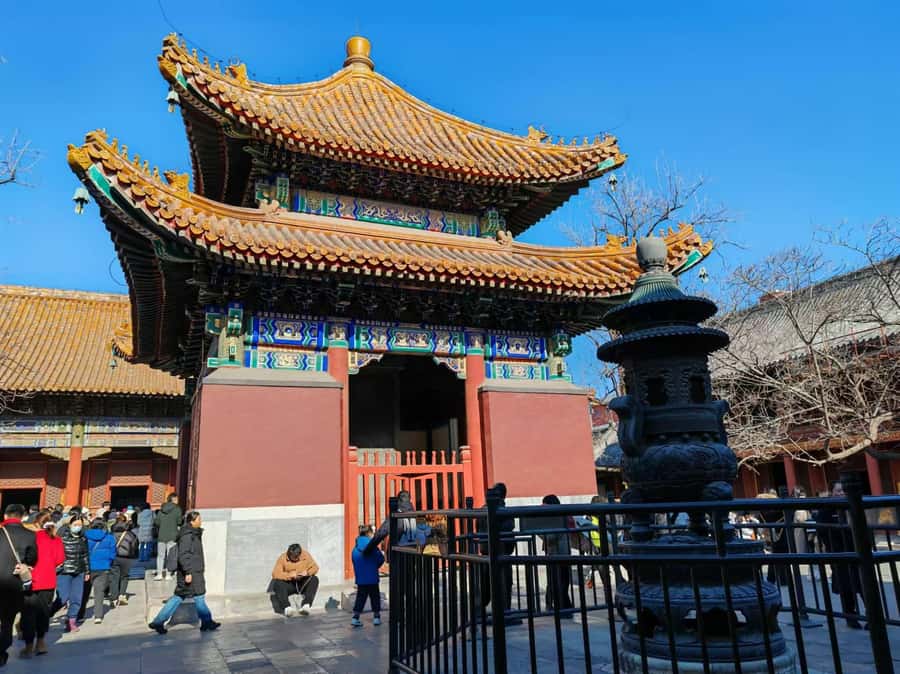
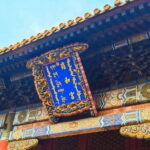
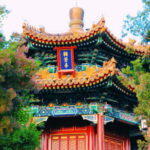
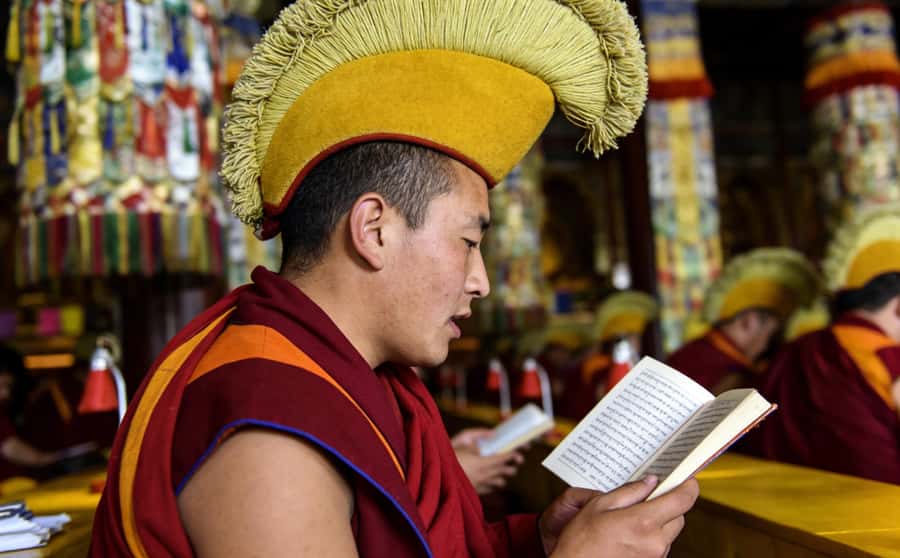
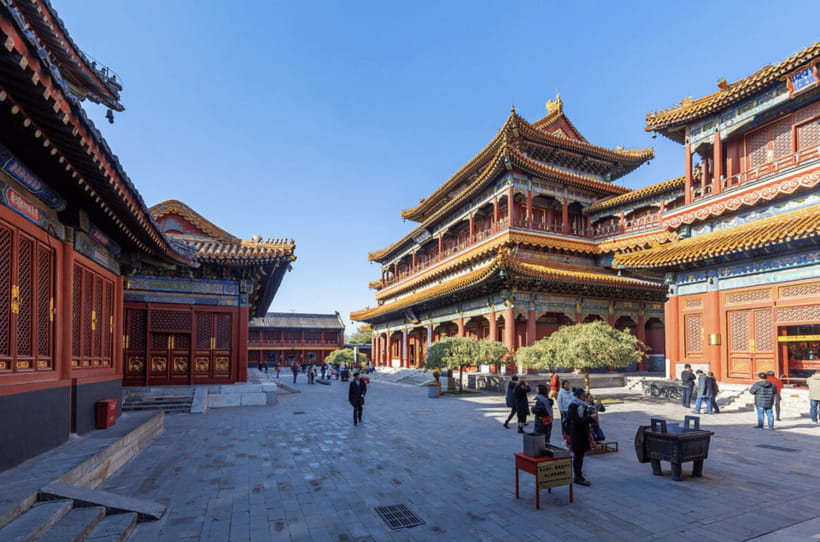
Lama Temple (also described as Beijing’s most prominent Buddhist temple and a core site of Tibetan Buddhism in northern China) is the kind of place that grabs you fast and keeps you looking. The first impression is visual: golden roof tiles, intricate wood carvings, and a huge focal-point statue—the 18-meter-tall sandalwood Buddha—described as one of the largest in Asia.
What makes this stop more rewarding on a private tour is the context around it. Instead of just seeing statues, you’ll understand what the different figures represent, and why certain forms of Buddha imagery show up the way they do. Guides with a history background and religious devotion, like Ms. Duan, are specifically praised for explaining the types of Buddhas in the Lama Temple area with passion and patience. That kind of explanation helps you read the site rather than just walk past it.
What to watch for when you’re there
- The scale and craftsmanship: large statues like the sandalwood Buddha aren’t just impressive; they’re designed to focus worship and attention.
- The carvings and building details: woodwork and structural ornamentation tell you where the temple’s priorities sit.
- The rhythm of the space: how people move, pause, and offer respect.
A small consideration: Lama Temple can be a major draw, so timing matters. Your best experience comes when your guide coordinates the order of stops so you’re not always arriving at the busiest moment.
Taoist highlights at Temple of Heaven and Baiyunguan (White Cloud Temple)
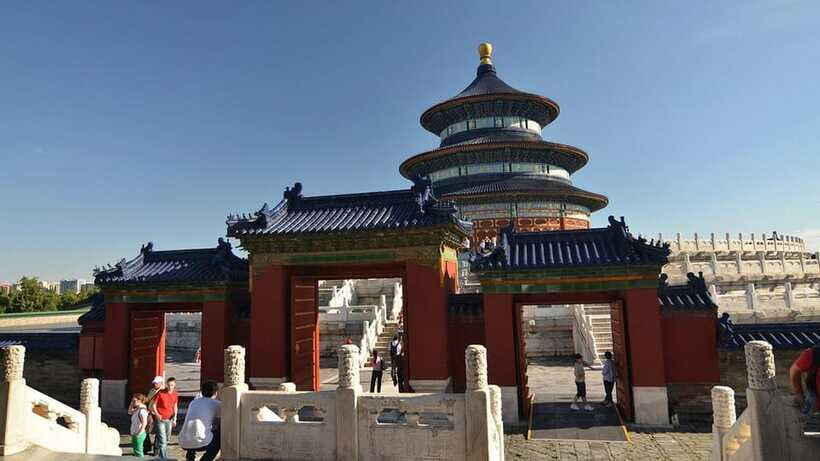
Taoism is where Beijing’s religion becomes seriously architectural. Two standout options often used in this kind of multi-faith day are Temple of Heaven and Baiyunguan (White Cloud Temple).
Temple of Heaven: UNESCO-level symbolism for emperors and harvest prayers
Temple of Heaven is the UNESCO World Heritage stop in this mix. It’s China’s most renowned Taoist complex and was built for emperors to worship heaven and pray for good harvests. Even if you’ve never studied Taoist ritual, the design explains the idea: heaven and earth concepts show up in the circular-and-square symbolism and the way the main structures relate to each other.
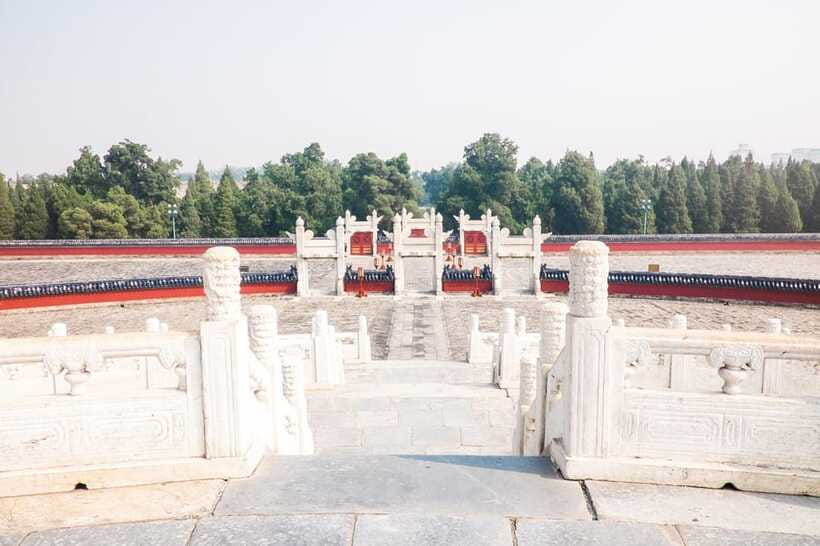
The iconic Circular Mound Altar and the Hall of Prayer for Good Harvests are the headline moments. With a good guide, you’ll understand these aren’t just pretty shapes—they’re built to represent cosmic order and legitimize the emperor’s role as the bridge to nature.
Day-of-week warning: Temple of Heaven is closed on Mondays. If you land on a Monday, swap this for Baiyunguan or another open site.
Baiyunguan / White Cloud Temple: old Taoism with intact ritual practice
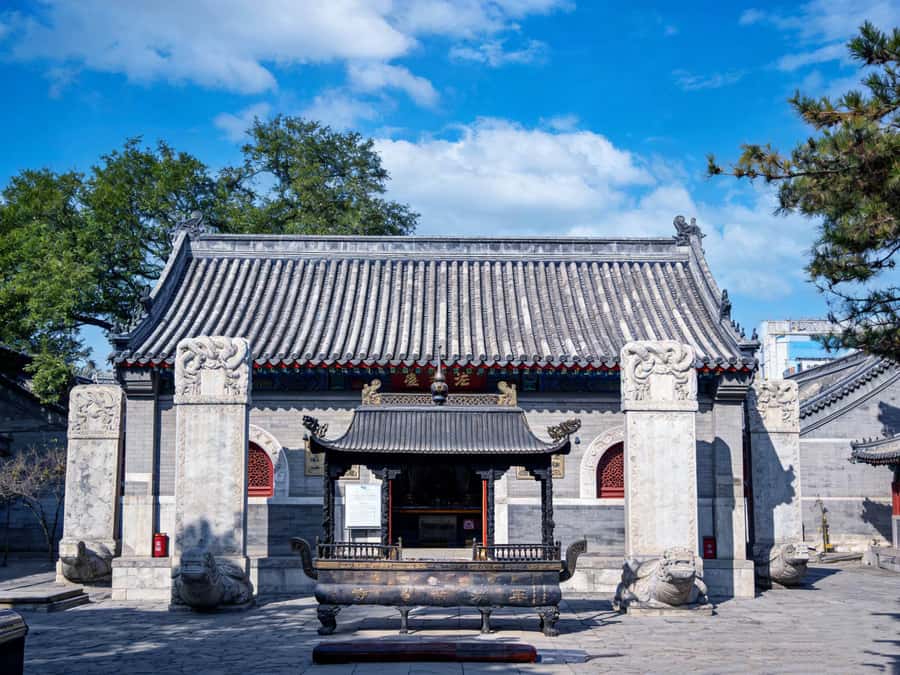
Baiyunguan (White Cloud Temple) is described as the First Taoist Temple Under Heaven and is about 1,300 years old. It’s known for preserving intact rituals, ancient scriptures, and calm courtyards lined with cypress trees.
On a private tour, this is a great “slow down” stop. The experience isn’t only about architecture—it’s about the feeling of continuity: practices and documents that have survived through the ages. If you’re the type who likes to understand what a building is used for, Baiyunguan can be more satisfying than a purely decorative site.
Open daily, which makes it a strong Monday alternative when Temple of Heaven is off the table.
Niujie Mosque: Beijing’s Islam story in courtyards
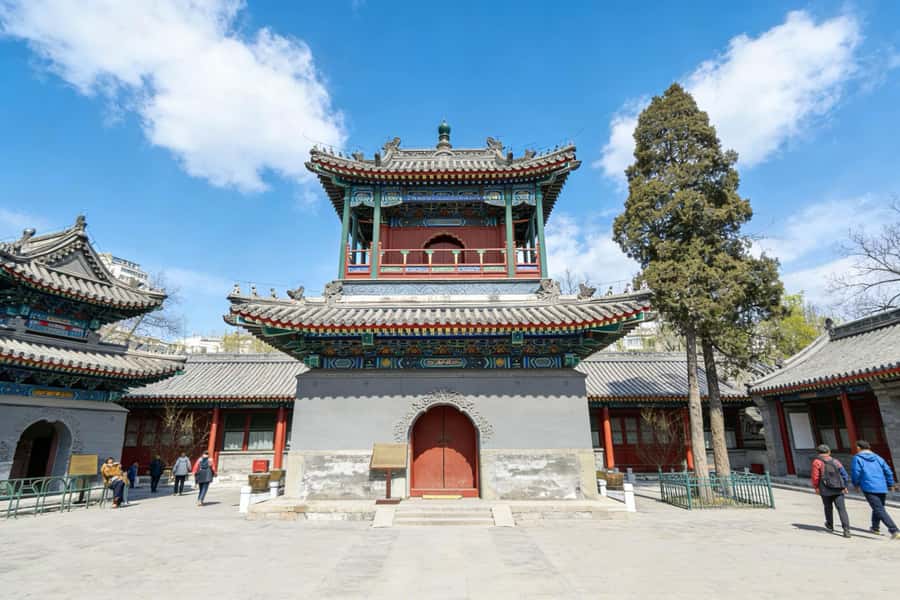
Niujie Mosque is Beijing’s oldest and largest Islamic mosque, founded in the 10th century. What you’ll notice right away is how it blends Chinese courtyard architecture with Islamic elements like domes and arabesque-style decoration.
That mix is the point. It shows how religious life adapted to local building traditions instead of staying isolated. On a private tour, your guide can connect these details to the broader idea of cultural coexistence.
Timing note that matters: Niujie Mosque is open daily, but prayer times may restrict access to some areas. This is exactly where a private guide helps: you’re not left guessing what you can see. You’ll still get value from the parts that are accessible, while your guide shapes the day around realistic access.
What makes this stop feel special
- The courtyard layout: it feels lived-in, not staged.
- The fusion of styles: Chinese architectural logic paired with Islamic ornamentation.
- The atmosphere during active worship: it’s not only a museum stop.
Christian and Confucian contrasts: St. Joseph’s and the Confucius Temple
Beijing’s religious landscape is striking partly because it isn’t one-note. You can switch from one worldview to another in a way that feels meaningful, especially if your guide helps you compare what each tradition emphasizes.
St. Joseph’s Church (Xuanwumen area listing calls it Xuanwumen Church/St. Joseph’s): Gothic Revival in a Chinese setting
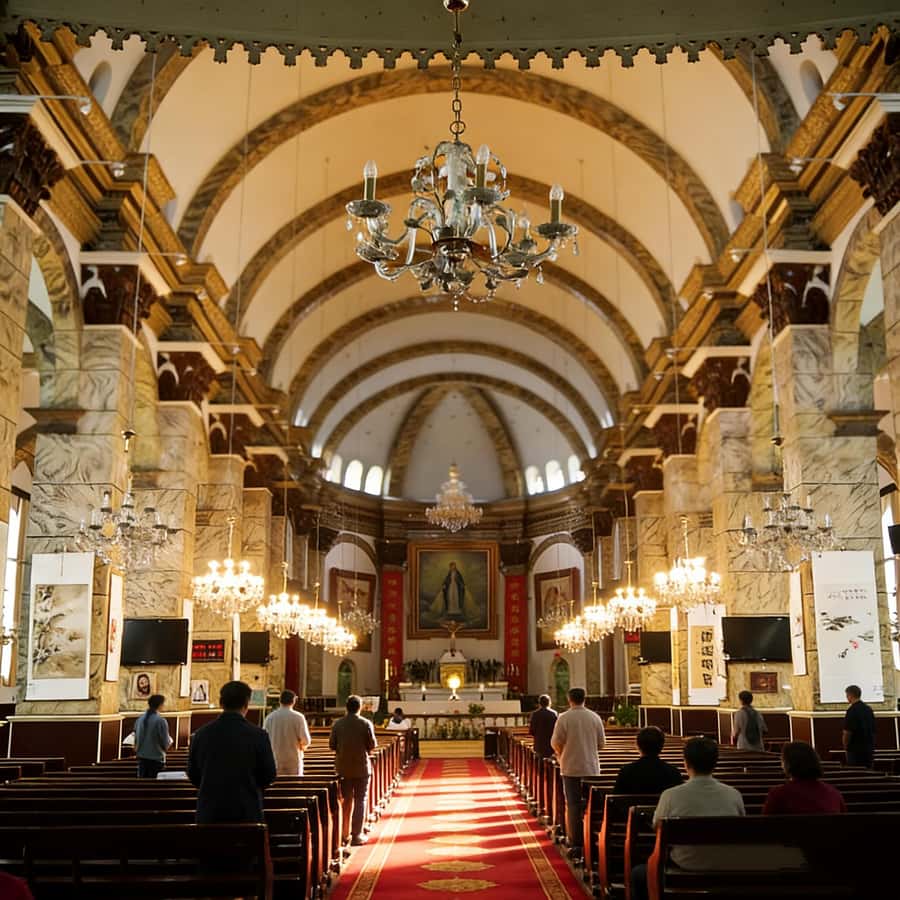
St. Joseph’s is described as a late 19th-century Gothic Revival landmark and one of Beijing’s early Catholic churches. What stands out is the contrast: pointed arches, stained glass, and a spire rising next to more traditional Chinese building styles.
This is a fantastic stop if you’re interested in cultural exchange. With the right guide, you’ll see how architecture becomes a language. The building’s form communicates a European Christian aesthetic, but it sits within a Beijing context where visitors and worshippers navigate both worlds.
Open daily, but mass times apply. Your guide can help plan around that so you don’t feel rushed or blocked.
Confucius Temple: for scholars, exams, and the power of ideas
Confucius Temple is described as Beijing’s most sacred Confucian site, built over 700 years ago. It honors Confucius and includes 500+ imperial examination stone tablets and ancient halls. If you’ve ever wondered why the Chinese civil service exam system mattered so much for centuries, this kind of site makes the connection feel concrete.
With a private guide, you’ll get more than a description of halls—you’ll learn how Confucianism shaped education, government, and social order. This is where “religion” and “philosophy” overlap in a way that matters historically.
Day-of-week warning: Confucius Temple is closed on Mondays.
Getting around with your guide: pickup, car or subway, and pacing
Logistics are often what ruins a “religious sites” day. The good news here is that your day is set up to reduce friction.
Pickup is included: your guide holds a sign with your name in the lobby of your hotel. That sounds simple until you’re trying to coordinate transport in a new city. It cuts stress right out of the day.
Then there’s transport flexibility. For packages that include a private car, you get door-to-door convenience, which is great when your route combines sites that don’t sit close together. For 4-hour no-transport packages, transport costs aren’t included, and you’ll need to self-arrange or use the subway.
A guide like Alice Ji is specifically praised for organizing the day well and communicating clearly in English, plus having a comfortable, clean vehicle. That kind of practical professionalism matters because it affects your pace. When you’re not stuck in traffic or figuring out directions, you actually get to spend your time looking, not guessing.
I also love that some guides provide extra support. In one experience, Ms. Duan prepared additional maps for the historic sites and helped navigate Beijing subway use. Even if you choose a car-included route, that kind of planning habit makes you feel more confident.
Finally, there’s skip-the-ticket-line for the chosen sites. When you’re visiting more than one location in a day, time saved at entrances can be the difference between a calm tour and a sprint.
Price and value for a private multi-faith day
The tour is listed at $77 per person and runs 4–7 hours. At first glance, it looks like a “custom tour” might be expensive. But the value equation here is more balanced than it seems, because the package isn’t just a guide—it includes entry tickets for the sites you select.
So you’re paying for:
- A live English guide with in-depth commentary
- Customized itinerary options
- Entry tickets for the chosen sites
- A private car transfer in car-included packages
- Skip-the-ticket-line entry
That’s why the “which package did you pick” detail really matters. If you choose a car-included option, you’re buying convenience. If you choose a 4-hour option without transport, you’re trading money for more self-organization. Either can be smart depending on your comfort level and how your day is built.
If you’re someone who wants to understand what you’re seeing—rather than just ticking off places—this price can feel fair. When a guide can explain why the Circular Mound Altar matters, or why the Lama Temple statue is such a statement, you’re getting more than entry. You’re buying meaning.
Who this tour is for, and when to plan differently
This is a strong fit if you:
- Want a multi-faith Beijing day (Buddhist, Taoist, Islamic, Christian, Confucian)
- Prefer a calmer experience away from mass-group pressure
- Like asking questions and getting patient answers
- Care about explanation—rituals, symbolism, history, and cultural significance
It may be less ideal if you:
- Want to check off every named site in a single day (it’s not designed for that)
- Travel on a Monday without flexibility, since Temple of Heaven and Confucius Temple are closed
- Expect Niujie Mosque access to be totally unrestricted during prayer times
If you’re planning around a tight schedule, I’d pick two top priorities and one “contrast” stop. That usually gives you the best pacing and the most satisfying explanations.
Should you book this tour?
If your goal is to understand Beijing’s sacred architecture and religious ideas in a way that feels personal, I think this tour is a smart booking. You’re not stuck with one route, and you can design a day that matches your interests—whether that’s Lama Temple’s scale, Temple of Heaven’s imperial symbolism, Baiyunguan’s Taoist continuity, Niujie Mosque’s cultural fusion, or Confucius Temple’s exam-era stone tablets.
Book it if you want a guide who can translate what you’re seeing into clear context—guides like Lucy, Alice Ji, Susan shan, and Ms. Duan are repeatedly praised for clarity, patience, and helpful planning touches.
Skip it only if you’re determined to see everything listed in one go or you hate adjusting plans for day-of-week closures. For most people, this is exactly the kind of flexible private experience that turns a long city day into something you actually remember.
FAQ
What sites can I visit on this private tour?
You can choose from a set of featured religious sites, including Lama Temple, Temple of Heaven, Baiyunguan (White Cloud Temple), Niujie Mosque, St. Joseph’s Church, and Confucius Temple. The exact combination depends on the package you select, and you will not visit all listed sites in one day.
How long is the tour?
The tour duration is 4 to 7 hours, depending on the package and selected sites.
Are any of the sites closed on certain days?
Yes. Temple of Heaven is closed on Mondays, and Confucius Temple is also closed on Mondays. Other sites like Lama Temple and Baiyunguan/White Cloud Temple are listed as open daily.
Do I need to arrange transport?
It depends on the package. Private car transfer is included only for car-included packages. For 4-hour no-transport packages, transport costs are not included, and you may need to self-arrange or use the subway.
Are entry tickets included?
Entry tickets for the chosen sites are included as specified in the package details.
Is there a line to wait in at the ticket gates?
The tour includes skip-the-ticket line for the selected sites.
What language is the guide?
The live tour guide is English.
What’s the hotel pickup like?
Pickup is included. Your guide will hold a sign with your name in the hotel lobby.
Can I cancel or pay later?
Yes. You can reserve now and pay later. Free cancellation is available up to 24 hours in advance for a full refund.