REVIEW · BEIJING
Beijing: Lama Temple (Yonghe Temple) Admission Ticket
Book on GetYourGuide →Operated by PANDA144 experience · Bookable on GetYourGuide
Beijing’s Lama Temple can feel like a quiet pause in the city. This fast-track ticket gets you into a complex where Tibetan Buddhist art, imperial-era architecture, and everyday prayer sit side by side. I really like how the site is both grand and human—big halls, but you’re watching real devotion unfold.
Two things I especially love: the blend of styles across the gates and courtyards, and the chance to see the famous 18-meter sandalwood Maitreya Buddha in person. It’s the kind of sight that makes you stand still without trying.
One consideration: even with fast-track entry, you still go through security checks, and the temple can get very crowded on major holidays—so plan for slower movement inside.
In This Review
- Key Highlights You Should Not Miss
- Yonghe Temple’s Atmosphere: Why This One Ticket Is Worth Your Time
- Getting Oriented Fast: Gates, Courtyards, and Style Mashups
- The Big Archways: What the Three Gateways Teach You
- Yonghe Gate
- Yonghe Palace Hall
- The Courtyard Flow Into the Halls
- Four Learning Halls: Your Best Walk Through the Religious Interiors
- The 18-Meter Sandalwood Buddha: The Moment You’ll Remember
- Incense, Prayer, and Temple Etiquette Without the Awkwardness
- Price and Value: Why $10 Feels Like a Fair Deal Here
- Your Walk Through the Complex: A Practical “How to Spend Your Hour” Plan
- Timing Rules and Holiday Reality: Don’t Get Trapped at Closing
- How PANDA144 Helps (and One Booking Reality Check)
- Who Should Book This Lama Temple Ticket?
- Should You Book Lama Temple Tickets Through PANDA144?
- FAQ
- How much is the Lama Temple (Yonghe Temple) admission ticket?
- How long should I plan for this visit?
- Does fast-track entry skip the security line?
- What does the ticket include once I arrive?
- What do I need to bring to the temple?
- Are there any rules about what I can’t bring?
Key Highlights You Should Not Miss
- Fast-track entry that still includes security screening
- Yonghe Gate and the grand ceremonial approach
- The Four Learning Halls (Medicine Buddha, Mathematics, Tantric, Lecture)
- The 18m sandalwood Maitreya Buddha, a Guinness World Records standout
- Exhibition rooms for context alongside the worship spaces
- A chance to observe real incense burning and prayer
Yonghe Temple’s Atmosphere: Why This One Ticket Is Worth Your Time
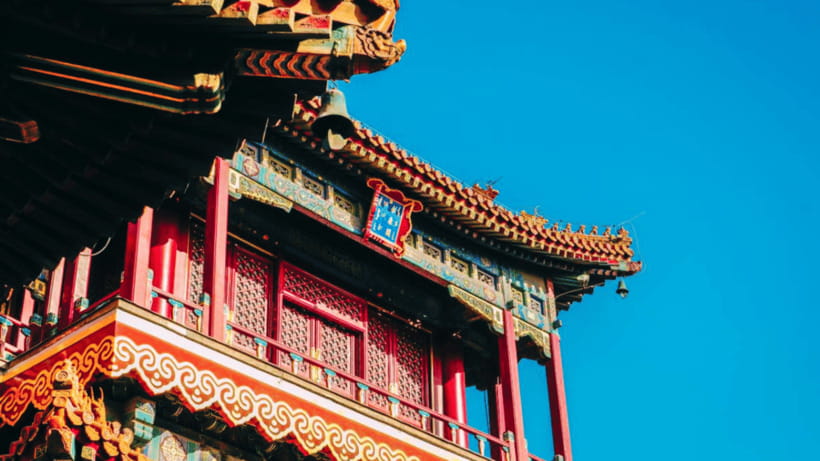
Lama Temple—also called Yonghe Temple—isn’t just a place to photograph and move on. It’s a functioning Tibetan Buddhist temple in Beijing, built in 1694 during Emperor Kangxi’s reign. It started as Emperor Yongzheng’s residence, became an imperial palace in 1725, and then turned into a Tibetan Buddhist temple in 1744 under Emperor Qianlong. That history matters because it explains why everything feels both ceremonial and lived-in.
When you’re inside, the building layout guides you step by step: gates, courtyards, and halls that feel like they were designed to slow your pace. And because locals visit to pray, you get moments that feel much more real than a typical museum stop.
This is the main reason I think it’s a strong value even as a standalone admission ticket. You’re not buying “a building.” You’re buying access to a whole spiritual complex with artifacts and architectural details you can actually take your time with—without needing a guided tour.
You can also read our reviews of more tours and experiences in Beijing.


Getting Oriented Fast: Gates, Courtyards, and Style Mashups
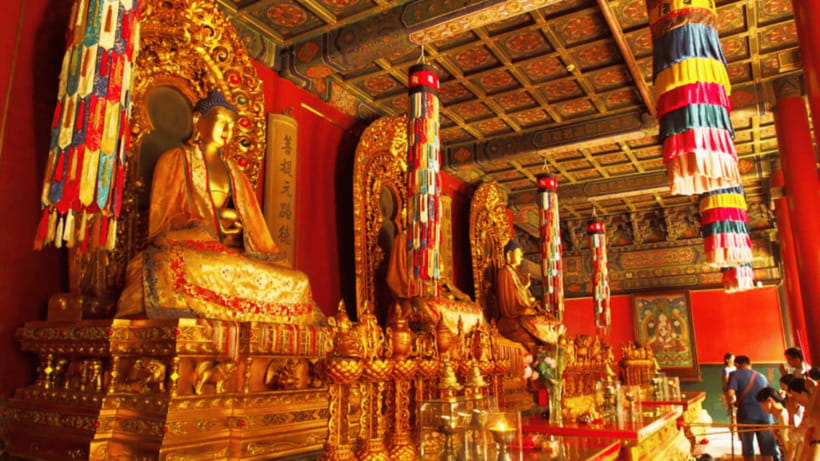
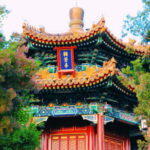
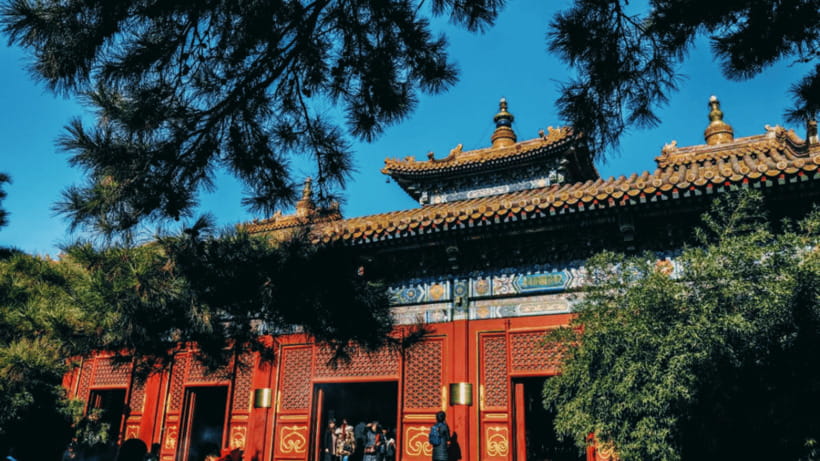
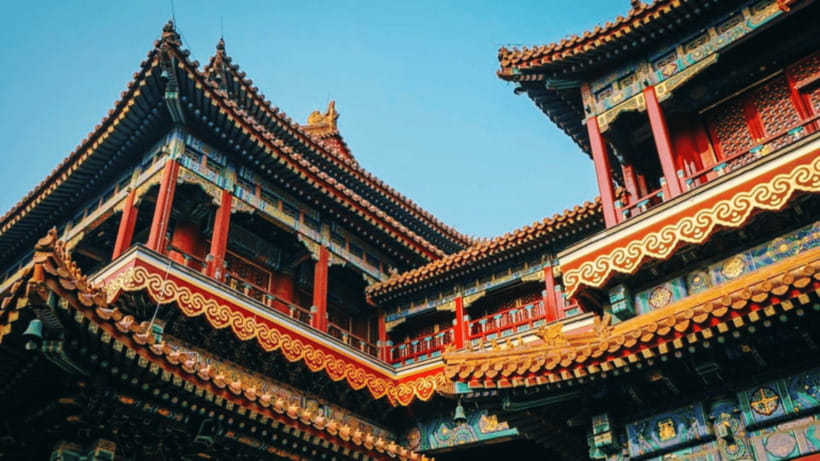
One of the most interesting parts is how the complex reflects multiple cultural influences: Han, Manchu, Tibetan, and Mongolian elements show up in the architecture and decorative styles. You’ll notice it as you walk—some parts feel palace-formal, while others feel distinctly Tibetan in their religious visual language.
A practical way to handle this: treat your visit like a guided self-walk, even though no guide is included. Start by looking for the major transitions. Each “threshold” (gate to courtyard, courtyard to hall) changes the mood. That’s when you’ll see the most distinct architectural cues—color, carvings, proportions, and how the space frames worship.
If you like religious art, this temple is especially satisfying because you won’t just see Buddha statues. The halls also contain items like thangkas and other precious artifacts, so the temple reads like a collection of devotional objects, not only a few big showpieces.
The Big Archways: What the Three Gateways Teach You
The complex is organized around three signature archways. They’re not just pretty entrances. Each one helps you understand how the temple “stages” your arrival.
Yonghe Gate
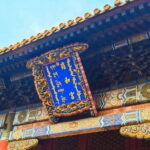
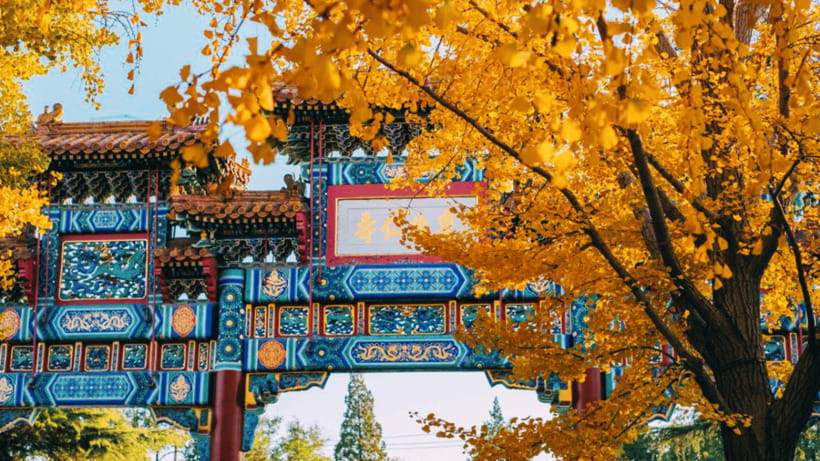
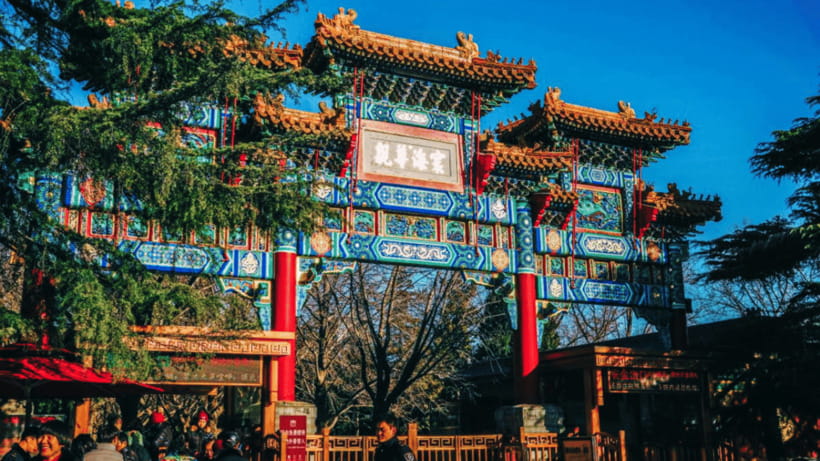
This is your first major ceremonial moment. Look at how the gate sets expectations: it signals that you’re entering something formal and sacred, not a quick sightseeing stop. Even if you’re not fluent in religious symbolism, the architecture does the talking—scale, design symmetry, and decorative intent.
Yonghe Palace Hall
This area shifts the tone. It feels more palace-like in its presentation, echoing the time when the buildings were imperial residence and palace before they became a Tibetan Buddhist temple. That historical layering is one reason this site feels more complex than a typical single-purpose temple.
The Courtyard Flow Into the Halls
Between these big sections, you’re walking courtyards that give your eyes time to adjust. If it’s crowded (common during busy dates), use the courtyard space to regroup. You’ll get better views when you step aside rather than trying to push through dense foot traffic.
Four Learning Halls: Your Best Walk Through the Religious Interiors
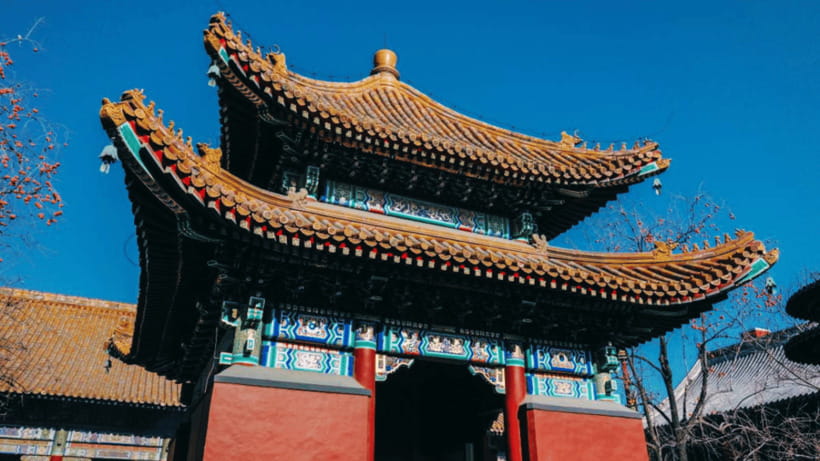
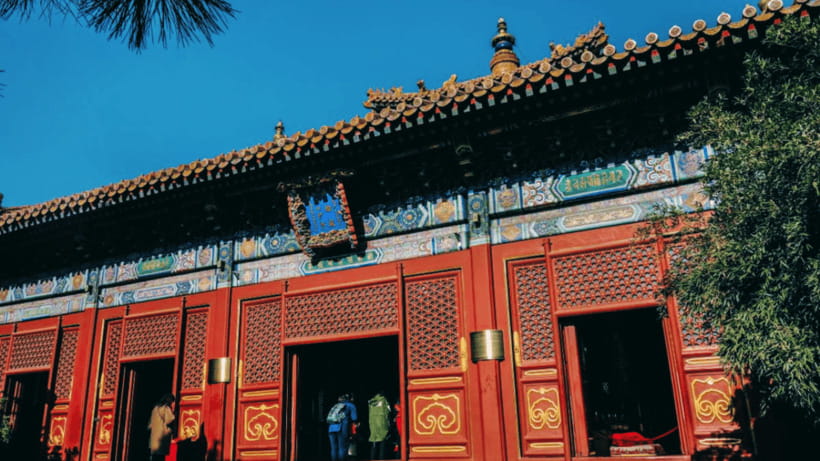
Once inside the main buildings, you’ll want to spend time in the Four Learning Halls, because they each spotlight a different dimension of worship and religious study.
- Hall of Medicine Buddha
Expect a strong focus on the healing Buddha tradition. If you like religious themes you can actually sense, this hall gives you a clear devotional direction.
- Mathematics Hall
This one is intriguing because it connects learning to religion. You’ll probably slow down here, just because it’s not the first thing you’d guess would be part of a major temple complex.
- Tantric Hall
The tantric tradition is visually intense in many Buddhist spaces, and here the hall’s purpose is unmistakably about advanced ritual practice. It’s one of the places where the temple’s Tibetan influence becomes especially noticeable.
- Lecture Hall
This hall reinforces that temples aren’t only for prayer—they’re also about teachings and study. Even if you don’t catch any live lecturing, the building design signals that this was meant to be a learning place.
No audio guides are included, so you’ll rely on your own curiosity and the visual clues inside. That’s not a downside. It actually makes the visit feel more personal. You can spend longer where something grabs you.
The 18-Meter Sandalwood Buddha: The Moment You’ll Remember
If you only do one thing carefully, do this: don’t rush the area where the 18-meter-tall sandalwood Buddha is displayed.
This Maitreya Buddha carved from a single piece of sandalwood is the headline attraction, and it’s been recognized in the Guinness World Records since 1990. In practical terms, that means you’ll see a major focal point that dwarfs your sense of scale. It can feel unreal until you’re standing close enough to notice the details.
What makes this sight meaningful is contrast. You’re in a temple with quiet prayer and incense, but you’re also facing an object made to inspire awe. That combination—devotion plus craftsmanship—creates the kind of “pause” moment that’s hard to replicate at a standard photo stop.
Incense, Prayer, and Temple Etiquette Without the Awkwardness
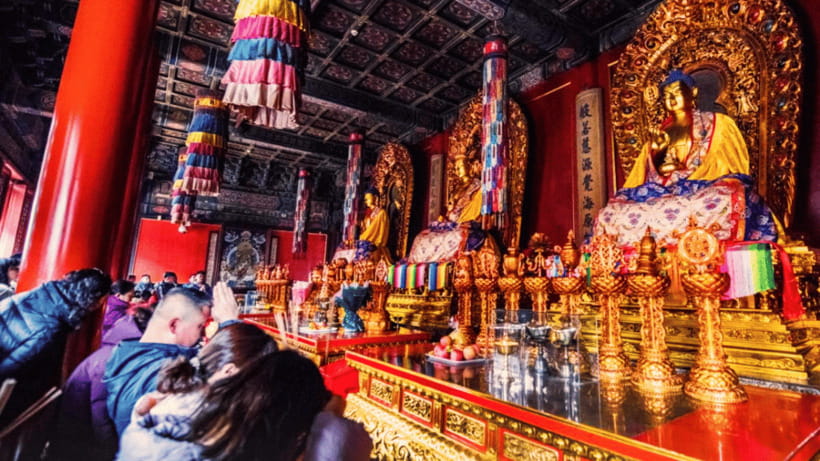
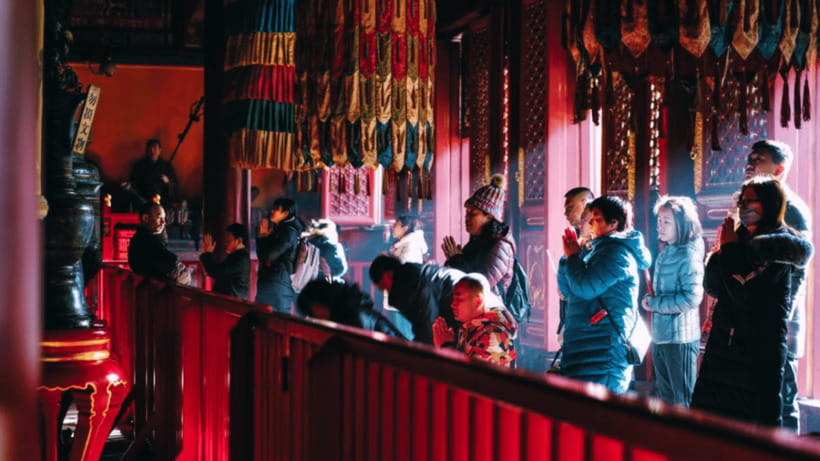
A lot of visitors come for the architecture. But what stays with me is how normal prayer looks here. During a visit on a major holiday, the temple felt very crowded because many people came specifically to pray. You’ll also see incense burning—one traveler noted they could burn incense—so expect smoke and a lively devotional rhythm.
To keep it respectful while still enjoying your time:
- Move calmly through busy zones rather than stopping in the thickest flow.
- When you see people praying, give them a small pocket of space.
- Watch what others do first, then follow the same general rhythm.
This temple isn’t a performance. It’s a place people use for worship. If you treat it like that, you’ll get far more out of it.
Price and Value: Why $10 Feels Like a Fair Deal Here
At about $10 per person, this ticket pricing is low enough that you shouldn’t overthink it. You’re paying for access to a real-world religious complex with major halls, exhibition rooms, and the signature sandalwood Buddha display.
Here’s the value breakdown:
- You get access to all major temple buildings and cultural exhibitions.
- Your entry is fast-tracked, which helps you start your walk sooner.
- You’re not paying for a guided tour or audio guide you might not even use.
The tradeoff is also clear: fast-track doesn’t mean you skip security checks. You should still expect basic screening at the entrance. Still, compared with many places in Beijing that force you into long entry lines, this approach usually feels worth it—especially if you’ve got limited time.
Also: because the ticket is basically self-directed (no guided tour, no audio guide), you’re in control. You can spend 10 minutes in an exhibition room or 40 minutes. That flexibility is part of the value.
Your Walk Through the Complex: A Practical “How to Spend Your Hour” Plan
You’ll do this in about a day, but your best results come from structuring your time.
A simple, effective pacing plan:
- Start with the gates and major courtyard approach
Use this time to get your bearings and notice architectural transitions.
- Hit the Four Learning Halls next
That’s where you’ll feel the temple’s religious categories most clearly.
- Make time for the 18-meter Buddha
Don’t treat it like a quick stop. Your eyes need a moment to adjust to scale.
- Then browse the exhibition rooms
These can add helpful context when your brain starts asking what you’re seeing.
If you end up short on time, prioritize the halls and the sandalwood Buddha. Exhibition rooms are great, but those main interiors are the reason you’re here.
Timing Rules and Holiday Reality: Don’t Get Trapped at Closing
Plan around the temple’s entry rhythm. Final entry is one hour before closing, and you must exit 30 minutes before closing. So don’t wait until the last minute and assume you’ll still get through everything comfortably.
Also, crowds are real. One visit date was noted as extremely crowded during a holiday when many people came to pray. On those days, movement slows down and your “perfect pacing” plan goes off-script. Your best defense is starting earlier and treating the complex like a series of slow transitions, not a sprint.
If you want a calmer experience, aim for a quieter time of day. But regardless of timing, keep your schedule aligned with those one-hour and 30-minute exit rules.
How PANDA144 Helps (and One Booking Reality Check)
This experience is provided by PANDA144. The practical benefit, based on how they handle communications, is that they actively message you ahead of time and send ticket information by WhatsApp. People also reported getting ticket information quickly by email and receiving details on the day of the visit.
There’s one detail you should respect: the GetYourGuide QR code is not a valid ticket. Instead, you need to communicate via WhatsApp or wait for the confirmation email they provide. In other words, don’t assume a generic QR code equals entry.
Also, this is a real-name ticket. You’ll need to provide your full name exactly as it appears on your passport, plus your passport number, to complete the booking. If that info isn’t received on time, your booking can be canceled and a cancellation fee may apply.
When you’re traveling in China, these real-name rules matter. Bring your passport and keep the confirmation message handy so entry feels smooth.
Who Should Book This Lama Temple Ticket?
This is a great fit if you want:
- A self-paced temple visit with major buildings included
- Architecture and religious art in one place
- A real temple atmosphere where locals pray, not just staged sightseeing
It’s also a good choice if you don’t need a guide. No audio guide or guided tour is included, so you’re free to move at your own pace.
You might consider another option if:
- You hate crowds and need a super quiet experience
- You want a structured explanation at every stop (because you won’t get an included guide or audio narration)
Should You Book Lama Temple Tickets Through PANDA144?
I’d book it if you want an efficient way to get into one of Beijing’s most distinctive sacred complexes. The price is fair, the ticket covers the key buildings and exhibition rooms, and fast-track entry saves you time. The sandalwood Buddha alone makes it a memorable stop, but the real payoff is the temple’s working feel—incense, prayer, and that calm interior pace.
Just be smart about the logistics reality: use your passport, expect security screening, don’t treat a generic QR code as entry, and plan your arrival so you’re inside before the final entry cutoff.
If you handle those points, you’ll likely feel like this was one of your easiest and most meaningful Beijing days.
FAQ
How much is the Lama Temple (Yonghe Temple) admission ticket?
The admission ticket price is listed as $10 per person.
How long should I plan for this visit?
The duration is 1 day. You can check availability to see starting times.
Does fast-track entry skip the security line?
No. Fast-track helps with the entry process, but you still need to go through security checks before entering the temple grounds.
What does the ticket include once I arrive?
The ticket includes fast-track entry, access to all major temple buildings, and cultural exhibitions, plus a reservation fee.
What do I need to bring to the temple?
You should bring your passport for real-name ticket verification at the ticket gate.
Are there any rules about what I can’t bring?
Yes. Pets aren’t allowed, and you can’t bring weapons or sharp objects or explosive substances.
If you want, tell me what day of the week and approximate time you’re going, and I’ll suggest a realistic order of halls so you don’t feel rushed under the closing rules.