REVIEW · BEIJING
Beijing: Night Tour Of Peking Opera Show / Transfer
Book on GetYourGuide →Operated by Private China Trips · Bookable on GetYourGuide
A night at Peking Opera feels like time travel. You get hotel pickup with a name-card sign and a guided show experience that explains what you are seeing before the costumes and fighting music take over. The main drawback is that pricing can feel steep if you only care about a very short show and want zero translation.
Your driver collects you from your hotel lobby at 18:20, then you head straight to the theater for a performance window of 19:30–20:40. A live guide in Chinese and English helps you follow the story and key performance details, and you finish with a return ride back to your hotel.
In This Review
- Key things to know before you go
- Getting picked up at 18:20 and getting to the theater fast
- What Peking Opera is, and why the 230+ year style matters
- The choreography language: costumes, gestures, and mime in motion
- Orchestra vs percussion: how the band runs the emotional soundtrack
- Seating reality: what you might see from your chair
- Timing and dinner: building an easy plan around 19:30–20:40
- Price and value: is $166 worth it?
- Who should book this Peking Opera night tour
- Should you book this Beijing Peking Opera night tour?
- FAQ
- What time does pickup happen?
- When does the Peking Opera show run?
- What languages are available for the live guide?
- Is dinner included in the tour price?
- What should I bring with me?
- Is the tour suitable for everyone?
Key things to know before you go
- Direct hotel-to-theater transfer: Pickup starts at 18:20, and the ride goes straight to the venue.
- A show built from multiple performance art styles: Think opera plus dance, martial arts, and mime.
- Two musical worlds on stage: The band splits into orchestra and percussion, with different jobs for different scenes.
- The percussion players help set the mood fast: Drums and castanets are used for battle energy, while gentler orchestral lines fit calmer moments.
- You will get guided context in Chinese or English: A live guide helps you make sense of the performance language.
- Dinner is not included: Plan your meal timing around the evening show window.
Getting picked up at 18:20 and getting to the theater fast
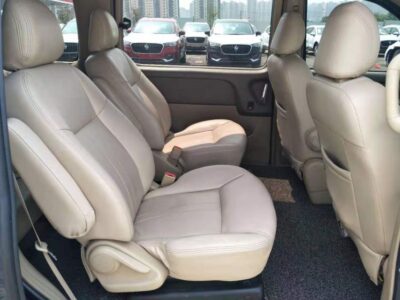
This is one of those Beijing evenings that works best when someone else handles the timing. You meet your private guide and driver at 18:20 at your hotel lobby. The driver holds a sign with your name, so you are not doing the awkward lobby guessing game.
From there, you go straight to the theater. That matters because Peking Opera starts on time, and the first part of the experience is you getting settled before the action. If you have ever missed the beginning of a show in a busy city, you know why this is a big deal.
The tour also includes both ends: hotel pick-up and drop-off, plus travel by private vehicle. And because the overall duration is listed as 3 to 10 hours, you should expect the time to vary depending on where your hotel is and how the schedule is handled, not because the opera magically changes length.
You can also read our reviews of more tours and experiences in Beijing.

What Peking Opera is, and why the 230+ year style matters
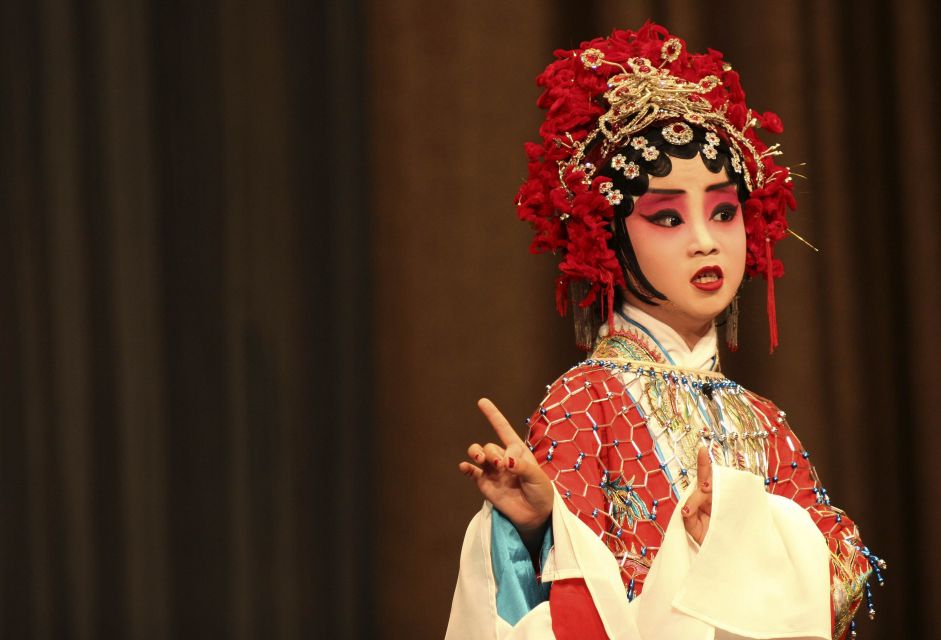
Peking Opera is not just a performance. It is a whole system of storytelling. This show covers a style with more than 230 years of history, and the origins go back to the late 1700s, when the four Anhui Opera troupes began coming to Beijing after 1790. From there, it developed quickly under imperial patronage—especially during the reign of Emperor Qianlong and Empress Dowager Cixi—and later it spread beyond the court.
Here is what makes that history worth knowing in the moment: Peking Opera uses highly stylized movement and music. The more you understand the system, the more the show becomes readable. You will notice patterns in gesture, pacing, and how the performers signal emotion or intent—often without the naturalistic acting style you might expect from modern theater.
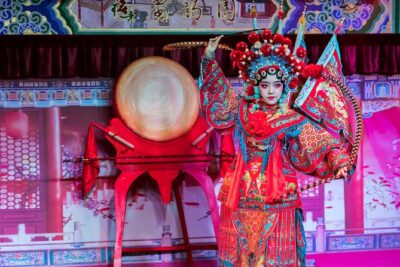
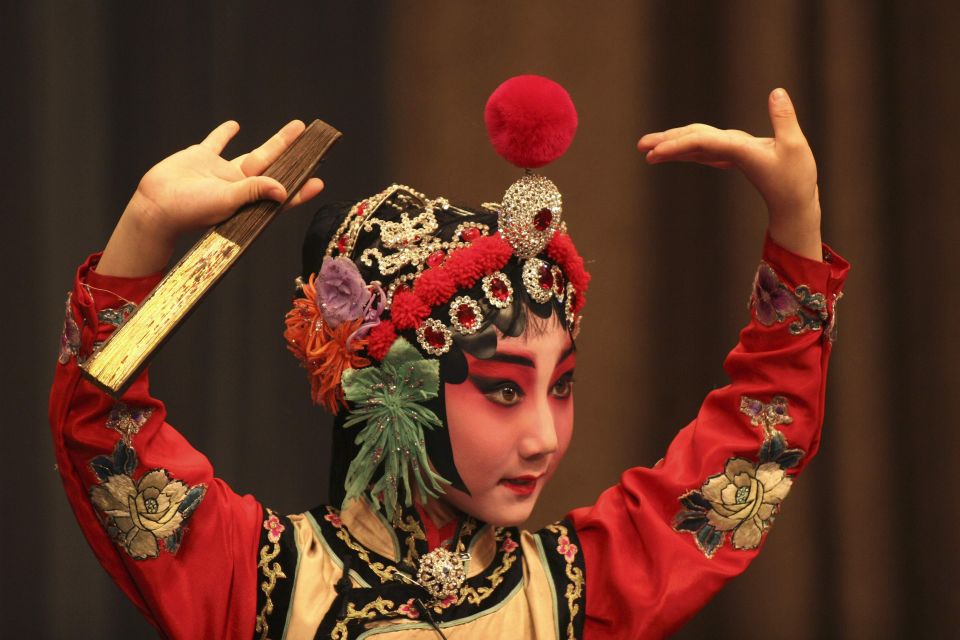
It also helps that the tour frames the visual look in a practical way. In earlier days, costumes were designed as high-contrast color to stand out on a dimly lit stage, lit by oil lamps. That is why you can end up thinking the costumes look almost unreal in color and shape. They were built to communicate at a distance and in low light, not just to look pretty.
The choreography language: costumes, gestures, and mime in motion
Peking Opera is often described as a mix of different arts, and that is not marketing fluff. The performance blends grand opera, ballet-like movement, and acrobatic action, plus dance, martial arts, and mime. The result is that the story gets told through body grammar.
Your guide’s job here is not to turn it into a lecture. It is to help you decode the basics fast: what the movement suggests, what the performers are emphasizing, and how the scenes connect. Once you catch that, you stop watching only for plot and start noticing performance choices—like how a movement style changes between tense and calm moments.
You will also get the feeling that it is both theatrical and athletic at the same time. Martial arts here is not just fight choreography; it is a vocabulary. Mime is not background acting; it is how characters communicate when dialogue alone would not land.
One practical consideration: the tour is not suitable for pregnant women, based on the activity details provided. If you have mobility concerns, it is worth asking your operator what the theater setup is like before booking, because this is not listed as an accessibility-friendly experience.
Orchestra vs percussion: how the band runs the emotional soundtrack
If you want to understand Peking Opera faster than most people, focus on the music cues. The band is split into two main components: an orchestra and a percussion band. They do different work.
The orchestra often supports peaceful or controlled scenes, while the percussion creates the correct pressure for battle and high-intensity moments. That means when you hear the percussion energy pick up, the show is usually shifting gears.
The instruments are part of the story. Percussion commonly includes castanets, drums, bells, and cymbals. One performer is described as playing castanets and drums simultaneously, helping drive the band’s timing. On the orchestra side, you may hear familiar Chinese instruments such as Erhu, Huqin, Yueqin, Sheng (reed pipe), and Pipa (lute).
There is also a staging detail that helps you orient yourself: the band usually sits on the left side of the stage. If you glance over during scene changes, you can start making sense of who is responding to the action and how the mood gets set.
Seating reality: what you might see from your chair
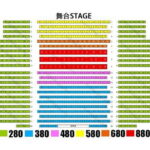
This is a private-guided experience, but the seating situation can vary. In past experiences with this style of tour, I’ve seen people report everything from close seating (even front row) to being seated at a shared table that is still centrally located.
So what should you do with that information? Aim for flexibility. If your top goal is the story and the performance language, almost any decent seat will let you enjoy the costumes, gestures, and music cues—especially with a live guide helping translate the meaning.
If your top goal is pure sightlines, consider arriving ready to adapt: keep your expectations on the performance itself, not one guaranteed seat position. And if you want souvenir photos, note that they are available to purchase—so decide in advance whether you want to spend extra money on that.


Timing and dinner: building an easy plan around 19:30–20:40
Your pickup is 18:20, and the show runs 19:30 to 20:40. That means you have a window of time beforehand for a quick meal or snack, but you do not want to gamble on a sit-down restaurant with a long wait.
Dinner is listed as not included, so you are choosing your own strategy:
- Eat before pickup if your hotel area has reliable options.
- Or grab something quick near where you can easily return to the pickup point.
Then, after the performance ends, your guide and driver take you back to your hotel. One of the underrated benefits of a private vehicle is that you do not have to problem-solve at the end of the show when it is late, crowded, and you are tired.
Also bring your passport. It is listed as what to bring, and for some venues that can be part of smooth entry.
Price and value: is $166 worth it?
At $166 per person, this is not a “budget evening,” and I get why some people feel that way—especially if they look only at the show length and ignore the rest.
Here is the value case, based on what is included:
- Local guide (Chinese/English)
- Driver/guide plus private vehicle
- Hotel pick-up and drop-off
- Peking opera show tickets
- The transfer is handled directly, not DIY
So you are paying for convenience plus an on-the-ground explanation. If you would otherwise be figuring out theater access, language barriers, and timing alone, this can start to look like a fair trade.
The risk is that if what you want is only a one-hour performance with no interest in context, the price can feel like too much. One complaint you might take seriously is that it may feel expensive for the show length plus translation/interpretation. My advice: book it if you want help reading the performance, not just watching it like background entertainment.
A simple way to decide: if you like theater where the details matter—costumes, gestures, music cues—this tour is likely to feel worth it.
Who should book this Peking Opera night tour
I think this experience fits best if you:
- Want an easy, guided evening without navigating transport or theater logistics
- Enjoy traditional performance arts and want to understand the system, not just watch it
- Like the sound of an evening where music cues and stylized acting drive the story
It may not be the best choice if you:
- Are very price-sensitive and only want the performance with minimal added explanation
- Have constraints that conflict with the listed suitability note (not suitable for pregnant women)
- Need to travel with pets (pets are not allowed)
Should you book this Beijing Peking Opera night tour?
Book it if you want a smooth, guided night where you can actually follow what is going on—especially through the music and the performance language. The big wins here are the direct pickup, the English-speaking guide support, and the fact that Peking Opera is all about interpretation. With context, it clicks fast.
Skip it or rethink it if your budget is tight or you are expecting a simple, low-cost show experience. The price can sting if you do not care about the guided explanation and you are mainly there for a short entertainment slot.
FAQ
What time does pickup happen?
Pickup is included and starts at 18:20 from your hotel lobby.
When does the Peking Opera show run?
The show time is listed as 19:30 to 20:40.
What languages are available for the live guide?
The live tour guide offers Chinese and English.
Is dinner included in the tour price?
No. The dinner fee is not included.
What should I bring with me?
Bring your passport.
Is the tour suitable for everyone?
Pets are not allowed, and the tour is not suitable for pregnant women.