REVIEW · BEIJING
Beijing:Private Forbidden City and Tiananmen Square Tour
Book on GetYourGuide →Operated by Sister tours · Bookable on GetYourGuide
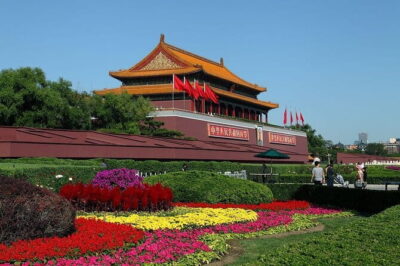
Tiananmen and the Forbidden City are huge.
This private tour format turns two intimidating megasites into a story you can actually follow, with your guide (like Alice, Amy Lu, or Rita) helping you make sense of what you’re seeing and what it meant.
I like the human pace—you’re not stuck decoding palace architecture alone—and I like the ticket-and-entry support, which matters in Beijing.
In a good tour like this, I’m usually happy for two reasons: the guide narrative (emperors, empresses, concubines, and how the buildings connect) and the practical planning (hot-lobby pickup, a clear plan for the day, and time-saving movement by public transportation).
Guides such as Simon and Jessica have been praised for making the details stick, not just reciting dates.
The main drawback to consider is the real-world friction: Tiananmen Square security is strict and the square can close suddenly for political reasons, with the plan adjusted (often to Jingshan Park or a surrounding circuit by taxi/bus).
So bring patience, good shoes, and a backup mindset.
In This Review
- Key things to know before you go
- Private access to Tiananmen and the Forbidden City (and why it matters)
- Tiananmen Square: the day’s big checkpoint (and the plan if it changes)
- The walk from the square to the Forbidden City: how the story clicks
- Forbidden City highlights you can actually recognize (not just see)
- Temple of Heaven (and why it’s worth adding)
- Summer Palace option: when you want greener contrast
- Price and logistics: is $18 actually good value?
- What I’d pack and how I’d handle the crowds
- Language support and what a private guide changes
- Who should book this tour (and who might skip it)
- Should you book this Beijing tour?
- FAQ
- Do I need a guide, or are there ticket-only options?
- What does the tour include?
- How do I get the correct tickets for entry?
- What passport details are required?
- How far in advance should I book?
- What happens if Tiananmen Square closes on the day?
- What should I bring and what is not allowed?
Key things to know before you go
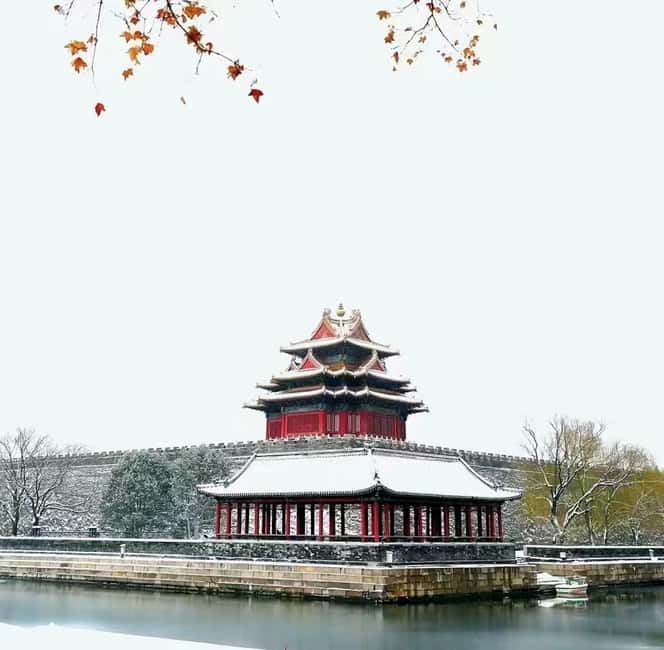
- Private guide storytelling: you’ll connect imperial life to what you’re standing in front of.
- Ticket reservation help: your tour option typically includes Forbidden City entry and Tiananmen Square reservation.
- Strict security at Tiananmen Square: expect a long check, especially around holidays.
- Temple of Heaven option: if chosen, you get Beijing’s signature architecture beyond the palace complex.
- Flexible replacements if the square closes: plans may pivot to Jingshan Park or a perimeter route.
- Guide support beyond the monuments: many guides add practical Beijing tips like food suggestions and navigation help.
Private access to Tiananmen and the Forbidden City (and why it matters)
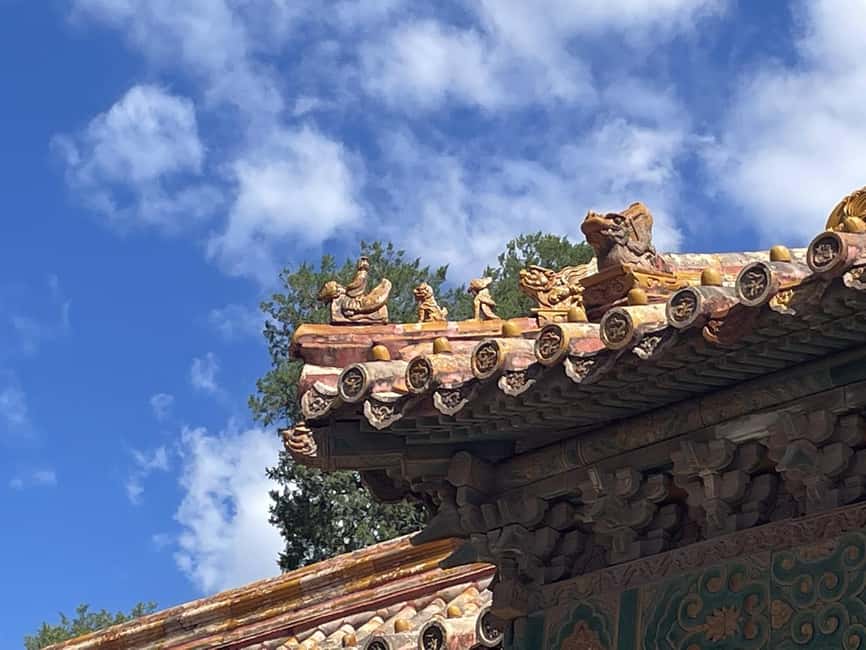
Beijing’s top sights are famous for a reason, but they’re also big, crowded, and full of symbolism that doesn’t read itself if you’re just staring at walls.
This tour’s value is the way it turns the day into a guided line of reasoning. Instead of treating the Forbidden City as a random museum layout, your guide helps you understand why certain halls and courtyards mattered, and how the imperial household worked in real terms. That’s where the tour stops being a photo checklist and starts becoming context.
It helps that the experience is built around a private format. Even if you’re only on a shorter route, your guide can answer the questions that pop up while you’re walking: What was the emperor doing here? Why is this building shaped this way? How did court life connect to ceremonies? Many guides listed in the feedback—Amy Lu, Kelly, Robin, Severine, and others—were praised for answering questions clearly and staying engaged for hours.
One more practical point: your guide meets you at your hotel lobby, holding a sign with your name. In a city that can feel confusing at first, that alone can reduce the stress before you even start.
You can also read our reviews of more tours and experiences in Beijing.
Tiananmen Square: the day’s big checkpoint (and the plan if it changes)
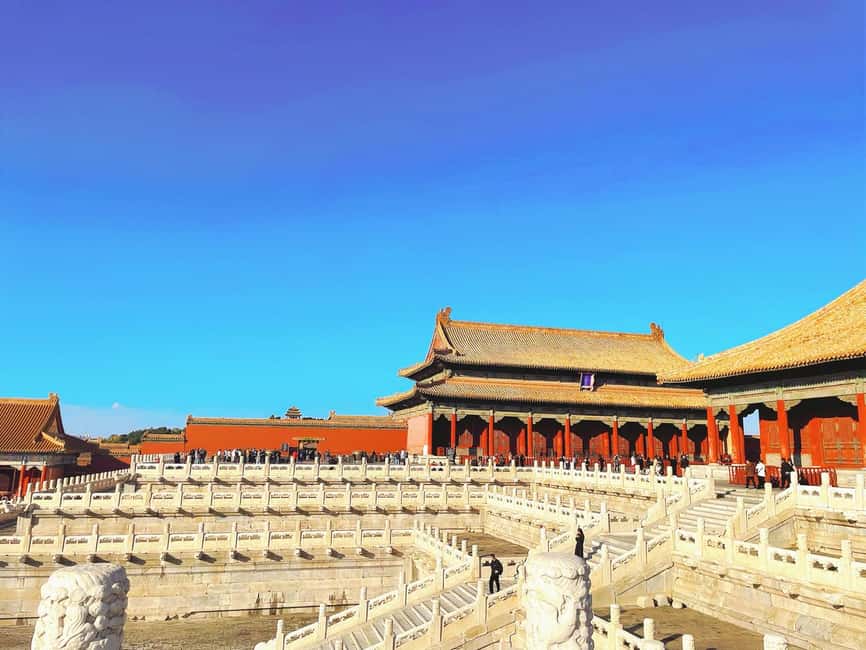
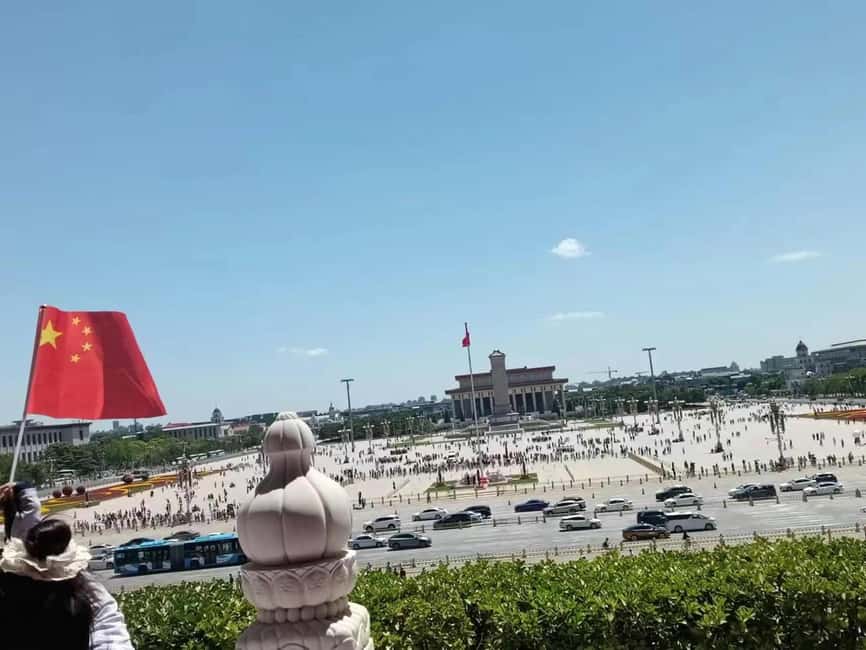
Tiananmen Square is the largest city center square in the world, and it also comes with the least “relax and wander” feeling of the day. The tour includes Tiananmen Square reservation, but the real gating factor is security.
Here’s what you should plan for: security checks can take hours, especially during holidays. That’s not a small detail. It affects when you’ll reach the square, how much time you’ll have to move, and how much energy you’ll have left for the Forbidden City.
Also keep in mind one key risk: due to political reasons, Tiananmen Square may close suddenly without notice. The good part is the tour has a fallback. If the square is closed, your guide changes to Jingshan Park instead, or you may go around the square by taxi or bus to still see the area.
That contingency is one reason this is more than a “ticket service.” It’s designed around the fact that the schedule can be out of your control. If you’re the type of traveler who hates surprises, you’ll still want to stay flexible—but at least you won’t be left stuck.
The walk from the square to the Forbidden City: how the story clicks
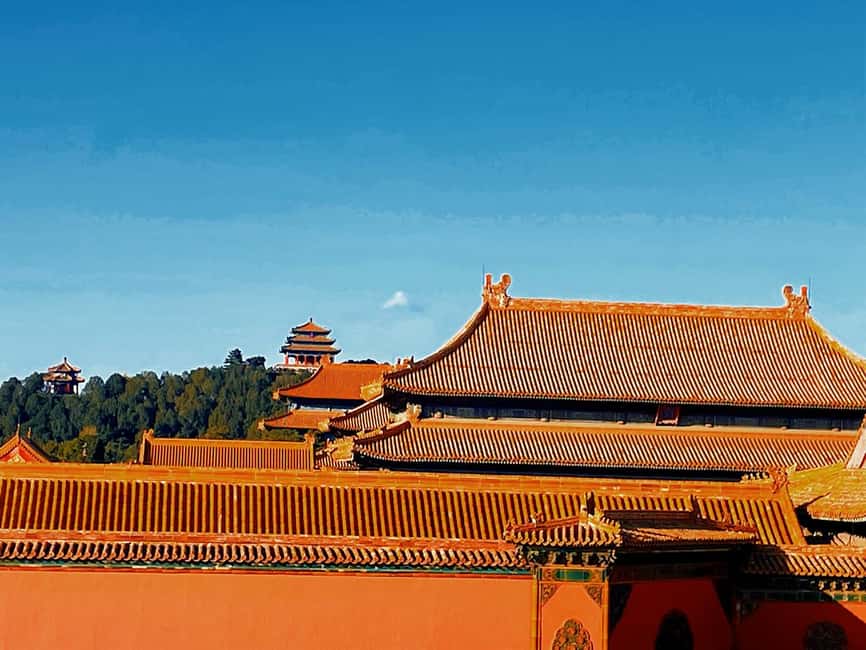
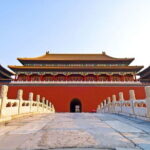
The heart of the experience is the sequence: you explore Tiananmen Square and then walk to the Forbidden City, learning about the imperial world as you go.
The tour is set up as a 4-hour experience for the core route (when you book the private tour option for Tiananmen Square and the Forbidden City). That’s a helpful length: long enough to understand what you’re seeing, but not so long that you’re running on fumes.
What I like about this kind of flow is that it turns the day into cause-and-effect. You go from the public stage (the square) to the private system (the palace). Your guide explains the details of buildings and shares the stories behind emperors, empresses, and concubines as you walk from one area to the other.
Guides named in the feedback—like Rita, Simon, and Lisa—were specifically praised for storytelling that made the palace feel like a living system, not just a set of halls. Even when you’re only seeing the “top” areas, the context helps you notice things faster: architectural layout, ceremonial significance, and why certain spaces were used the way they were.
If you’re traveling with kids or multiple generations, this pacing also helps. Several reviews highlighted patience and the ability to explain in a way that stayed interesting even for younger visitors.
Forbidden City highlights you can actually recognize (not just see)
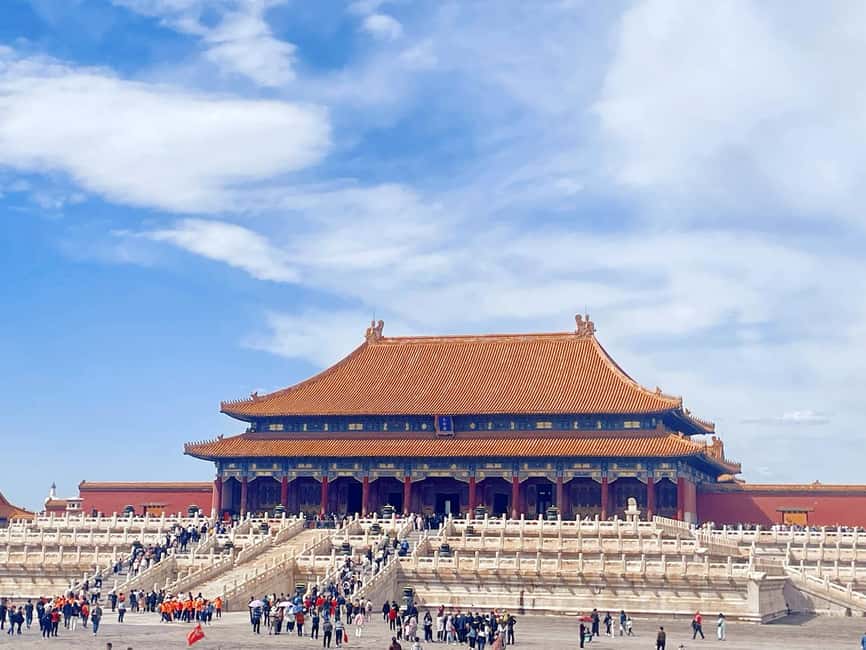
The Forbidden City is massive. That’s the problem: if you don’t have a framework, it’s easy to drift and miss what you came for.
With this tour, your Forbidden City ticket is included, and your guide uses that time to point out the parts that connect to the imperial story. You’re not only getting facts—you’re getting what those facts mean in spatial terms: what the buildings were for, how the court would move through power spaces, and what roles people in the royal household played.
The feedback repeatedly praises guides who can answer questions and keep momentum without rushing. People mention strong English, clear explanations, and guidance that helps you avoid losing time inside crowds. That’s exactly what you want here, because the Forbidden City rewards attention—but it doesn’t forgive wasted time.
If you choose the ticket-only options, you’ll need to be more self-directed. Option choices matter:
- If you pick a ticket-only setup, you’re responsible for the pacing and interpretation.
- If you pick the private tour options, you get the guide’s interpretation tied to where you’re standing.
If your goal is to walk away understanding “what this place was really like,” choose the guided option.
Temple of Heaven (and why it’s worth adding)
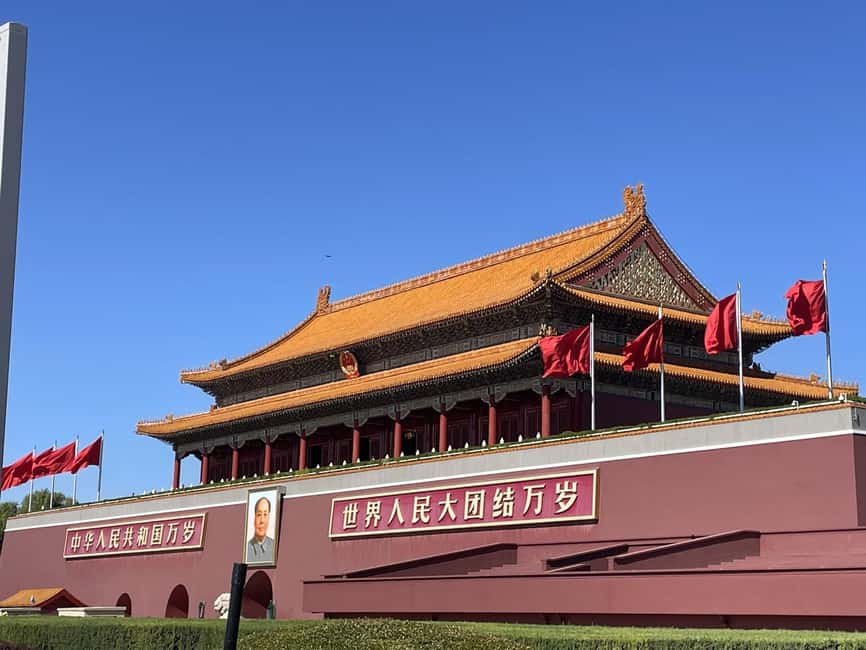
If you include Temple of Heaven, you get a completely different side of Beijing’s worldview. This isn’t palace power; it’s ceremonial architecture tied to the relationship between rule, ritual, and the natural order.
The tour description calls Temple of Heaven a Beijing landmark building, and the “most beautiful architecture” note isn’t just marketing fluff. It’s the kind of site where a guide can help you see patterns and design choices instead of just appreciating the scale.
Also, the guide’s storytelling style seems to matter a lot here. Many guides were praised for making architecture easier to follow by explaining how structures relate to purpose. In practical terms, that means you’re more likely to understand why things look the way they do, rather than just photographing angles.
If your day feels like it’s becoming only “royal buildings,” Temple of Heaven balances it with ritual spaces, giving you a bigger picture of how imperial China thought.
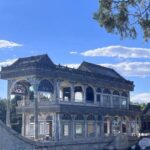
Summer Palace option: when you want greener contrast
One option includes Tiananmen Square, Forbidden City, and Summer Palace. If you’re choosing that path, you’re basically adding a “contrast day” component—palace authority in the Forbidden City, then a more expansive retreat vibe at the Summer Palace (and more walking, more logistics, and more time pressure).
I’d consider this option if you:
- want a larger Beijing “greatest hits” arc, and
- don’t mind that you’ll pack more into one schedule.
The core guided structure (square plus Forbidden City) is the anchor. The Summer Palace inclusion is for people who want more variety without switching hotels or adding a whole extra tour day.
Price and logistics: is $18 actually good value?
The price listed is $18 per person, but this is where you have to read the fine structure of what you chose.
This offering has multiple variants:
- ticket booking services that may include no guide, and
- private guided tour options where the guide escorts you and provides historical background.
So the real value comes from matching the option to your needs. If you want to just get tickets handled and you’re comfortable exploring on your own, a ticket-focused choice can feel like a bargain. If you want interpretation, question time, and guided pacing through crowds, the guided option is the real “pay for meaning” value.
Here’s the practical takeaway: the ticket-and-reservation support and the presence of a guide both reduce friction. In Tiananmen Square especially, friction is the enemy—security lines and timing can eat your day. A guide can’t eliminate security, but they can help you manage the flow.
Also note one operational gotcha: the GetYourGuide QR code is not a valid ticket. You should communicate via WhatsApp or wait for a confirmation email. That means the “value” depends on you following the process early enough to get everything confirmed.
What I’d pack and how I’d handle the crowds
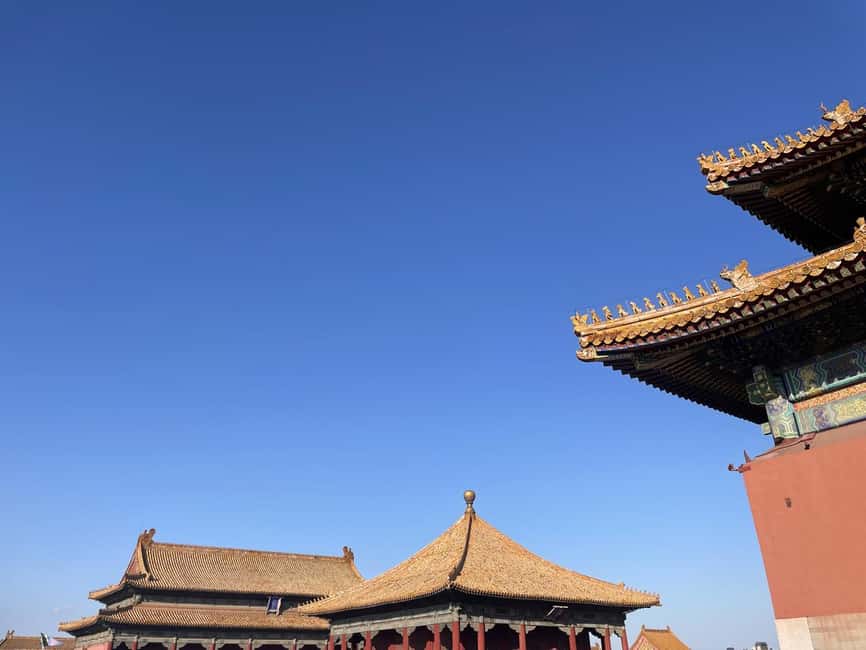
You’re given a straightforward packing list:
- comfortable shoes
- camera
That’s the right core. The Forbidden City and Tiananmen area are both walk-heavy, and long security checks can add up fast.
Also, there are clear no-go rules:
- no drones
- no fireworks
- no explosive substances
Not glamorous, but it prevents unpleasant surprises at checkpoints.
For a smoother day, I’d also plan your expectations around crowd density. This is a “show up early energy” type of sightseeing. Even with a private guide, you’ll be sharing space with thousands of people if you travel during peak times.
Language support and what a private guide changes
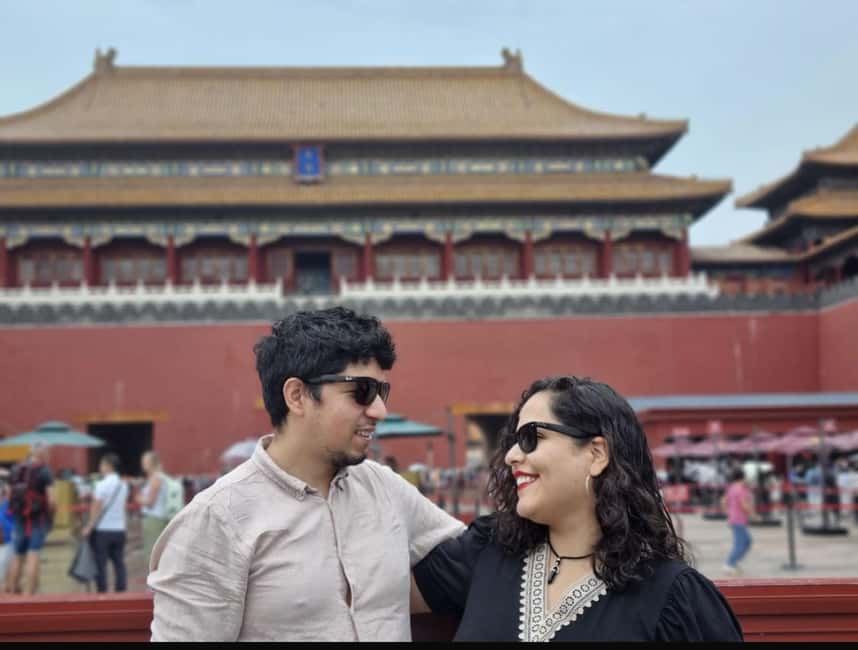
This tour supports many languages: English, French, German, Japanese, Russian, Spanish, Dutch, Swedish, Greek, Kannada, Polish.
More important than language choice is how a good guide uses it. The feedback praises guides like Amy Lu, Severine, Grace, Simon, and Jessica for clear explanations and strong engagement. People also highlight guides who adjust to different interests—families, solo travelers, and mixed-age groups.
In real terms, that means:
- If you’re history-first, you’ll get the dynasty and palace-life connections.
- If you’re photo-first, you’ll often get help timing viewpoints and finding less frustrating ways to move.
- If you’re planning the rest of your Beijing days, your guide may offer practical recommendations (food and navigation were specifically mentioned).
This is a tour where a guide can turn “I saw buildings” into “I understand why these buildings exist.”
Who should book this tour (and who might skip it)
This works best if you:
- want a guided explanation of the Forbidden City and Tiananmen Square,
- care about understanding power structures and court life (emperors through concubines),
- don’t want to spend your limited time on guesswork and crowd navigation.
It might not be the best fit if you:
- prefer only self-paced exploration and already have a solid plan for what to see and why,
- plan to travel during periods when you can’t tolerate long security waits,
- need an experience that is friction-free. Tiananmen security is not that.
One more note: it’s marked as not suitable for people over 95 years. If that applies, you’ll want to check whether the pace works for your group.
Should you book this Beijing tour?
If your goal is to leave Beijing with a real understanding of what you saw, I’d book it—especially the private guided option. The best value isn’t the monuments themselves (you can find plenty of photos online). The value is the guided connections, the ability to ask questions, and the way ticket handling removes pressure.
If you’re traveling with limited time, consider the core route first: Tiananmen Square plus the Forbidden City, often structured as a 4-hour private experience. Add Temple of Heaven if you want architecture with a different purpose. Pick the Summer Palace option only if you’re comfortable stacking more highlights.
Just be honest about Tiananmen Square realities: security can be slow, and closures can happen. This tour is built with that in mind, but you’ll still need patience.
FAQ
Do I need a guide, or are there ticket-only options?
There are ticket booking options where you may get tickets with no tour guide (for Forbidden City only, or for Tiananmen Square and Forbidden City, depending on the option).
What does the tour include?
Depending on your selected option, it includes Tiananmen Square reservation and Forbidden City ticket, and in guided options you also get tour guide service. Transportation fee and personal spending are not included.
How do I get the correct tickets for entry?
The GetYourGuide QR code is not a valid ticket. You’ll need to communicate via WhatsApp or wait for a confirmation email to confirm the ticketing process.
What passport details are required?
You need to send participant passport information in advance: full name, passport number (ID), date of birth, and gender. Failure to provide it in time can lead to cancellation and a cancellation fee.
How far in advance should I book?
Chinese citizens should book at least 7 days ahead. Everyone should book at least one day ahead, and during Chinese holidays the 7-day advance timing is recommended to ensure tickets.
What happens if Tiananmen Square closes on the day?
If Tiananmen Square closes suddenly without notice, the plan will be changed to Jingshan Park or you may take a taxi/bus around Tian’anmen Square to see the area.
What should I bring and what is not allowed?
Bring comfortable shoes and a camera. Drones are not allowed, and there are also restrictions on fireworks and explosive substances.