REVIEW · CHONGQING
Chongqing: Guided City Tour with Lunch & Entry Tickets
Book on GetYourGuide →Operated by Chongqing jinyue international agency · Bookable on GetYourGuide
Chongqing makes history and skyscrapers share the same street. This guided route treats you to the city’s famous 8D mountain feel, mixing old temples and guild halls with jaw-dropping modern architecture. I like how the day is built around standout photo stops—especially Kuixing Tower’s suspended skybridge—so you get views that make the city click fast.
The second reason I think this tour works is the human side: guides like Cheryl get praised for adjusting the plan to your energy, taking rest breaks, and even helping you time local shopping and questions. The only real catch is simple: it’s a walking-heavy day, and the itinerary may shift with weather and traffic, so you’ll want comfortable shoes and a flexible mindset.
In This Review
- Key Highlights You’ll Actually Care About
- Chongqing’s 8D Mix: A One-Day Plan That Makes Sense
- From Jiefangbei to Kuixing Tower: The Skybridge View You’ll Remember
- Liziba Light Rail Station: Where Everyday Transit Becomes a Photo Moment
- Guanyue Temple and Fotuguan Park: Taoist Meaning in a Quiet Pocket
- Huguang Guild Hall: A Yellow Facade Built Against the Mountain
- Longmenhao on the South Bank: Bayu Steps, European-Style Rooms, and Stone Legends
- Raffles Place and the Crystal Corridor: Futuristic Chongqing (With Real Views)
- Lunch That Doesn’t Feel Like an Afterthought
- Price and Logistics: Is $88 a Good Deal?
- Who This Tour Suits Best
- Quick Booking Check: Should You Choose This One-Day Route?
- FAQ
- Where does the tour start?
- Does the tour include lunch?
- Is there an English guide?
- What entry tickets are included?
- How much walking should I expect?
- What major sights are visited?
- What can I do after the tour ends at Raffles?
- Is the tour good for families with kids or teens?
- Are alcohol and drugs allowed on the tour?
Key Highlights You’ll Actually Care About
- Kuixing Tower’s 22-story suspended skybridge spans two high-rises and frames Jialing River views
- Liziba Light Rail Station lets you watch trains run through a residential neighborhood
- Guanyue Temple at Fotuguan Park pairs Ming-dynasty Taoist meaning with calm tree shade
- Huguang Guild Hall is the largest extant ancient guild hall complex, with a bright mountain-side facade
- Longmenhao steps and Bayu legends connect old stilt houses to old European-style buildings
- Raffles Place Crystal Corridor and Discovery Pod deliver a 270-degree “two rivers, four banks” skyline at night
Chongqing’s 8D Mix: A One-Day Plan That Makes Sense
Chongqing is the kind of city where you can’t really understand it from one viewpoint. Hill roads drop fast into river basins. New high-rises crowd in around older neighborhoods. Old religious sites and communal meeting halls sit next to modern transit and shopping.
This tour is built for that reality. You start in the busy center area of Jiefangbei, then work through a string of places that each explain a different layer of the city: rivers, religion, migration-era culture, neighborhood life, and then that futuristic skyline moment at Raffles Place. It’s not just “see things.” It’s more like getting a guided set of lenses so Chongqing stops feeling chaotic.
One more practical thing I like: this isn’t a museum-only day. You’re moving through real urban scenes—street steps, park paths, rail platforms—so the modern parts feel grounded instead of random.
You can also read our reviews of more tours and experiences in Chongqing.
From Jiefangbei to Kuixing Tower: The Skybridge View You’ll Remember
Your day kicks off at the People’s Monument of Jiefangbei, where you meet the guide and then head out on foot toward the river-facing sights.
The first big “wow” is Kuixing Tower, built during the Qing Dynasty. What matters here isn’t only age—it’s how the tower acts like a viewing tool. The headline feature is the 22-story suspended skybridge that spans two tall buildings. When you stand there, the city’s layers make more sense: river movement below, streets slicing through slopes, and the sense that Chongqing is always climbing or descending.
A quick consideration: because it’s a popular viewpoint, you’ll want to be ready for crowds and changing light. If your goal is photos, keep your timing flexible and listen to what the guide suggests about when to stand where.
This is one of the stops that makes the whole day feel coordinated. Without it, the itinerary would just feel like a grab bag of locations. With it, you get the “big picture” early.
Liziba Light Rail Station: Where Everyday Transit Becomes a Photo Moment
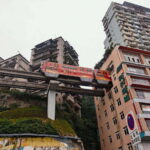
Next up is Liziba Light Rail Station—a station famous for the simple idea that the train threads through the urban fabric instead of running far away from it.
Here’s the key detail: trains shuttle between residential buildings every day. It’s not a staged attraction. It’s commuter life, but you get a rare vantage point to watch it happen with the buildings around the rails. The station feels like Chongqing is making a design argument: cities can stack, squeeze, and still function.
I also like that this stop symbolizes creativity without needing a long explanation. Even if you don’t understand every term on the first pass, the visual story is obvious: the city’s density is the show.
If you’re traveling with kids or teens, this is usually the kind of sight they don’t forget. It’s active. It’s moving. It’s not just standing in front of stonework.
Guanyue Temple and Fotuguan Park: Taoist Meaning in a Quiet Pocket
After the transit spectacle, the pace shifts. You head to Guandi Temple, located inside Fotuguan Park.
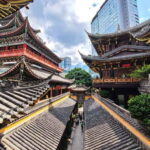
This is a Taoist shrine tied to important figures: it’s dedicated to Guan Yu and Yue Fei. The temple layout is described as solemn, with exquisite colored sculptures and ancient trees that help the space feel older than the surrounding streets.
Built during the Ming Dynasty, the site gives you a chance to slow down. And that matters on a walking tour. The earlier stops can be energetic—then suddenly you’re in a calmer sequence of paths and carved detail.
Two things to keep in mind:
- You may want to wear gear that works on softer ground around parks (comfortable shoes again).
- If weather is hot, this stop can be a welcome shaded break.
This portion of the tour is where you start to understand Chongqing not just as skyline and transit, but as a city with spiritual routines and long communal memory.
Huguang Guild Hall: A Yellow Facade Built Against the Mountain
Now the tour turns toward community and historical movement. You’ll visit Huguang Guild Hall, described as the largest extant ancient guild hall complex.
The first thing you notice is the color and shape: the exterior has bright yellow walls built against the mountain. That detail isn’t just aesthetic. It tells you how these buildings were designed to hold up in a rugged terrain where space and elevation are never “flat.”
Inside, the attention moves to the cultural machinery of the hall complex, including Yuwang Palace Theater and its intricate carvings. Then there’s a learning stop connected to the area’s story: the Immigration Museum, which focuses on the idea of “filling Sichuan.” In plain terms, it’s about how population movement and community building shaped the region.
Why this part is valuable: it adds context to everything else. When you later see old street patterns and neighborhood architecture, you’ll have a better sense of why people gathered where they did—and why guild halls mattered as social hubs, not just fancy buildings.

Longmenhao on the South Bank: Bayu Steps, European-Style Rooms, and Stone Legends
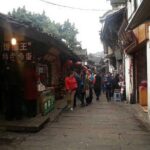
After the guild hall, you stroll along Longmenhao in Xiahaoli, on the south bank of the river. This is one of those areas where you don’t need a ticket to feel the history.
The tour highlights bluestsone steps connecting Bayu stilt houses with old European houses. That mix sounds like a marketing line, but walking the steps helps it become real. You’re literally moving through the architecture’s timeline.
You’ll also find art spaces and cafes here, so the street feels more like a lived-in creative corridor than a preserved theme park. If you like to take breaks without abandoning your walking rhythm, this is a good place for it.
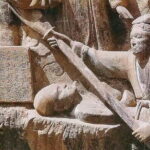
Don’t miss the Longmen Haoyue Stone Carving, tied to the legend of the Twelve Scenic Spots of Bayu. And under Dongshuimen Bridge, the contrast between old and new time gets poetic—another reminder that Chongqing’s “layers” aren’t abstract. They’re side-by-side.
Raffles Place and the Crystal Corridor: Futuristic Chongqing (With Real Views)
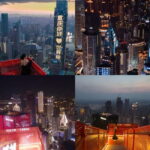
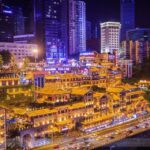
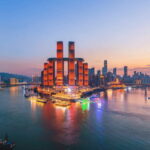
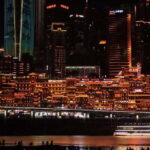
The ending point shifts you into modern spectacle. The tour finishes at Raffles Place, a major landmark with the Crystal Corridor, designed by the same designer behind Marina Bay Sands in Singapore. You’ll hear about its 250-meter height and the idea of the corridor as a dramatic “sailing” shape that blends shopping, hotels, and sightseeing.
If you time it right, the Discovery Pod Observation Deck is the headliner. The view is described as 270 degrees, covering the two rivers and four banks. Even if you’re not a night-sky person, this is the kind of skyline that makes your earlier river and hill views feel connected.
There’s also a note about the night light show being dazzling. And yes, it was once controversial. Now it’s treated as a new landmark on the Yuzhong Peninsula, symbolizing Chongqing’s forward push.
One logistics note: the tour information says you’ll be disbanded at Raffles afterward, while the general activity notes say you end back near the meeting point. In practice, I’d plan your evening around finishing in central Yuzhong and treat Jiefangbei as a nearby reference point, not a guarantee of an exact return path.
Lunch That Doesn’t Feel Like an Afterthought
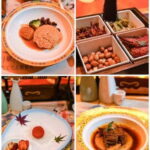
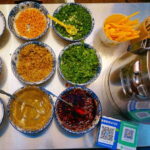
This tour includes one lunch with the meal standard depending on group size. The lunch arrangement in the experience is described as a strong local pick—especially hot pot.
This is worth calling out for value. In many tours, lunch is a filler. Here, it’s positioned as a real taste of the city’s food culture. And since your day is built around multiple neighborhoods, having lunch handled for you saves the common problem of arriving hungry and then hunting for something that fits your schedule.
If you have specific dietary needs, you’ll want to ask ahead, because the only definite promise is that lunch is included—not exactly how every ingredient will match your preferences.
Price and Logistics: Is $88 a Good Deal?
At $88 per person, this tour is priced like a guided “greatest hits” day that doesn’t leave you stuck solving transit puzzles.
Here’s where the value comes from, based on what’s included:
- Public transportation costs
- English tour guide service
- One lunch
- Huguang Guild Hall tickets
So you’re not just paying for a guide who talks. You’re paying for guided routing plus a ticketed stop plus food plus transit support. If you tried to copy this day on your own, you’d spend time figuring out the route flow and likely pay for at least one attraction ticket and lunch anyway. The guide’s real advantage is the structure: you get to important places in the right order and you get context without needing to research every stop.
The other side is that you should expect a lot of moving. The tour is walking-forward, and the pace can adjust based on weather and traffic. One review also points out that parts of the day may shift between walking and using bus or metro depending on conditions and energy. That flexibility is good, but it still means you shouldn’t book if you’re hoping for a mostly seated experience.
Who This Tour Suits Best
This tour fits best if you want:
- A guided sampler of Chongqing’s history-meets-modernity story
- Photo-friendly urban scenes like the skybridge and Liziba rail views
- A plan that includes a ticketed cultural stop and a local lunch
- An English-speaking guide who can answer questions and adjust the pace
It’s also a strong fit for families. The experience includes positive notes about children and adolescents learning and enjoying the route, which usually means the day has enough variety to keep different ages engaged.
If you’re a hardcore “go at my own speed” traveler, you might find the structured order a little tight. But if you like having someone handle the sequencing, this is a smart day-trip style choice.
Quick Booking Check: Should You Choose This One-Day Route?
If your first time in Chongqing and you want a day that actually connects the dots, I’d book it. The Kuixing Tower skybridge, Liziba Light Rail Station, and the ending at Raffles Place’s Discovery Pod give you a clean arc from river view to urban life to future-facing skyline.
I’d think twice if:
- You’re sensitive to long walking days
- You’re traveling with limited mobility
- You expect a purely historical tour with zero modern landmarks
If you fall in the middle—curious, comfortable on your feet, and open to both temples and towers—this is the kind of plan that keeps Chongqing from feeling like noise.
FAQ
Where does the tour start?
You meet at the People’s Monument of Jiefangbei, and the guide will bring the marker.
Does the tour include lunch?
Yes. The tour includes one lunch, and the meal standard depends on the number of people.
Is there an English guide?
Yes. The tour includes English tour guide service, and the experience also supports Chinese and English.
What entry tickets are included?
Huguang Guild Hall tickets are included. Entrance fees for attractions not mentioned are not included.
How much walking should I expect?
The tour requires walking, so comfortable shoes are recommended. The itinerary may also use public transportation depending on traffic and conditions.
What major sights are visited?
The route includes Jiefangbei, Kuixing Tower, Liziba Light Rail Station, Guanyue/Guandi Temple, Huguang Guild Hall, Longmenhao in Xiahaoli, and ends at Raffles Place.
What can I do after the tour ends at Raffles?
After the tour, you can freely choose activities such as taking a cruise or visiting the Raffles High-Altitude Discovery Pod and other options.
Is the tour good for families with kids or teens?
The experience includes positive feedback about children and adolescents enjoying the day and learning along the way.
Are alcohol and drugs allowed on the tour?
No. Alcohol and drugs are not allowed.