REVIEW · HANGZHOU
Hangzhou: Impression West Lake Show Enduring Memories of HZ
Book on GetYourGuide →Operated by Travel Sichuan Guide · Bookable on GetYourGuide
A night on West Lake can change your whole trip. This outdoor performance turns Hangzhou myths into movement and music. Nine acts unfold on a floating stage right over the water, with top-tier lighting and sound that make every minute feel like part of the city.
What I really like is the way the show blends Chinese legends with world-famous classics. You’ll see everything from tea-picking romance to swan-diving ballet energy, and it all lands in a neat 1-hour arc. One thing to consider: the whole experience is short, so if you’re hoping for a long evening event, plan something else after the curtain falls.
In This Review
- Key Highlights You’ll Feel Immediately
- First Impressions at the West Lake Show Entrance
- Price and Seating: Is $74 Worth It?
- How the Floating Stage Creates That West Lake Magic
- The Nine Acts You’ll See in About One Hour
- Act 1: Spring River in the Flower Moon Night
- Act 2: Dance of Picking Tea Leaves
- Act 3: The Liang Shanbo and Zhu Yingtai Love Story
- Act 4: High Mountains and Flowing Waters
- Act 5: Ballet Swan Lake
- Act 6: My Country and I
- Act 7: Moon Light
- Act 8: The Unforgettable Jasmine Flower
- Act 9: Ode to Joy
- Sound, Lights, and Weather Tips (Especially Nov–Apr)
- Who Should Go (and Who Might Not Love It)
- Practical Details That Help You Enjoy It More
- Should You Book the Impression West Lake Show?
- FAQ
- Where is the Impression West Lake Show held?
- How do I enter the show?
- How long is the show?
- Who directed the show?
- What are the main acts included?
- Is it cold at night, and what should I wear?
Key Highlights You’ll Feel Immediately
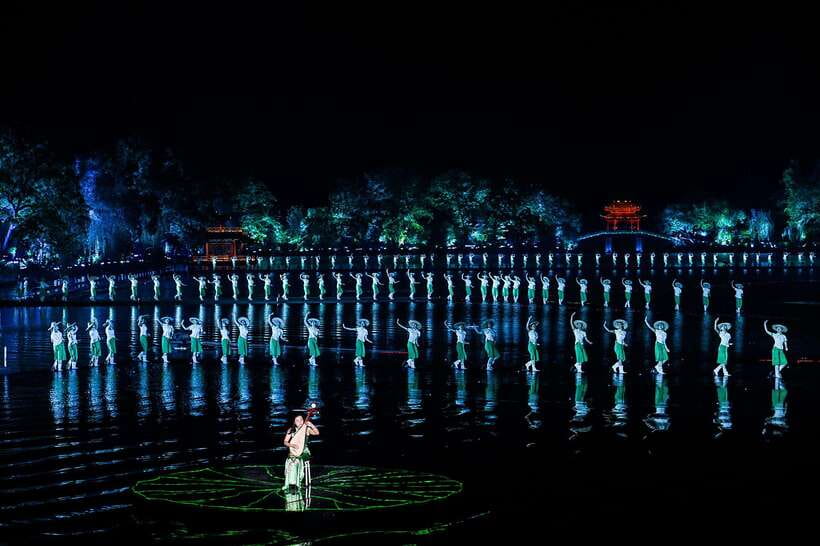
- A floating stage on West Lake with performers dancing in shallow water for a direct, close-to-the-water view
- Big-name creative direction by Zhang Yimou, known for the 2008 Beijing Olympics opening and closing ceremonies
- Nine themed acts blending Chinese musical masterpieces with major Western music moments
- State-of-the-art sound system plus lights and artificial mists that heighten the night atmosphere
- Seat design meant for good viewing through a concealable auditorium setup (so you’re not stuck with a bad angle)
First Impressions at the West Lake Show Entrance
The experience starts before the first note. The show is staged at No. 82, Beishan Road, Xihu District, Hangzhou City. When you arrive, you’ll enter with a QR code sent to you by text message or email, and you just show that code at the gate.
That’s the first win: you don’t waste time hunting for the right entry point. A separate step you should expect is an e-ticket exchange. One practical tip I learned is that you may need to exchange your e-ticket for a printed ticket at the counter before you go in. It’s quick, but it’s worth doing promptly so you’re seated without stress.
Once inside, you’ll see that the venue is designed to help you watch. The audience setup uses a concealable auditorium, which means you’re not automatically stuck with a far-off, blocked view. Even so, if you’re particular about your sightline, arriving a bit early is smart—because good seats don’t feel “first come, first served” in a relaxed way. They feel like a real event with a real flow.
You can also read our reviews of more tours and experiences in Hangzhou.


Price and Seating: Is $74 Worth It?
At about $74 per person, this show sits in the “worth it if you care about performance” category. It’s not just a casual sightseeing photo stop. You’re paying for craft: a stage built on water, pro-level sound, choreographed acts, and a lighting design meant for night viewing.
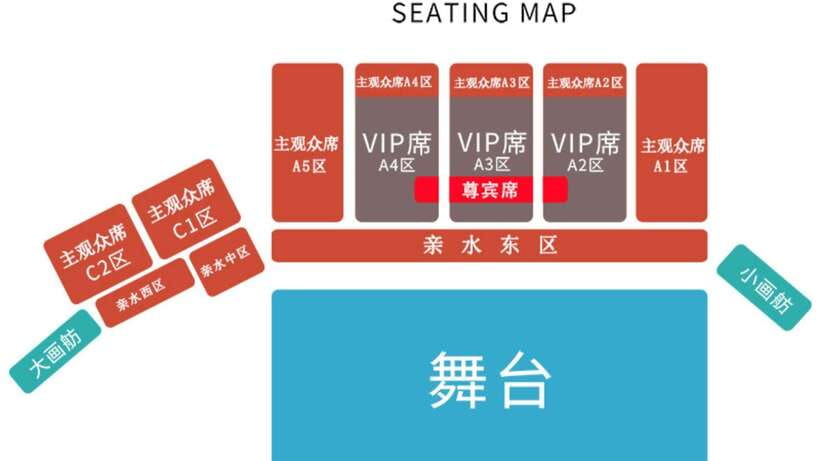
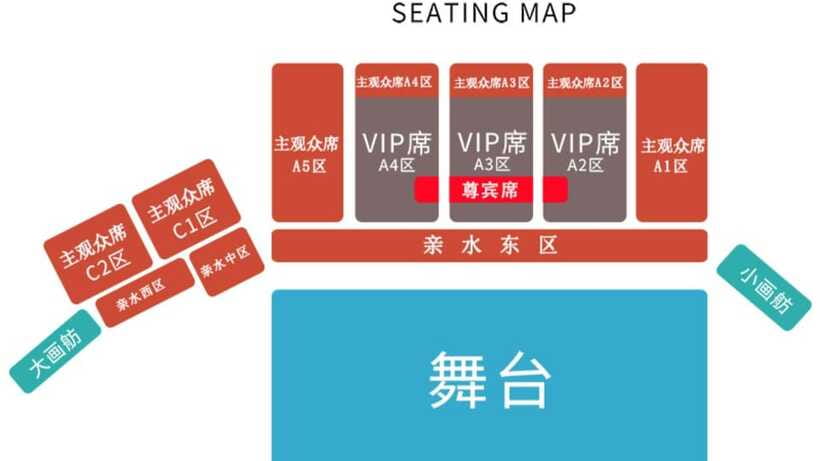
You can also choose ticket classes, including VIP seats and regular seats. The value question is simple: if you want the best angle for the stage effects and you’re traveling as a pair or family, spending a bit more can pay off in the “I could see everything” feeling. If you’re okay trading a perfect angle for great overall impact, regular seats can still do the job because the auditorium design aims to keep views strong.
One more thing about the value: the show is about one hour. That’s ideal for a Hangzhou evening because you can still roam the lake area afterward. But it also means you won’t “settle in” for a long production. You’ll be watching for the whole sprint.
How the Floating Stage Creates That West Lake Magic
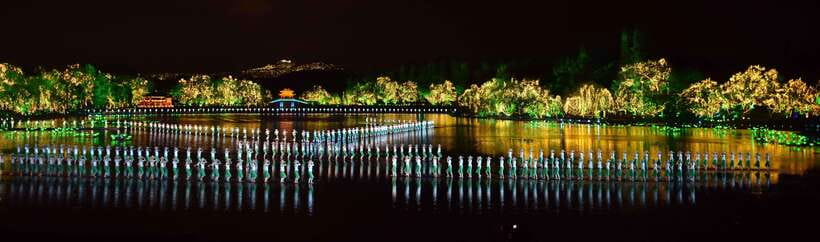
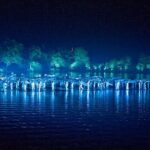
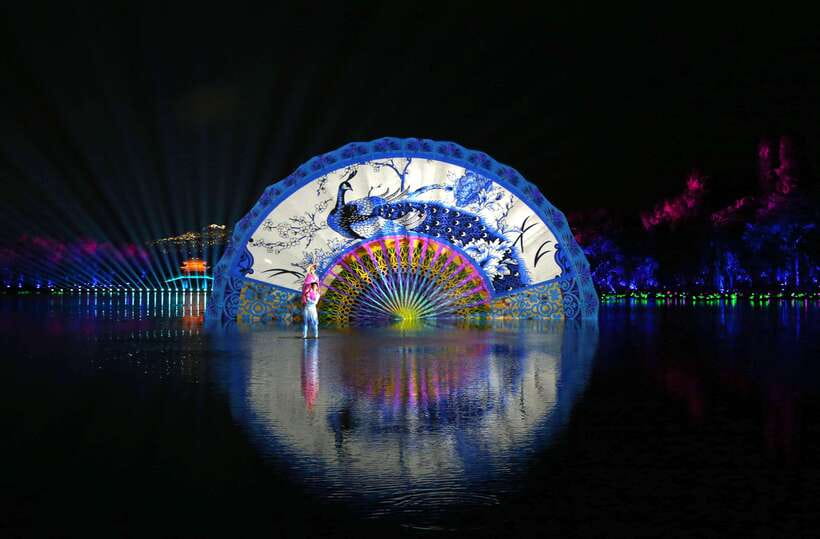
This is not a theater show dropped into a tourist schedule. The stage is ingeniously built to be part of West Lake itself. The performance is set on a floating platform, and dancers perform in shallow water during key moments.
That design matters because it changes how the visuals feel. When something moves on water, your brain reads it as natural, not artificial. Add the background music, lights, and artificial mists, and the show looks like it’s been processed through moonlight and legend—like the lake is the set, not just the backdrop.
And yes, the sound system is a big deal here. With outdoor performances, audio can make or break the experience. This one aims to avoid that problem, delivering a surprising musical enjoyment thanks to a modern sound setup tuned for the space.
The Nine Acts You’ll See in About One Hour
The show runs as a sequence of themed scenes. You’ll move through folklore, Chinese classics, romance tragedy, and big musical hits. Think of it as a cultural mixtape with serious production talent. Here’s what you’ll experience act by act.
Act 1: Spring River in the Flower Moon Night
This opener sets the tone. It uses Spring River in the Flower Moon Night, one of the Ten Chinese Traditional Musical Masterpieces. Expect it to feel lyrical and atmospheric, like the lake is waking up slowly. It’s the kind of beginning that helps you stop thinking about logistics and start reading the mood.





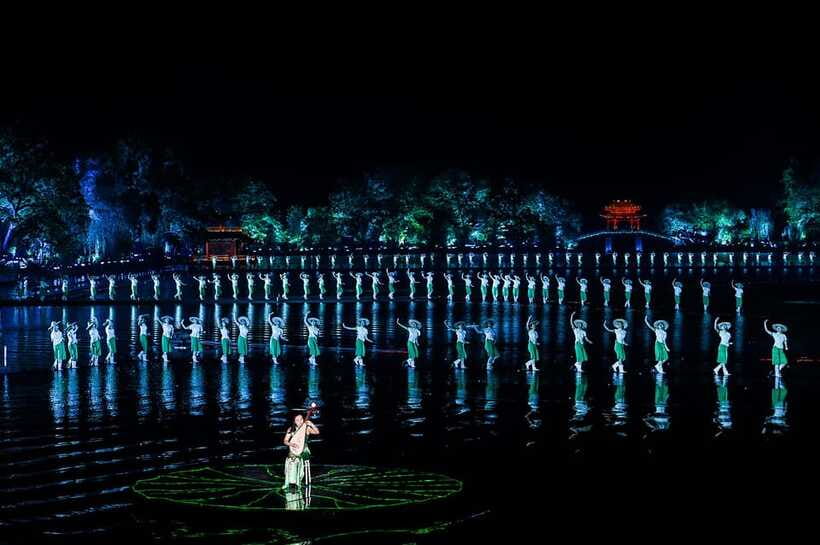
Act 2: Dance of Picking Tea Leaves
Then the pace shifts to grounded, human imagery. You’ll see the scene of tea-picking girls working in a green tea plantation, presented through dance. I like this act because it brings West Lake’s cultural identity into focus. Tea is everyday, but here it becomes choreography.
Act 3: The Liang Shanbo and Zhu Yingtai Love Story
This is the show’s romance-and-heartbreak segment, based on the Tale of Chinese Romeo and Juliet. Liang Shanbo and Zhu Yingtai are separated by family restrictions, love survives, and the story turns tragic. After death, they become butterflies and fly out of the tomb.
If you’re watching closely, you’ll notice how the dance communicates emotion without needing dialogue. It’s the kind of act that works even if you don’t know the story.
Act 4: High Mountains and Flowing Waters
Now you get a major classical music moment: one of the Ten classical Chinese string music masterpieces. The choreography is designed to feel like flowing water through mountains—natural motion turned into performance language. For me, this act is a strong mid-show reset. It feels scenic and focused, not just flashy.
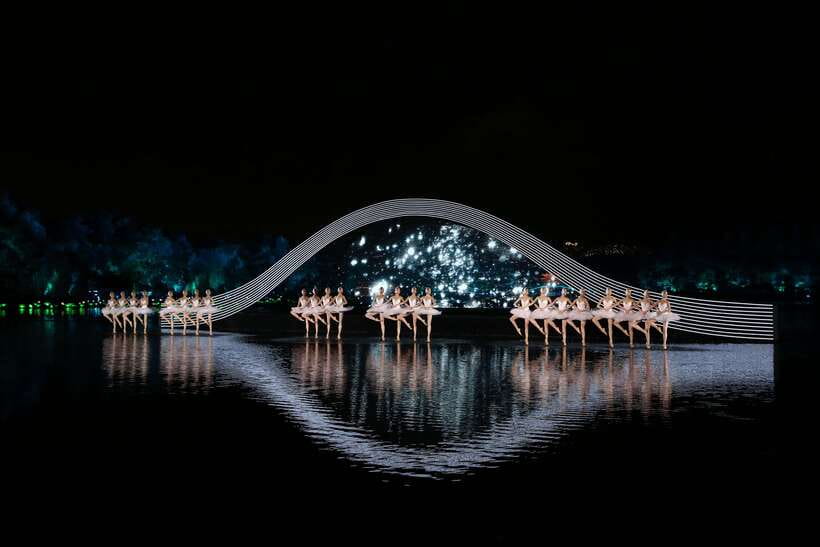
Act 5: Ballet Swan Lake
Yes, this is where the show reaches outward to the world. The production brings Swan Lake energy to West Lake, described as a move of the famous Russian ballet into this setting. Even if ballet isn’t always your thing, this act typically clicks because it’s so recognizable in movement style.
Act 6: My Country and I
Next comes a patriotic-themed act expressing Chinese people’s deep love for their motherland. It’s emotional and grand in tone. If you’re sensitive to heavy themes, you might find it more intense than the love story or the tea scenes—but it’s still one of the acts that shows the show’s ambition.
Act 7: Moon Light
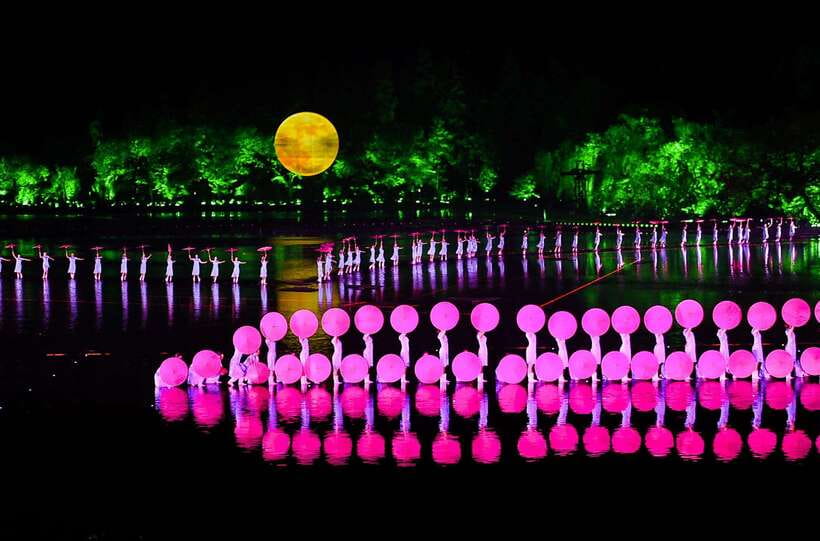
This one goes straight for the atmosphere. It leans into the West Lake night feeling, with moonlight mirroring on the water. You’ll likely notice the lighting choices most in this act. It’s also a “breathe for a second” moment because it’s calmer than the more plot-driven segments.
Act 8: The Unforgettable Jasmine Flower
This folk song is one of the most well-known Chinese folk songs. It’s a smart choice for an outdoor production because it’s familiar and emotional, even for people who don’t know every detail. It’s also a great “memory anchor” near the end, so the show stays with you after.
Act 9: Ode to Joy
The climax ties it together using Beethoven’s Ode to Joy. When this hits, you feel the production switch from storytelling into celebration. It’s the kind of finale that leaves you thinking, okay, that’s the point of this whole event: scale, emotion, and a shared big ending.
Sound, Lights, and Weather Tips (Especially Nov–Apr)
Outdoor shows live or die by weather. The good news: this one is built for night performance with lighting and sound designed to carry across the open-air space. Still, you should dress based on the season.
A helpful review tip I’d take seriously: if you travel from November to April, bring heavy clothes. Even if the show is only about one hour, you’ll be sitting and watching, and your body feels cold faster when you’re near open water. If you run warm, you might be fine. If you don’t, plan for cold.
Also, because the show uses artificial mists, you’ll feel that humid atmosphere in the air during certain segments. It’s part of the visual design, so don’t treat it like a surprise. Dress in layers so you’re comfortable no matter which moment you’re in.
Who Should Go (and Who Might Not Love It)
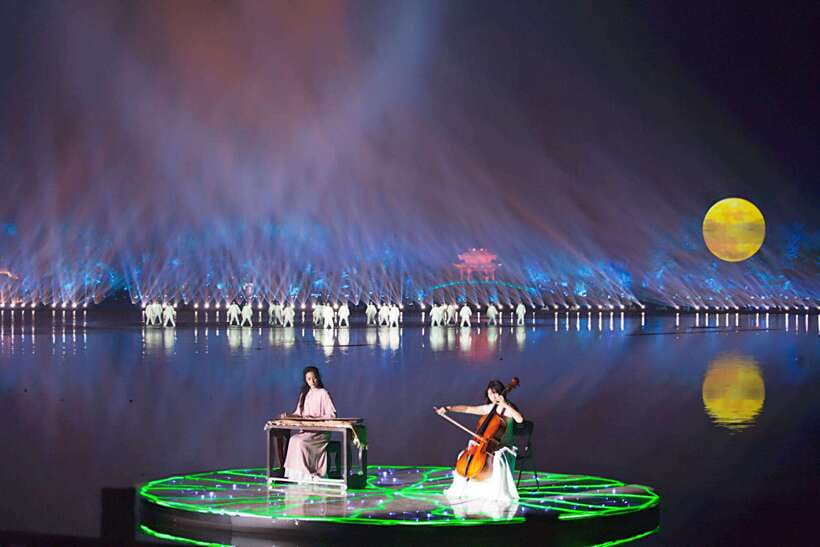
This show is a great match if you want a single evening that gives you more than photos. It’s perfect for travelers who like performance arts, want a West Lake experience beyond walking, and enjoy cultural storytelling through movement.
It’s also a strong pick if you’re traveling with someone who’s into music and spectacle. The show mixes Chinese traditional musical masterpieces, tea-picking dance scenes, and ballet-and-Western music moments. That variety gives you multiple entry points even if your tastes are different from your travel partner’s.
Who might think twice? If you’re expecting an all-night event or something that feels like a long, slow museum experience, this won’t fit. It’s short by design at about 1 hour, and one review note flagged it as a bit short. It’s not a flaw; it’s just a different expectation.
Practical Details That Help You Enjoy It More
Before you go, line up a few basics so you can focus on the show.
- Know the address: No. 82, Beishan Road, Xihu District, Hangzhou
- Use the QR code for entry: you’ll show it at the gate
- Plan for an e-ticket exchange: you may need to swap your e-ticket for a printed ticket at the counter
- Pick your seat category thoughtfully: VIP can be worth it if angle matters to you, while regular seats benefit from the auditorium’s viewing design
- Dress for cold and mist: especially November–April, bring heavy layers
One more “do this, not that” note: because the show is timed and runs in acts, don’t treat it like something you can casually drift into late. Give yourself enough cushion to get seated, then settle in. The show is designed so each act transitions in sequence, and arriving late can mean missing the emotional setup.
Should You Book the Impression West Lake Show?
If you’re in Hangzhou and you want one evening that feels like the city’s culture turned into live art, I’d book it. The combination of a floating water stage, Zhang Yimou’s direction, strong sound, and a lineup of acts that move from tea scenes to Beethoven gives you real value for your time.
I’d hesitate only if you hate cold outdoor waiting, or if you’re looking for a long performance night. Here, the payoff is in intensity over duration. For most people visiting Hangzhou, that’s exactly what you want.
FAQ
Where is the Impression West Lake Show held?
The show is at No. 82, Beishan Road, Xihu District, Hangzhou City (杭州市西湖区北山路82号).
How do I enter the show?
You’ll be sent a QR code by text message or email. Show the QR code at the gate to enter. You may also need to exchange an e-ticket for a printed ticket at a counter.
How long is the show?
The duration is about 1 hour.
Who directed the show?
The director is Zhang Yimou, who was also the director of the 2008 Beijing Olympics opening and closing ceremonies.
What are the main acts included?
The show includes: Spring River in the Flower Moon Night, Dance of Picking Tea Leaves, the Liang Shanbo and Zhu Yingtai love story, High Mountains and Flowing Waters, Ballet Swan Lake, My country and I, Moon Light, The Unforgettable Jasmine Flower, and Ode to Joy.
Is it cold at night, and what should I wear?
If you travel from November to April, plan for cold weather and wear heavy clothes. The show uses lights and artificial mists as part of the production.