REVIEW · BEIJING
Beijing Wangfujing Calligraphy Class by Forbidden City
Book on Viator →Operated by Hutong Calligraphy Class · Bookable on Viator
Ink, tea, and a new character in an hour. In Wangfujing’s downtown studio, an English-speaking calligraphy teacher helps you practice ink strokes on rice paper, plus you get a break in an air-conditioned room with tea. It’s only about one hour, so you’ll leave with a few finished pieces, not full mastery.
You’ll learn the basics behind the art: how strokes work, how brushes and ink behave, and how calligraphy uses paper, inkstones, and even seal carving. The point is not just copying shapes, but understanding the calm rhythm behind Chinese writing.
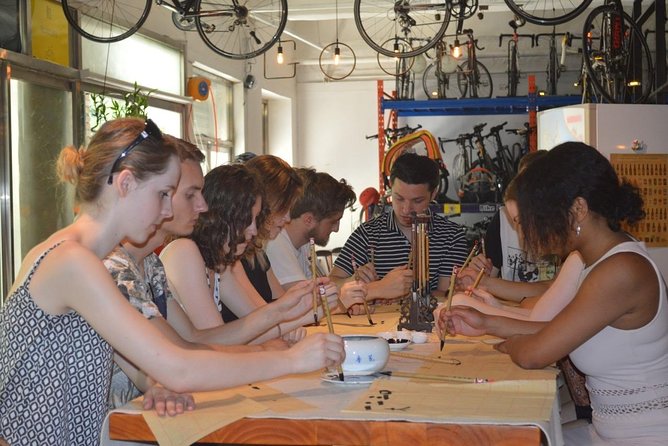
This is also a great fit if you’re traveling with kids or if you just want something more hands-on than a museum sprint. The class runs with a small group size (up to 15), and you can ask questions as you go.
In This Review
- Key highlights at a glance
- Beijing Wangfujing Calligraphy Class: what you’re actually paying for
- Where the class happens: Wangfujing address and the Hilton meeting point
- The Hutong Calligraphy session: how the hour is paced
- What you learn: strokes, tools, rice paper, and seal carving
- Teacher quality and small-group feel: getting feedback fast
- Picking the right class length: 30, 90, 1 hour, or 2 hours
- Comfort and atmosphere: why this feels easier than you expect
- Price and value: is $20 worth it?
- Practical notes: what to bring and what to expect
- Should you book the Beijing Wangfujing Calligraphy Class?
- FAQ
- What is the duration of the Beijing Wangfujing calligraphy class?
- How much does the calligraphy class cost?
- Where does the tour meet?
- Where is the calligraphy class located?
- Is an English-speaking teacher included?
- What materials are included for the class?
- Are class tickets mobile?
- How large is the class group?
- Is gratuity included in the price?
- Can I cancel for a full refund?
Key highlights at a glance
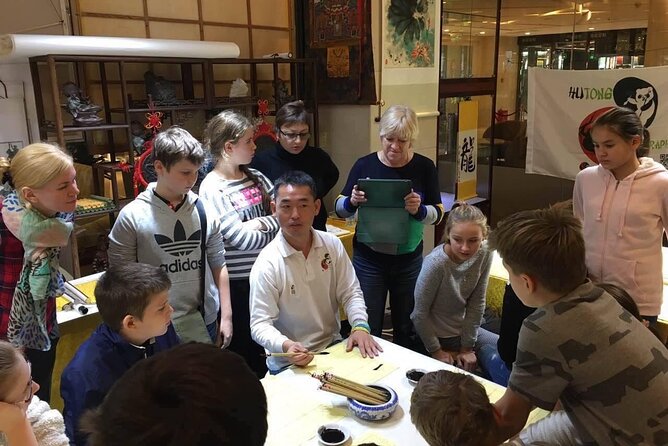
- Practice real calligraphy tools like brushes, rice paper, and inkstones, not just worksheets.
- Write a meaningful character, with many students focusing on happiness-related writing such as 福.
- English support throughout, so you can ask what you don’t understand as you practice.
- Small-group setting (max 15), which helps you get feedback without waiting in line.
- Multiple time options (you choose 30 minutes, 90 minutes, 1 hour, or 2 hours when booking).
- Hutong-style downtown location near Wangfujing, with a comfortable, indoor atmosphere.
Beijing Wangfujing Calligraphy Class: what you’re actually paying for
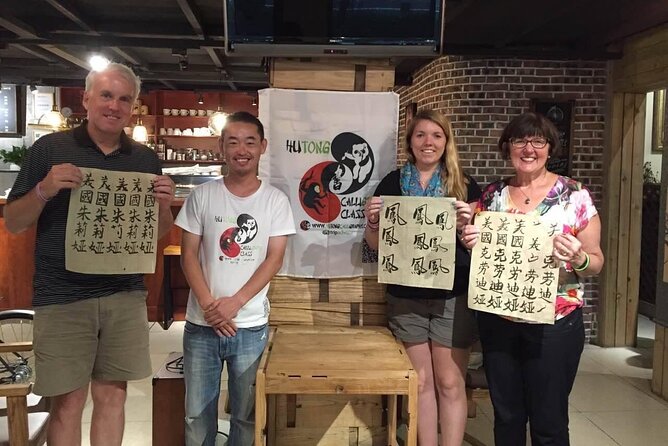
At $20 per person, this isn’t a pricey show. You’re paying for two things that usually cost real money in Beijing: guided instruction in Chinese calligraphy and the use of proper materials. That matters, because calligraphy isn’t just about knowing what to write—it’s about how the brush moves, how ink flows, and how paper absorbs.
What makes the experience feel valuable is the mix of structure and flexibility. You get a teacher who can explain the basics clearly in English, and you also have space to ask questions while your hand is learning. For many people, that’s the difference between watching a demo and actually walking away with a piece you can point to.
The pricing also fits a common Beijing travel problem: you might be squeezed between major sites like Tiananmen and the Forbidden City area. This class gives you a calmer, slower activity that still feels culturally real. If you want a creative souvenir, this is the kind of thing that doesn’t collect dust because you remember the moment you made it.
You can also read our reviews of more tours and experiences in Beijing.

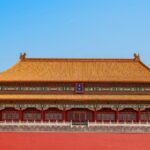
Where the class happens: Wangfujing address and the Hilton meeting point
The class meets back at Hilton Beijing Wangfujing (王府井东街8号, 邮政编码 100006). The tour start and end are both at that same meeting point, which is convenient if you don’t want to figure out multiple rendezvous points.
The calligraphy location is in the Wangfujing area and is listed as No. 8 Wangfujing Dongjie (Dong Cread…/Dong Cheng Qu). Practically, that means you’re not trekking across the city for a one-hour cultural break. It’s a good option when you want to stay near your hotel base and still do something distinctly Chinese.
One more small detail that makes logistics easier: the tour uses a mobile ticket system and you’ll receive confirmation at booking. So you don’t have to stress about printing something out in a hurry.
The Hutong Calligraphy session: how the hour is paced
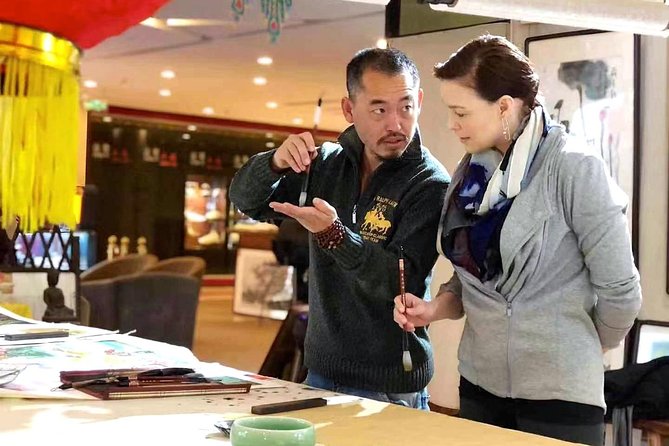
This experience is built around one main stop: the calligraphy class itself. During that time, you typically move through a few stages that teach you both technique and context.
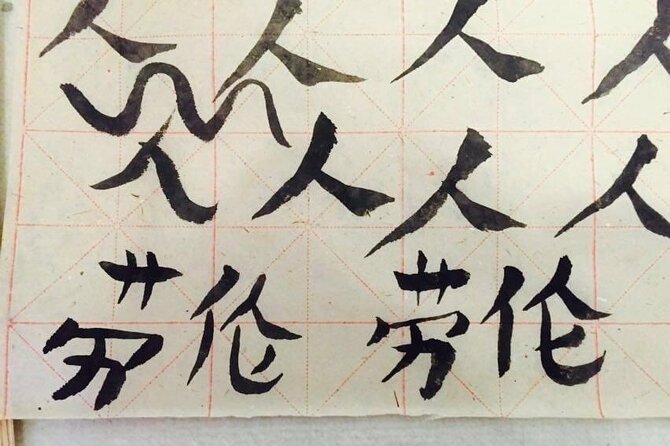
First, you’ll get introduced to the essentials: brushes, ink, rice paper, and inkstones. Even if you’ve never held a brush before, the lesson is designed to start from fundamentals so you can feel capable quickly.
Then comes the part that students usually enjoy most: practicing strokes in a controlled way. Calligraphy looks effortless when you watch someone else. When you try it, you realize it’s all about pressure, angle, and timing. The teacher’s job is to help you correct your hand while you’re still learning the basics, not after you’ve already formed bad habits.
You also get context for why calligraphy matters. The class frames it as an art form where writing becomes something tangible—energy in motion turning into marks on paper. That sounds poetic, but it actually helps you understand what you’re trying to do with each stroke.
Depending on the length you book, you may also have time for finishing steps. One participant described writing characters and then painting them onto a decorative board after improving. If you choose a longer session, you’re more likely to have time for that kind of finishing touch.
What you learn: strokes, tools, rice paper, and seal carving
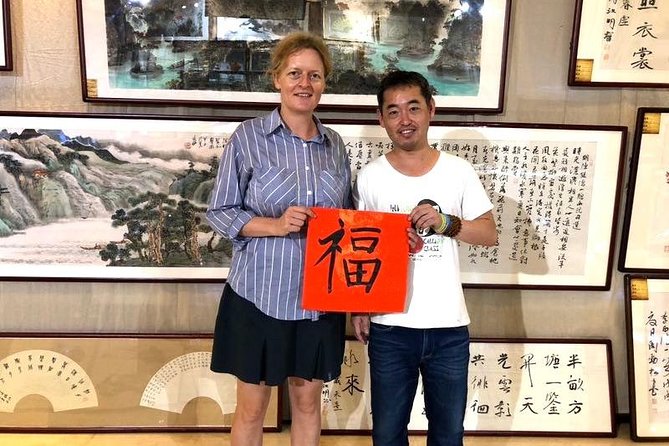
The class covers more than how to form letters. You learn the supporting pieces that make Chinese calligraphy work.
Here are the core elements you can expect:
- Brush technique: how to control the brush so strokes look intentional, not scratchy.
- Rice paper: how it receives ink so the same stroke can look different depending on pressure and speed.
- Inkstone and ink behavior: why ink isn’t just ink—it changes as you work with it.
- Rice paper and layout basics: how characters sit and flow on the page.
- Seal carving knowledge: understanding what seals are and how they relate to the meaning of a written work.
You’ll also have time to ask questions. That’s important because the technical side of calligraphy can be confusing if you only get a quick demonstration. Being able to stop and clarify helps you keep your practice aligned with the teacher’s instructions.
Teacher quality and small-group feel: getting feedback fast
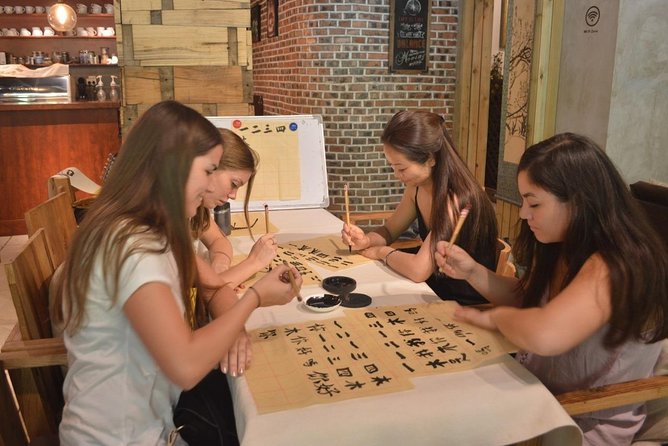
This class is capped at 15 travelers, which is a big deal for any hands-on workshop. In a larger class, the teacher often becomes a performer. Here, the format supports real guidance as you try.
The instruction is described as an excellent English calligraphy teacher, and at least one English-speaking teacher named Richard is mentioned in feedback. Whether it’s Richard or another instructor, the point you should care about is the same: you can understand the lesson as it’s happening, not after you return to your hotel.
In practice, good calligraphy teaching is mostly about micro-corrections. A good teacher notices when your wrist is doing something slightly off, or when your pressure changes halfway through a stroke. You want that kind of attention, and the small-group size is how this class makes it possible.



Picking the right class length: 30, 90, 1 hour, or 2 hours
You can choose the session length at booking: 30 minutes, 90 minutes, 1 hour, or 2 hours. The standard duration listed is about one hour, but the available options let you match your schedule and your patience for practice.
Here’s how I’d think about the decision:
- Choose 30 minutes if you want the basics and a quick souvenir moment with minimal time cost.
- Choose 1 hour if you want a balanced experience where you can learn the tool basics and still practice enough to feel it click.
- Choose 90 minutes if you’re traveling as a couple or bringing kids and want more guided repetition.
- Choose 2 hours if you want a more complete experience and more chance to refine your strokes.
The biggest trade-off is simple: the longer you go, the more practice time you get. With calligraphy, practice is the whole magic. If you’re the kind of traveler who likes doing something for real—even if it’s imperfect—lean toward the longer sessions.
Comfort and atmosphere: why this feels easier than you expect
One review-style detail worth your attention: the class can be in an indoor, air-conditioned setting and may include tea. That sounds small, but it changes the experience a lot. When you’re traveling in Beijing, you might be worn out by weather or walking. A comfortable room makes it easier to focus on the slow motions calligraphy demands.
It’s also the kind of activity that doesn’t require you to be athletic or fast. If you can sit, hold a brush, and follow steps, you can do this. Even if you’re traveling with kids, the workshop format tends to work because it’s not a long lecture.
Price and value: is $20 worth it?
For $20 per person, you’re paying for:
- Admission to the calligraphy class (included)
- Teacher instruction in English (included)
- Calligraphy supplies to use during the class (included)
- A session that can be as short as 30 minutes or as long as 2 hours depending on your choice
The biggest value point is that supplies are included. In many creative workshops, you either pay extra for materials or you get minimal tools and limited guidance. Here, the materials you need—like brushes and rice paper—are part of the experience.
The only extra cost mentioned is gratuities, which are recommended. So think of $20 as the base price for instruction plus materials, with optional tipping on top.
Also, the class is described as a cultural activity that works for both adults and kids. If you’re trying to keep one day from becoming only sightseeing, this kind of workshop can be a high-value slot in your itinerary.
Practical notes: what to bring and what to expect
This is a class, so show up with the right mindset: slow down. Calligraphy isn’t about speed. It’s about control and calm.
A few practical tips:
- Wear something comfortable enough to sit and move your wrist for a while.
- Come ready to ask questions. The format supports it.
- If you’re doing this with kids, treat it like a creative craft session with cultural context, not a test.
- Expect progress, not perfection. The duration is limited.
One more practical advantage: the experience says most travelers can participate. That’s helpful if you’re worried about whether you need special skills. The whole point is learning the basics, not demonstrating prior experience.
Should you book the Beijing Wangfujing Calligraphy Class?
Book it if you want a break from the typical Beijing routine and you like hands-on learning. This is one of those activities that turns cultural curiosity into muscle memory—your hand actually learns something new.
Skip or reconsider if you hate structured activities, or if your idea of travel is mostly about big outdoor sights and you only have time for a quick, passive stop. Also, if you only book the shortest option, you should mentally budget for a small set of finished results rather than deep mastery.
If you’re debating between one more museum ticket and one creative workshop, this is the kind of swap that often feels worth it—because you leave with something you made, plus the cultural context for why the art matters.
FAQ
What is the duration of the Beijing Wangfujing calligraphy class?
The class is listed as about 1 hour. When booking, you can also choose different time options such as 30 minutes, 90 minutes, 1 hour, or 2 hours.
How much does the calligraphy class cost?
It’s $20.00 per person.
Where does the tour meet?
The meeting point is Hilton Beijing Wangfujing at 王府井东街8号 邮政编码 100006.
Where is the calligraphy class located?
The class location is listed as in the Wangfujing area, with an address shown as No. 8 Wangfujing Dongjie.
Is an English-speaking teacher included?
Yes. The experience includes an excellent English calligraphy teacher.
What materials are included for the class?
The class includes the calligraphy supplies you use during the session, including items like brushes and materials such as rice paper and ink-related tools (as part of the class instruction).
Are class tickets mobile?
Yes, the experience uses a mobile ticket.
How large is the class group?
The maximum group size is 15 travelers.
Is gratuity included in the price?
No. Gratuities are recommended and are not included in the listed price.
Can I cancel for a full refund?
Free cancellation is available. You can cancel up to 24 hours in advance of the experience start time for a full refund.