REVIEW · HONG KONG SAR
Small-Group Gong Relaxation Experience in Hong Kong
Book on Viator →Operated by Red Doors Studio Ltd · Bookable on Viator
Your nervous system gets an instant reset. This small-group gong relaxation session in Hong Kong pairs breathing and gentle movement with a long, sound-based meditation. The vibe is quiet, guided, and designed for real downtime, not a quick demo.
I especially like the small group size (maximum 12). That keeps the room more personal and helps you feel comfortable, even if you’re new to meditation. Another big plus is the hands-on setup: floor mats, supportive equipment, plus spiced tea and snacks to close the session.
The one drawback to consider is that this is mostly a seated/lying-down experience. If you want active sightseeing or constant motion, you might find it too calm and slow.
In This Review
- Key highlights worth knowing
- A One-Hour Reset at Red Doors Studio in Wong Chuk Hang
- How the Session Actually Flows: Tuning, Breathing, Stretching
- The 45-Minute Gong Meditation: Why Sound Works (and Why You’ll Feel It)
- What’s Included (So You Don’t Have to Think): Mats, Support, Tea, Snacks
- Meeting Point, Start Time, and How to Arrive Calm
- Price and Value: Is $115 Fair for What You Get?
- Who This Is Best For (and Who Might Want Something Else)
- Weather, Service Animals, and Practical Notes You Should Know
- Should You Book This Hong Kong Gong Relaxation Session?
- FAQ
- How long is the gong relaxation experience?
- What happens during the session?
- Do I need meditation experience to join?
- How big is the group?
- What is included in the price?
- Where is the meeting point?
- What time does the experience start?
- Do I need a paper ticket?
- What if the experience is canceled due to weather?
Key highlights worth knowing
- Small group (max 12): more room to settle and a calmer feel.
- 45 minutes of deep meditation: a real chunk of guided gong sound, not just a short gong segment.
- A full warm-up sequence: tuning, breathing meditation, and gentle stretches first.
- All-in comfort included: floor mats and supportive equipment so you’re not figuring out how to sit.
- Tea and snacks after: a homemade-style spiced tea transition to help you come back slowly.
A One-Hour Reset at Red Doors Studio in Wong Chuk Hang
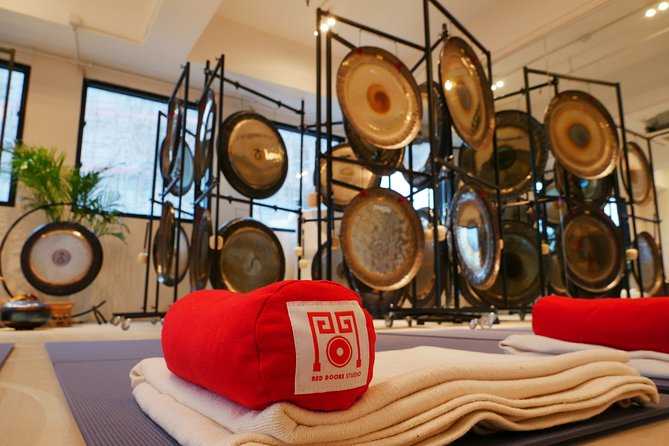
This experience is built like a short retreat, held in a studio setting rather than a moving tour. You start at Red Doors Studio, Flat A on the 21st floor of Lee Fund Centre, at 31 Wong Chuk Hang Rd in Wong Chuk Hang. The meeting point is described as near public transportation, which matters in Hong Kong because travel time can balloon if you’re careless with timing.
The session itself runs about one hour. That may sound short, but the plan is structured so you don’t jump straight into silence. You’ll ease in with guidance, your body gets a gentle wake-up via stretches, and only then do you settle into the longer meditation segment. It’s a nice fit for evenings when you’re tired, jet-lagged, or just done with being “on.”
I like the way the tour positions itself as a break from the grind. You’re not expected to be spiritual or fluent in meditation language. The description says it’s suitable for all ages and that no prior experience is necessary. In practice, that usually means you’ll be supported with simple instructions and physical setup so you can follow along without guessing.
One more detail I appreciate: it’s a mobile-ticket experience. That usually translates to less hassle on the day, and you won’t be stuck hunting for paper tickets when you’re already worn out.
You can also read our reviews of more tours and experiences in Hong Kong SAR.


How the Session Actually Flows: Tuning, Breathing, Stretching
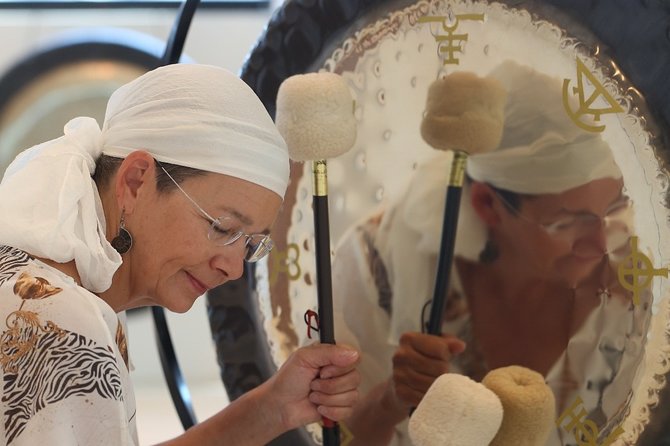
The session starts with tuning. This is not the kind of “start the show” moment where the gong goes off immediately and everyone is supposed to cope. Tuning sets the tone: you’re guided into the state of listening before the deep gong part begins. That matters because gong sound can feel physical. If you’re thrown into it without a ramp-up, it can be harder to relax.
Next comes a short breathing meditation. This is a practical step, not a performance. Your attention shifts away from mental chatter and toward the rhythm of breath. In a city like Hong Kong—busy streets, noise, schedules—this is one of the fastest ways to interrupt the pattern of constant scanning. Even if you don’t think you’re a meditation person, you can usually follow breathing guidance.
Then you do gentle stretches. This is a real comfort feature. Floor-based sessions can leave your hips and back feeling stiff if you arrive tense. The stretches are meant to prep you to lie down or sit more comfortably during the main gong meditation. You’re not doing anything athletic here. It’s about easing tightness so you don’t spend the “relaxation” part fighting discomfort.
All of this is led by an experienced meditation gong practitioner. In at least one of the five 5-star reviews tied to this experience, the practitioner name mentioned is Martha, praised for being generous in sharing knowledge. I take that as a good sign that you won’t feel like you’re being left in the dark. You’ll understand what’s happening and why you’re doing it, even if you’re brand-new.
The 45-Minute Gong Meditation: Why Sound Works (and Why You’ll Feel It)
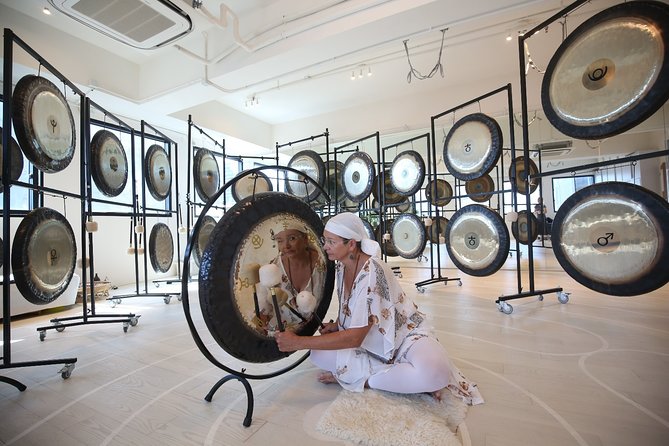
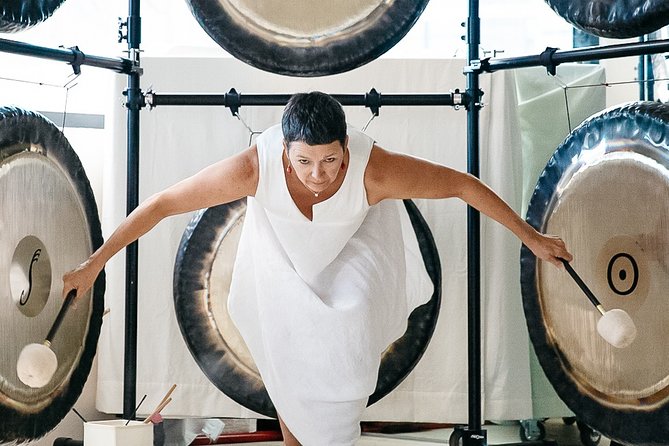
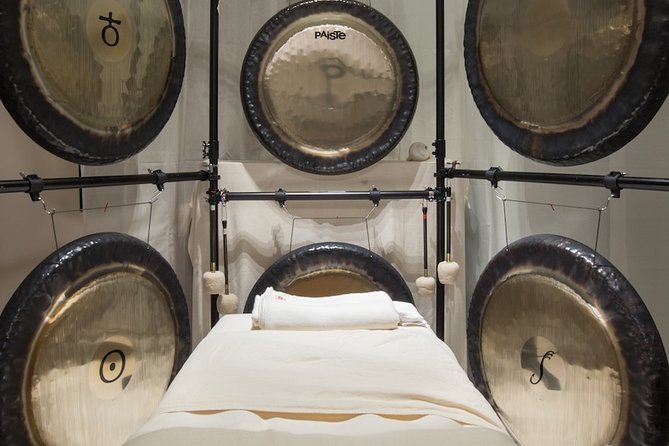
The centerpiece is about 45 minutes of deep relaxation using the sound of Asia’s largest meditation gong collection. That “largest collection” claim is a standout line in the description, but what matters for you is the effect of having multiple gong sounds in a controlled, guided sequence. Gong meditation isn’t just hearing. It’s listening with your whole body, because low-frequency sound can feel like a vibration.
You’re led into a deep meditation session after the warm-up. The goal, as the description puts it, is to calm the monkey mind (that bouncing mental noise), erase tension, and leave you feeling relaxed and renewed at multiple levels. That language is common in meditation circles, but you can translate it into something more straightforward: you’re aiming to leave with less stress carried in your body and fewer racing thoughts.
For me, the biggest practical reason this works is pacing. A 45-minute segment is long enough to settle. If it were only 10 minutes, your mind might still be adjusting. Here, you get time for the initial distraction phase to pass, and then you can actually soften into the sound.
The small-group format also helps. When max 12 people share a quiet space, it usually stays more controlled. You’re less likely to have random conversation or awkward movement from strangers. If you’re sensitive to noise, that’s a real consideration.
One more note: you finish with a transition using homemade yogi spiced tea. That’s small on paper, but it’s smart. When relaxation sessions end abruptly, people often snap back too fast—heart still racing, body still floating, brain still confused. A warm drink gives you a gentle landing, and it reinforces the “this is rest” theme rather than “session over, now rush out.”
What’s Included (So You Don’t Have to Think): Mats, Support, Tea, Snacks
You don’t need to bring meditation gear. The session includes floor mats and supportive equipment. That’s a big deal for value because it reduces “invisible costs.” You don’t have to show up wondering if you need a cushion, a blanket, or some posture support. The description explicitly says these items are provided.
Supportive equipment matters because gong meditation is physical comfort. If your hips, knees, ankles, or lower back are unhappy, your mind can’t fully relax. When setup is handled for you, you can focus on listening instead of problem-solving your body position.
You also get spiced tea and snacks. That’s not just a perk. It’s part of the whole experience arc. You’re taught how to slow down, then you’re offered something warm and soothing afterward. A spiced tea transition helps your body shift from “in the session” mode to “I’m back, but gently.”
One practical angle: tea and snacks mean you can fit this into your evening without a frantic dinner scramble afterward. It’s still wise to eat earlier if you’re very hungry, but the inclusion reduces stress. And if you’re sensitive to empty-stomach distraction, having snacks on-site can help you focus through the session.
Meeting Point, Start Time, and How to Arrive Calm
It starts at 7:00 pm and ends back at the meeting point. That “back where you started” structure is helpful. There’s no hopping between locations, no added transport time, and no chance of your calm evening turning into a logistics puzzle.
The address is specific, so you’ll want to plug it in: Red Doors Studio, Flat A, 21st Floor, Lee Fund Centre, 31 Wong Chuk Hang Rd, Wong Chuk Hang, Hong Kong. It’s on the 21st floor, so I’d plan to arrive a little early and give yourself time to locate the right elevator and level without rushing.
Because it’s near public transportation, you have an option to come by transit rather than relying on rideshare. In Hong Kong, that often saves time and avoids traffic unpredictability. Still, the key is buffer time. If you’re already stressed, the whole session can feel harder to enter.
Dress-wise, the description doesn’t specify, but this type of floor-based meditation is usually best with comfortable clothes you can move into easily. You’ll do gentle stretching, then lie down or sit on a mat for sound. Bring layers if you tend to get chilly.



Price and Value: Is $115 Fair for What You Get?
At $115, this isn’t the cheapest activity in Hong Kong. So I look at value in terms of what’s actually included and how long you spend in a guided state.
You get:
- about one hour total time,
- an experienced practitioner-led flow (tuning, breathing, gentle stretches),
- a 45-minute deep gong meditation,
- provided floor mats and supportive equipment,
- spiced tea plus snacks,
- and a small group size capped at 12.
For $115, you’re paying for trained instruction and a longer guided sound segment in a controlled studio environment. You’re also paying for “setup,” which is real. Many relaxation experiences offer the concept but don’t provide the comfort tools. Here, you don’t have to bring your own mat or posture support.
Is it overpriced? It depends on your goals. If you’re chasing views, markets, or famous landmarks, this won’t fill that role. If you’re trying to decompress, it can be good value because it’s not just a 10-minute stop. It’s structured rest with a guided finish.
Also consider timing. When your schedule is packed, a calming session can protect your energy. Sometimes the value is less about the money and more about what it saves you later—less crankiness, better sleep, and a calmer head for the next day.
Who This Is Best For (and Who Might Want Something Else)
This is a good fit if you:
- want a low-effort evening activity,
- are new to meditation but open to guided instructions,
- prefer calm, indoor experiences in Hong Kong,
- need stress relief between busy sightseeing days,
- or simply want a break with comfort setup and included refreshments.
It’s described as suitable for all ages, and the session is said to work well with no experience required. If you’ve tried meditation apps and found them too self-directed, the practitioner-led format here is usually easier.
Who might not love it? If you want energetic movement, big cultural programming, or a tour guide pointing out sights and history, this is not that. The focus is relaxation through sound, not entertainment. The gentle stretches are part of preparation, not a workout.
And if you’re the type who gets impatient with quiet, you may find yourself watching the clock early on. The pacing is intentional, but it still requires a willingness to slow down.
Weather, Service Animals, and Practical Notes You Should Know
One practical point: the experience requires good weather. If it’s canceled due to poor weather, you’ll be offered a different date or a full refund. Since it’s a studio-based activity, you might wonder why weather matters, but it’s still listed as a condition. I’d check close to the day if you’re booking with tight plans.
Service animals are allowed. That’s helpful for travelers who need them.
Confirmation is received at the time of booking. So you should have a clear record quickly, rather than wondering whether the spot is secured.
Should You Book This Hong Kong Gong Relaxation Session?
Book it if you want a structured, soothing break with real time for sound meditation. The biggest selling points are the experienced practitioner, the warm-up that helps you settle (tuning, breathing, gentle stretching), and the 45-minute deep gong segment. Add in included comfort items—floor mats, supportive equipment—and you get an experience that feels thoughtfully put together, not like a generic “sit and listen” event.
Skip it if you’re looking for an action-packed evening or you don’t do well with mostly quiet, floor-based relaxation. Also, if you hate delays caused by weather rules, keep a backup plan for your schedule.
If you’re deciding between another night of crowds and one calm hour, this is the kind of reset that can make the rest of your trip feel easier.
FAQ
How long is the gong relaxation experience?
It lasts about 1 hour.
What happens during the session?
You’ll start with tuning, then a short breathing meditation and gentle stretches. After that, you’ll have about 45 minutes of deep meditation led by the sound of the meditation gong collection, and the session ends with a transition using homemade yogi spiced tea.
Do I need meditation experience to join?
No. The experience is designed for all ages and says no experience is necessary.
How big is the group?
The group size is limited to a maximum of 12 travelers.
What is included in the price?
You can expect floor mats, supportive equipment, spiced tea and snacks during the session.
Where is the meeting point?
The start location is Red Doors Studio, Flat A, 21st Floor, Lee Fund Centre, 31 Wong Chuk Hang Rd, Wong Chuk Hang, Hong Kong. The activity ends back at the meeting point.
What time does the experience start?
The start time is 7:00 pm.
Do I need a paper ticket?
No, the tour uses a mobile ticket.
What if the experience is canceled due to weather?
It requires good weather. If canceled due to poor weather, you’ll be offered a different date or a full refund.