REVIEW · HONG KONG SAR
Private Half-Day Walking Tour of the New Territories Region in Hong Kong
Book on Viator →Operated by Big Foot Tour · Bookable on Viator
A quiet pagoda walk beats the usual Hong Kong loop. This private half-day stroll through the Ping Shan Heritage Trail in the Yuen Long area lets you see Tsui Shing Lau and a string of temples, ancestral halls, and village lanes without feeling rushed. I liked how focused it is: you’re walking the real places people built and used, not just passing by viewpoints.
Two things really sold me. First, the private guide brought the sites to life with English commentary and local insights. Second, the route links several meaningful stops—Yeung Hau Temple, Hau Wong Tang Hall, Kun Ting Study Hall, Hung Shing Temple, plus Sheung Cheung Wai, a 200-year-old walled village. One watch-out: there’s about 5 km of walking and some steep slopes, so comfortable shoes matter.
If you want Hong Kong culture with actual neighborhood texture, this is a strong choice. If you’re expecting an easy, flat stroll or mostly indoor stops, you might find the walking pace and stairs a bit much.
In This Review
- Key highlights worth your attention
- Why I Chose a New Territories Walking Tour From Tin Shui Wai
- Start Time, Pickup Options, and How the Route Fits Your Day
- Ping Shan Heritage Trail: Pagodas, Temples, and Village Lanes
- Tsui Sing Lau Pagoda: Why This Stop Opens the Tour
- Sheung Cheung Wai: Passing Through a 200-Year-Old Walled Village
- Yeung Hau Temple and the Temples-and-Halls Chain
- How the Licensed English-Speaking Guide Changes Everything
- Price and Value: When $213.20 Makes Sense
- Walking Comfort: Shoes, Slopes, and Weather Reality
- Who Should Book This New Territories Heritage Walk
- Should You Book This Tour?
- FAQ
- Where do I start and where does the tour end?
- What time does the tour begin?
- How long is the walking tour?
- Is this a private tour, and can I choose my group size?
- What’s included in the tour price?
- Are food and drinks included?
- Do I need to buy tickets for the stops?
- Is hotel pickup available?
- What if the weather is bad?
Key highlights worth your attention
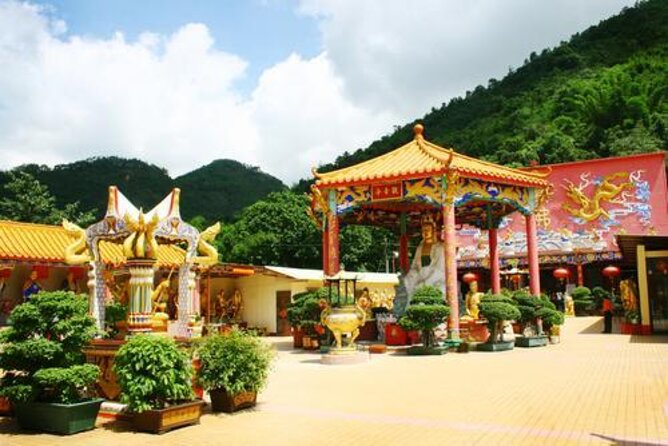
- Tsui Shing Lau Pagoda: One of Hong Kong’s oldest pagoda stops the tour centers first
- Three-village walking loop: Hang Tau Tsuen and Hang Mei Tsuen connect the trail to lived-in heritage
- Sheung Cheung Wai walled village: You pass through a 200-year-old walled village and learn what daily life looks like
- Temple-and-hall variety: Yeung Hau Temple, Hau Wong Tang Ancestral Hall, Kun Ting Study Hall, Hung Shing Temple
- No ticket hassle: The included heritage sites are listed as free admission for this tour
Why I Chose a New Territories Walking Tour From Tin Shui Wai
This tour is built around the New Territories side of Hong Kong—specifically the Yuen Long district—where you get a different rhythm than the standard skyline-and-ferry day. You start at Tin Shui Wai MTR Station, which makes it easier to reach than tours that hide in far-out corners.
What I liked most is the geography of the experience. The Ping Shan Heritage Trail is not just a name; it’s a walking thread that connects villages and heritage buildings in a logical order. Instead of piling into one “big” attraction and calling it a day, you get a sequence: pagoda first, then temples and halls, then the walled village area.
Also, the tour’s private format helps here. You’re not trying to hear over a crowd at every stop. Your guide can pace the group and explain what you’re actually seeing—especially at sites like ancestral halls and study halls where details can matter.
You can also read our reviews of more tours and experiences in Hong Kong SAR.


Start Time, Pickup Options, and How the Route Fits Your Day

The tour runs about 4 hours and starts at 10:00 am. The end point is Yuen Long Railway Station. That means you’re planning a morning block and then finishing near a major transit hub, which helps with the next meal or your next stop.
There’s a pickup option if you prefer not to navigate to the meeting area. If you’re traveling with someone who doesn’t want to arrive early, this can be a big convenience. If you do take public transit, you’ll start at Tin Shui Wai MTR Station and you’ll be close to public transportation during the walking route.
One practical detail I appreciated: it’s a private tour, and you can choose your private group size. That matters because the experience is intimate by design. If you’re a couple, a family, or a small group, you’re not sharing your guide’s attention with strangers.
Ping Shan Heritage Trail: Pagodas, Temples, and Village Lanes
The core of the tour is walking the Ping Shan Heritage Trail with your English-speaking licensed guide. The itinerary begins with the Hong Kong–listed oldest pagoda stop: Tsui Shing Lau. From there, the walking route meanders through village areas such as Hang Tau Tsuen and Hang Mei Tsuen, with multiple heritage buildings along the way.
You’re looking at a mix of religious and community structures: temples, ancestral halls, and a study hall. Even if you don’t read Chinese signage fluently, the guide’s commentary gives you the “why” behind the buildings. Names like Yeung Hau Temple, Hung Shing Temple, and Kun Ting Study Hall are like signposts; your guide helps connect them to the daily life and traditions that kept these places relevant.
This is also where the trail format feels smart. Short time slots at individual stops keep the walk moving, but they still give you time to look up, check details, and ask questions. The route is listed with moderate walking overall (around 5 km) and some steep slopes, so plan on a steady pace rather than long stops for photos at every corner.
Tsui Sing Lau Pagoda: Why This Stop Opens the Tour
The itinerary lists a specific pagoda visit for Tsui Sing Lau Pagoda as part of the heritage trail, with time set aside (about 10 minutes). The tour positioning here is important: starting with the pagoda gives you a sense of the area’s spiritual and community roots early.
Pagodas can feel similar until someone points out what makes a particular one meaningful in its local context. In this case, Tsui Shing Lau is explicitly framed as one of Hong Kong’s oldest pagoda sites, which helps you understand why it anchors the tour.
My suggestion: treat the pagoda stop as your “orientation” moment. Before you head into temples and halls, let the guide explain what you’re seeing, then use that knowledge to spot patterns in later buildings. It makes the rest of the route easier to follow.
Sheung Cheung Wai: Passing Through a 200-Year-Old Walled Village
Then you move into one of the most compelling parts of the route: Sheung Cheung Wai, a 200-year-old walled village. The tour time allocation for this segment is short (around 10 minutes), but it’s exactly the kind of stop that changes how you see the neighborhood.
A walled village isn’t just a scenic backdrop. It’s a physical reminder that communities organized themselves for protection and continuity. The tour’s setup also includes guide commentary about local life as you pass village areas like Sheung Cheung Wai. That’s the difference between seeing old walls and understanding why people built and lived within them.
Because the tour is walking-based, you don’t just look at the village from a distance. You pass through the area at pedestrian speed. That helps you notice the way the village layout shapes movement and daily activity.





Yeung Hau Temple and the Temples-and-Halls Chain
After the pagoda, the tour moves into a sequence of heritage religious and community spaces. Here’s what you can expect, based on the itinerary structure:
- Yeung Hau Temple (about 20 minutes): A focused stop where your guide explains what you’re seeing in context.
- Yu Kiu Ancestral Hall (about 10 minutes): A shorter visit, useful for quick understanding of family and lineage-related heritage.
- Tang Ancestral Hall (about 20 minutes): Another ancestral hall stop with time for observation.
- Kun Ting Study Hall (about 20 minutes): Named for learning, this is one of the stops that shifts the mood from worship to education and community function.
- Ching Shu Hin (about 20 minutes): Another heritage hall stop along the trail’s flow.
- Hung Shing Temple (about 20 minutes): The tour ends this major chain of sites with a temple visit.
I like this mix because it doesn’t force a single-genre day. You get a lot more texture than just one temple. And you get a clearer sense of how communities in the New Territories organized their spiritual life, family identity, and learning traditions in the same walkable area.
A couple additional points that appear in the tour description: you may see the Shrine of the Earth God along Tsui Sing Road, and there’s mention of a historic police station in the area. Those are the kinds of “bonus context” details your guide can help you place.
How the Licensed English-Speaking Guide Changes Everything
This tour is priced for a reason: you’re not doing a self-guided walk through a heritage trail with a phone map. You’re with an English-speaking licensed tour guide providing expert commentary and local insights.
The tour’s standout strength is how the guide helps you connect the dots. From the feedback I’ve seen from prior participants, the guide is both extremely kind and very well-informed—and that combination matters. You’re walking through older community spaces where it’s easy to feel like you’re just taking photos unless someone explains what you’re looking at. A good guide turns stone and signage into something you can actually understand.
Also, since this is private, your questions don’t get swallowed. You can ask why a building is positioned a certain way, what a hall functionally signaled, or how the village setting affects life today. It’s a small thing, but it can make a huge difference in how satisfying a half-day becomes.
Price and Value: When $213.20 Makes Sense
At $213.20 per person, this isn’t a budget “walk and snap pics” tour. The value comes from three places that are clearly part of the experience setup:
- Private guide time for a full 4-hour block
- Stops with free admission (the itinerary lists admission ticket free at key points)
- A curated walking route through multiple heritage sites instead of one attraction
If you’re traveling solo, you’re paying more for the privacy. If you’re traveling as a couple or small group, the private format becomes easier to justify because you’re spreading the guide time across your group.
Two other money notes you should plan for: food and drinks are not included. The tour also suggests budgeting around $20 USD or $150 HKD for personal expenses during the duration. That’s a realistic line item for water, snacks, and small on-the-go purchases, especially when you’re walking.
My practical take: this price feels most fair when you care about understanding what you’re seeing—pagodas, temple spaces, ancestral halls, and village life—rather than just ticking off landmarks.
Walking Comfort: Shoes, Slopes, and Weather Reality
The tour lists a moderate walking load of about 5 km, with some steep slopes. That’s not meant to scare you away, but it is meant to keep you from showing up in soft-soled shoes and regretting it halfway through.
If you want an easy day, treat this as a “comfortable hike pace,” not a casual stroll. Plan on short photo stops and a steady rhythm with the guide. Since some sites are on uneven ground and the route includes slopes, your feet will thank you for sturdy shoes.
Also, the experience requires good weather. If it’s canceled due to poor conditions, you’ll be offered a different date or a full refund. For Hong Kong, this matters—so keep one flexible morning available in your schedule.
Who Should Book This New Territories Heritage Walk
This tour is a great fit if you want:
- A private, guided walk focused on heritage sites in the New Territories
- A route that mixes pagoda, temples, ancestral halls, and a walled village
- Something calmer and more neighborhood-based than the usual Hong Kong day trips
It may be a weaker fit if:
- You need a fully flat, low-walking itinerary
- You’re only looking for major landmarks without interest in village-scale history and community spaces
- Your group has limited ability to handle slopes and about 5 km of walking
Most travelers can participate, but be honest about your comfort level. This is “walkable,” not “sit-down-and-watch.”
Should You Book This Tour?
I’d book it if you like meaningful stops connected by walking, and you want a guide to explain what you’re seeing—especially at sites like Tsui Shing Lau Pagoda and Sheung Cheung Wai. The private format and English commentary are what turn a heritage trail into a real experience.
Skip or reconsider if your priority is maximum convenience with minimal walking. The route includes steep bits, and the half-day only works well if you’re good with a solid 5 km on foot.
If you can meet the start point (Tin Shui Wai) or use pickup, and you’re traveling with someone who values local context, this tour offers a strong value-for-understanding tradeoff.
FAQ
Where do I start and where does the tour end?
The tour starts at Tin Shui Wai in Hong Kong and ends at Yuen Long Railway Station.
What time does the tour begin?
The start time listed is 10:00 am.
How long is the walking tour?
It runs about 4 hours (approx.).
Is this a private tour, and can I choose my group size?
Yes. It’s a private tour, and you can choose your private group size.
What’s included in the tour price?
Included items are expert commentary & local insights, an English-speaking licensed tour guide, and the private tour itself. The itinerary stops also show free admission.
Are food and drinks included?
No. Food and drinks are not included.
Do I need to buy tickets for the stops?
The itinerary indicates admission ticket free at the listed heritage sites, so you typically don’t need separate admission tickets for these stops.
Is hotel pickup available?
Hotel pickup is offered, and the tour also starts near public transportation at Tin Shui Wai MTR Station.
What if the weather is bad?
This experience requires good weather. If it’s canceled due to poor weather, you’ll be offered a different date or a full refund.