REVIEW · HONG KONG SAR
Introduction to Hong Kong: Central Tip Based Walking Tour
Book on Viator →Operated by Hong Kong Free Tours · Bookable on Viator
Politics shows up in Hong Kong streets. This tip-based walking tour connects Central’s major buildings with everyday life, using architecture, incense, and law to explain how One Country, Two Systems feels on the ground. It’s not just a photo walk. You learn the city’s story by watching how power got built, and then rebuilt.
I especially like the close-up stop plan: the route moves fast between landmarks, so you get context without losing half your time in transit. I also like the personal local stories shared by the guide, including mentions of guides like Andy and Stephen, who are praised for being helpful and intelligent in how they explain Hong Kong’s changes.
The main thing to consider is that it’s an outside walking tour and it needs good weather, so a rainy day can change your plans.
In This Review
- Quick hits before you lace up
- Hong Kong Central as your open-air classroom
- Price and value: why this tip-based walk makes sense
- Before you go: meeting point, timing, and how to prepare
- Stop-by-stop with meaning: from Court of Final Appeal to Man Mo Temple
- Stop 1: Court of Final Appeal
- Stop 2: Statue Square
- Stop 3: HSBC Main Building
- Stop 4: St. John’s Cathedral
- Stop 5: Queen’s Road Central
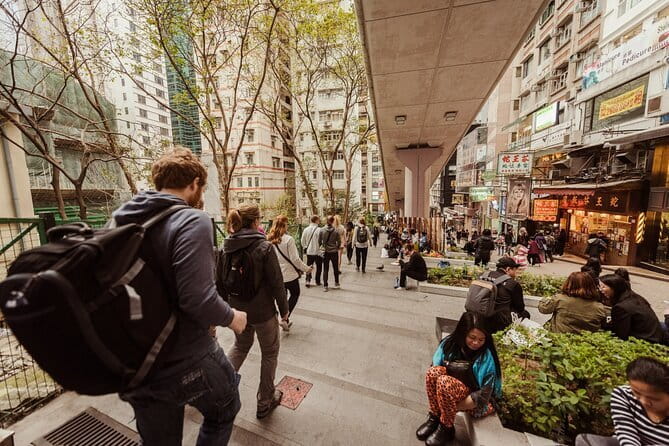
- Stop 6: Central-Mid-Levels Escalators
- Stop 7: Wellington Street
- Stop 8: Man Mo Temple
- Guide-led storytelling: personal context you can actually use
- Central-Mid-Levels Escalators and the slope-factor
- Food street details and temple manners
- Who this tour fits best
- Should you book this Central tip-based walking tour?
- FAQ
- How long is the Central tip-based walking tour?
- What time does the tour start?
- Where do I meet the guide?
- Where does the tour end?
- Do I need to pay admission tickets for the stops?
- What’s included in the price?
- Is food tasting included?
- How large is the group?
- Is the tour affected by weather?
Quick hits before you lace up
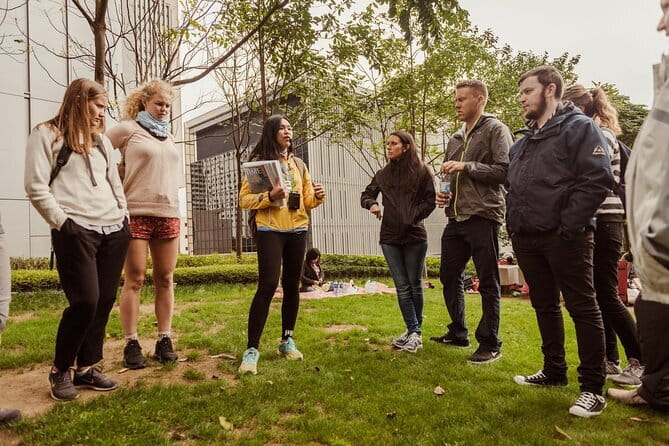
- One Country, Two Systems explained in real places so it doesn’t stay stuck in a textbook
- HSBC vs Bank of China framed through the buildings and even feng shui symbolism
- Central-Mid-Levels Escalators treated as city-making engineering, not just a ride
- Rent pressure and subdivided living discussed where the city’s economics are visible
- Man Mo Temple hands-on ritual with incense offerings, plus bell and drum participation
Hong Kong Central as your open-air classroom
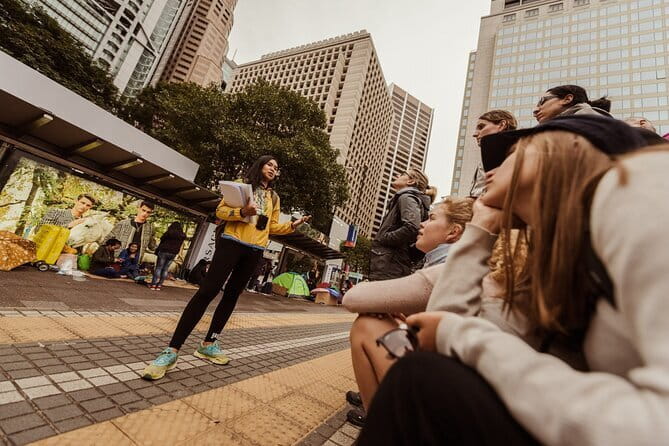
Central in Hong Kong can feel like a wall of glass and finance. This tour flips that. Instead of treating the city as scenery, it treats it like evidence. You walk through a chain of places where politics, business, and community traditions all sit side by side.
What makes it work is the way the story keeps grounding itself. You start with law, then move to the power of money, then to how people actually live and worship. Even if you already know Hong Kong’s big-picture timeline, the route helps you connect it to what you see while you’re standing there.
And because it’s tip-based and local-led, the explanations tend to sound like city talk instead of script-reading. You’re guided through meaning, not just facts.
You can also read our reviews of more tours and experiences in Hong Kong SAR.

Price and value: why this tip-based walk makes sense
At $2.63 per person, the price is low enough that it’s worth asking what you’re really buying. Here, you’re mostly buying time with a local guide and a focused narrative. The tour isn’t built around paid museum tickets. Many of the stops are set up as free-entry stops, so your money goes toward interpretation and direction.
Also, the pace is built for short attention spans and tight schedules. With a tour length of about 2 hours, you can fit it between other Central plans. Instead of “maybe I’ll get a feel for the city,” you get a sequence of stops that teaches a coherent theme.
One more value angle: the group size is capped at 30 travelers, which helps keep the tour more manageable than big-bus sightseeing. It doesn’t guarantee a private experience, but it’s still small enough for the guide to steer conversations when needed.
Before you go: meeting point, timing, and how to prepare
The tour starts at Central MTR Station (Exit K) and ends at Man Mo Temple, 124-130 Hollywood Rd, Sheung Wan. It runs for about 2 hours, starting at 11:00 am.
You’ll use a mobile ticket, and the sites on the route don’t require you to buy separate admission tickets. Service animals are allowed, and the tour is marked as suitable for most people. Still, it’s a walking tour through Central streets, so wear shoes that can handle city sidewalks and stairs.
Finally, it’s designed for good weather. If conditions aren’t right, you’ll be offered a different date or a full refund. So on a stormy forecast day, don’t bet your whole trip on going.
Stop-by-stop with meaning: from Court of Final Appeal to Man Mo Temple
This is the heart of the experience. Each stop is brief (often around 10 minutes, with one longer 15-minute cultural segment), but the guide ties each place to a bigger theme: power, identity, and daily life under shifting rules.
Stop 1: Court of Final Appeal
This is where the tour makes the phrase One Country, Two Systems feel concrete. The guide explains the interplay between British Common Law and Chinese continental law, using the court setting as the jumping-off point.
Practical tip: even if you can’t linger inside or read every detail, you can still understand the story. Look at the building’s role as a symbol, then listen for how the guide translates law into lived experience.




Stop 2: Statue Square
Next comes a showdown told through architecture. The tour frames a rivalry between HSBC and the Bank of China, including a story about a feng shui-style contest for financial dominance.
What to watch for: the tour pushes you to see “design choices” as signals. That’s the bigger theme here: Hong Kong often communicates power through planning, placement, and symbolism.
Stop 3: HSBC Main Building
This stop connects money to stability, and stability to the city’s shoreline story. The guide talks about monetary stability and the bank’s role tied to the currency peg, while also referencing Hong Kong’s dramatic coastline reclamation since 1842.
The guardian lions are part of the visual language. If you’re used to thinking of lions as decoration, the tour helps you understand why they matter in a financial setting.
Stop 4: St. John’s Cathedral
St. John’s Cathedral is used to explain Hong Kong’s British beginnings and the later handover back to China in 1997. The guide links the city’s birth under British rule—when the territory was considered British possession in 1842—to the idea of an eventual return.
This is also one of the places where the guide’s personal story comes in. Expect a more human angle rather than only dates and dates.
Stop 5: Queen’s Road Central
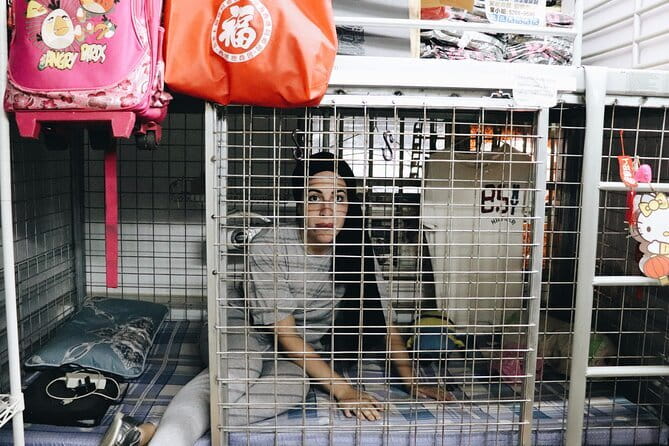
Now the tour turns from institutions to housing reality. You’ll hear how Hong Kong’s rental economics shape the urban layout, including the reality of subdivided living units.
This is where you start thinking like a planner. If you understand rent pressure here, it makes later sights feel less random. The city’s density and street-level life stop being abstract.
Stop 6: Central-Mid-Levels Escalators
This is a highlight for many people because it’s both famous and oddly practical. The tour treats the Central-Mid-Levels Escalators as the world’s longest outdoor escalator system and explains how it’s part of a government urban solution to connect steep hillside neighborhoods. There’s also talk of the engineering challenges involved.
Practical tip: build in a bit of patience. Escalators are still an experience, not magic teleportation. But when the guide explains why they exist, it stops feeling like a tourist attraction and starts feeling like city infrastructure.
Stop 7: Wellington Street
Wellington Street is where the tour shifts into taste and culture. The guide introduces Hong Kong’s culinary identity using dish examples like wonton noodles and egg tart, plus the stories those dishes represent.
You’ll also get a suggestion list for what to look for in the area. It’s not a meal tour, but it’s a useful start if you want ideas later without doing guesswork.
Stop 8: Man Mo Temple
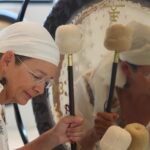
The last stop is the most hands-on. At Man Mo Temple, the guide leads a practice of offering incenses, ringing the bell, and striking the drum. It’s a participatory cultural moment rather than a passive viewing experience.
Practical and respectful note: temples run on rules of behavior, even when you’re not explicitly given them. Follow the guide’s pace, watch what others do, and don’t treat it like a quick photo stop. The point is participation.
Guide-led storytelling: personal context you can actually use
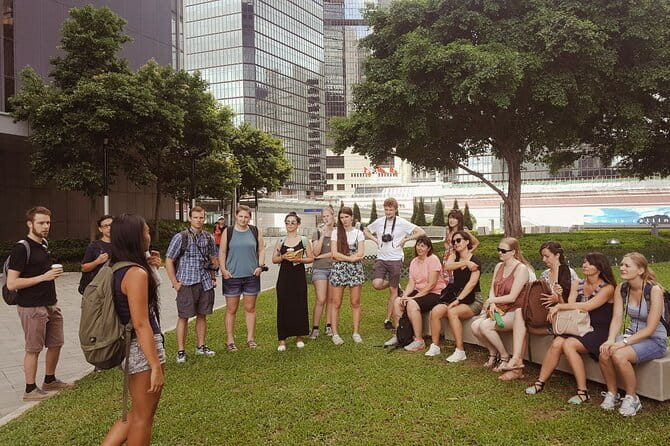
A big part of why this tour gets high marks is the guide style. The route is designed to connect politics, architecture, and daily life, but the guide brings it to human scale.
People like Andy and Stephen are singled out for being helpful and intelligent in how they explain events and changes in Hong Kong. Even when you don’t know the history already, the guide’s approach makes it easier to follow. You’re not handed a timeline and told to memorize it. You’re shown how choices made long ago still shape the city today.
Pacing matters too. With each stop timed tightly, you don’t get stuck in one spot while the rest of the story waits. That helps if you’re also trying to see other Central sights in the same day.
Central-Mid-Levels Escalators and the slope-factor
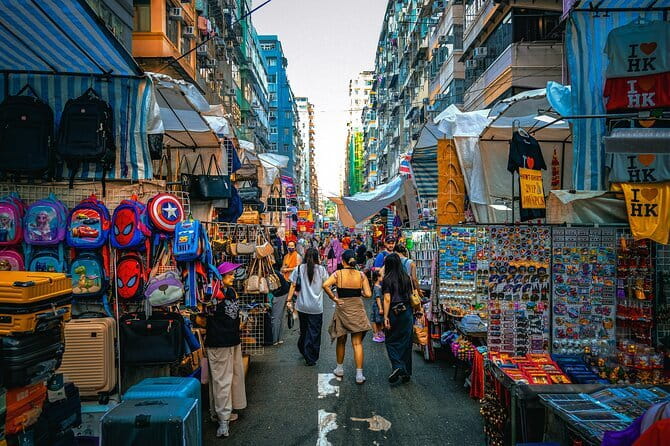
Hong Kong’s topography can be tiring. That’s true whether you’re walking or taking transit. This tour uses that reality as a feature.
When the guide talks about why the escalator system was built, it helps you understand the city as a place that actively solves vertical movement. It’s not just a novelty ride. It’s an urban decision shaped by steep neighborhoods.
So if you’re planning other sights nearby, this stop gives you a useful mental map. After you ride it (or watch the flow of people around it), you start understanding how Central connects to the hillside areas without you having to study a city plan.
Food street details and temple manners

This tour isn’t a food tasting experience. It doesn’t promise samples or a paid meal. But it does give you food anchors at Wellington Street: wonton noodles and egg tart are two of the dishes used to explain Hong Kong’s culinary identity and local culture.
That matters because it helps you navigate decisions later. After the tour, you’re less likely to pick the first place you see just to get lunch. You have a few starting points tied to what you learned.
Then you end with Man Mo Temple, where the focus is ritual and respect. The guided practice includes incense offerings, bell ringing, and striking the drum. It’s social in the best way: you’re doing something with others, following the guide, and stepping into a living tradition rather than just looking at a sign.
Who this tour fits best

This tour is a strong match if you want a fast way to understand Hong Kong’s identity beyond shopping and skyscrapers. It works well for people who like city stories grounded in physical places—courthouses, banks, churches, and temples.
It’s also a good fit if you’re the type who enjoys seeing how money affects architecture and how economics shows up in housing. The Queen’s Road Central stop makes that clear.
If you dislike walking, or if you’re sensitive to weather, it’s worth taking the good-weather requirement seriously. The route is outdoors and you’ll be on your feet for most of the experience.
Should you book this Central tip-based walking tour?
If you’re looking for value, structure, and local storytelling in about two hours, I’d book it. The low listed price plus the fact that many stops are free-entry makes it an efficient way to learn how Central works. You leave with a set of connections: law to power, banks to symbolism, housing to the street, infrastructure to daily movement, and temple ritual to community life.
I’d hesitate only if you hate outdoor walking, can’t handle hills and stairs, or need a very slow pace with long sightseeing stops. Otherwise, it’s one of the smarter ways to understand Hong Kong quickly without turning it into a checklist.
FAQ
How long is the Central tip-based walking tour?
It runs for about 2 hours.
What time does the tour start?
The start time is 11:00 am.
Where do I meet the guide?
You meet at Central MTR Station, Exit K.
Where does the tour end?
It ends at Man Mo Temple, 124-130 Hollywood Rd, Sheung Wan, Hong Kong.
Do I need to pay admission tickets for the stops?
Admission is listed as free for the stops on the route.
What’s included in the price?
A professional local guide and insights with personal stories about Hong Kong are included.
Is food tasting included?
No, food or beverage tasting is not included.
How large is the group?
The tour has a maximum group size of 30 travelers.
Is the tour affected by weather?
Yes. It requires good weather. If it’s canceled due to poor weather, you’ll be offered a different date or a full refund.