REVIEW · LHASA
13 Day Lhasa, Mt. Everest, Mt. Kailash to Kathmandu Adventure
Book on Viator →Operated by Tibet Vista · Bookable on Viator
Sacred Tibet, stitched into one road trip. This trip strings together Lhasa culture, Everest-area scenery, and the spiritual core of Mt Kailash Kora in a tight 13-day window. You’ll move by comfortable van/minibus with an English-speaking local Tibetan guide, and you get practical altitude support like an oxygen cylinder in the car.
Two things I really like: the guide-led pacing in big holy places, and the fact that the big spiritual moments are paired with real scenery stops. In places like Potala Palace, Jokhang Temple, Barkhor Street, and the Kora route, your guide (often people like Pasang or Tenzing) helps you make sense of what you’re seeing instead of just moving you along. I also like that this is small-group travel (2 to 12), so you’re not swallowed by a bus tour crowd.
One consideration: this is a high-altitude, long-distance, physically demanding route. You’re doing passes and long drives, and you’ll want a moderate fitness level. Also, double-check any optional costs (like yak/horse/porter hires during the Kailash trek area) and confirm meal inclusions, since the package details list meals in more than one way.
In This Review
- Key Points to Know Before You Go
- First Steps in Lhasa: Acclimatize Without Rushing
- Potala Palace, Jokhang Temple, and Barkhor Street Kora
- Dadong Village Meets Sera Monastery: Culture With Breathing Room
- Road-Trip Tibet: Yamdrok Yumtso to Gyantse’s Pelkor Kumbum
- Shigatse’s Big Monastery Energy: Tashilunpo and the Permit Step
- Toward the Everest Base Camp Zone: Rongbuk Sunrise and High-Peak Views
- Saga to Manasarovar: Passes, Wetlands, and the Holy Lake Mood
- Mt Kailash Kora: Eco-Bus to Sarshung, Then High Pass Days
- Leaving Kailash: Mani Stone Country to Saga, Then Kyirong Border
- Kathmandu Arrival Day: Border to Nepal Road Views
- Price and Value: What You’re Really Paying For
- Who Should Book This Trip (and Who Might Want a Simpler Route)
- Should You Book This Lhasa–Kailash–Kathmandu Trip?
- FAQ
- How long is the tour?
- How big is the group?
- What language is the guide?
- Do you provide airport or train station pickup in Lhasa?
- Is oxygen provided for altitude?
- Are entrance fees and eco-bus costs included?
- Are lunch and dinner included?
- Is the Kailash trek support included?
- How does transfer from the border to Kathmandu work?
- Can I cancel and get a refund?
Key Points to Know Before You Go
- Small-group size (2–12) means the guide can actually manage the day, not just point.
- Oxygen in the car (4L or 7L) is a real comfort item at altitude.
- Lhasa to Kailash to Kathmandu avoids piecing together multiple separate bookings.
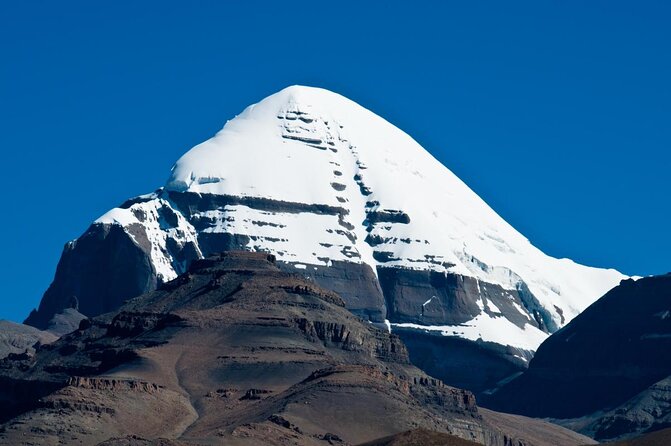
- Kailash Kora walking days include high passes, teahouse breaks, and mani stone country.
- Entrance fees and eco-bus costs for key zones are included, which reduces surprise add-ons.
- Guides like Pasang and Tenzing are noted for being patient and steady when people have questions or altitude issues.
First Steps in Lhasa: Acclimatize Without Rushing
Your first day in Lhasa is about getting your body used to the altitude. After you arrive (by train or flight), you’re picked up and taken to the GangGyan Lhasa Hotel or your reserved hotel. Then it’s rest time. The simple advice here matters: don’t sprint into sightseeing the moment you land.
If you feel up to it, you can do a slow walk near Potala Square for photos, including the colored fountain and classic views toward the Potala. But the best “activity” is sleep and an easy evening. Altitude travel is not a place for hero moments.
Here’s a practical way to handle day one well: drink water steadily, eat something simple, and keep movement slow for a few hours. If you’re the type who wants to fill every minute, this is your reminder to chill. You’ll thank yourself later.
You can also read our reviews of more tours and experiences in Lhasa.
Potala Palace, Jokhang Temple, and Barkhor Street Kora
Day two is where Lhasa starts feeling real.
First stop is Potala Palace, the Dalai Lamas’ winter palace. You’ll see major collections tied to past Dalai Lamas, including the gilded burial stupas, plus places like a meditation cave associated with the 33rd great king of Tibet. Even if you’ve read about it, seeing it on the ground is different. It’s a whole statement in stone.
Next is Jokhang Temple, one of the most important religious centers in Tibet. Outside, you’ll notice pilgrims prostrating in front of the temple. Inside, the focus is on sacred imagery, including the statue of Buddha Sakyamuni shown at age twelve. This is one of those places where people’s behavior tells you the meaning, not your guide’s speech.
Then comes Barkhor Street around the temple. This is where you can do a kora, the religious circuit done by locals and pilgrims. It’s also an old-market area where you can taste Tibetan tea in a tea house and watch daily life orbit the holy space. And yes, you may also get a welcome dinner arranged depending on timing.
One drawback to know: tickets for Potala and Jokhang aren’t included. Plan for that ahead so you don’t start negotiating with your day once you’re there.
Dadong Village Meets Sera Monastery: Culture With Breathing Room
Not every Tibet stop needs to be a famous name. This route gives you a day with a village feel, then a monastery afternoon.
In place of Drepung Monastery (the plan uses Dadong Tibetan Village), you’ll visit Dadong Village, about 25 kilometers southwest of Lhasa. It’s described as a well-protected ancient village around valleys, which means you get a quieter slice of Tibetan life instead of only stone courtyards and crowds. You’ll also visit Nyimatang Monastery (built in the 11th century), take a light village walk, and even share lunch offered by a local Tibetan family.
That lunch is worth more than it sounds. Food like that is how you learn rhythm: how people talk, what they consider normal, and how community life looks when it’s not for tourists.
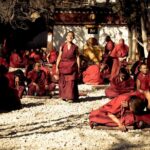
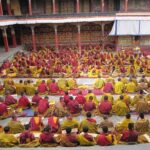
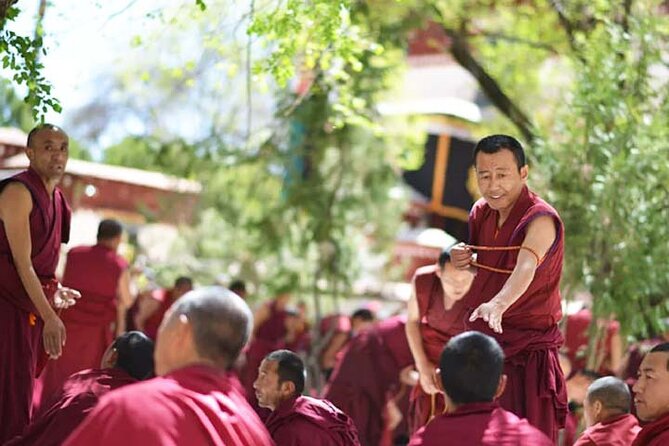
Later, you go to Sera Monastery, one of the “great three” Gelug monasteries. The highlight is the monks debating in the afternoon (often around 3 to 5). You’ll also tour parts of the monastery, including a scripture printing house area, and see details like sand mandalas and colorful rock paintings connected to Buddha imagery.
If you hate long lines, you’ll like this balance. It’s not only shopping hours, and it’s not only a museum walk. It gives you a pattern: people live here, study here, and argue in ritual time.
Road-Trip Tibet: Yamdrok Yumtso to Gyantse’s Pelkor Kumbum
Once you leave Lhasa and head toward Shigatse and Gyantse, the landscapes do most of the talking. Day four builds in big views with classic sacred-road stops.
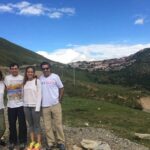
You’ll pass Gampala Pass (around 4,790m) and get a glimpse of Yamdrok-tso lake in the 4,400m range. Yamdrok-tso is surrounded by snow-capped mountains, with distant views of Holy Mount Nyenchen Khangsar (7,191m). Even if visibility is imperfect, the lake setting tends to land.
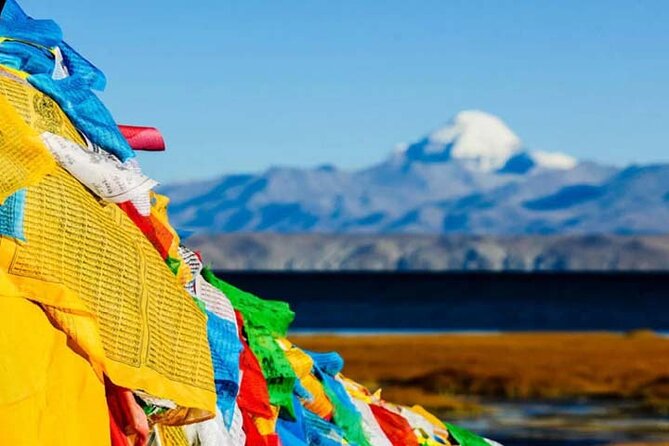
Then you continue to Karo La Glacier on the roadside and make stops near places like Manak Dam Lake. You’ll also hang prayer flags around Simila Mountain Pass. This is the kind of stop that sounds small, but it adds meaning: these aren’t random photo pull-offs. They’re part of how route and ritual mix.
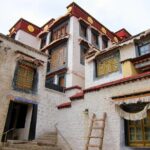
In Gyantse, you visit Pelkor Monastery and Gyantse Kumbum, plus you’ll get a far view of Gyantse Fortress. The Kumbum complex is famous for its layered structure and spiritual function, and your guide will help you read it beyond the postcard angle.
Entrance fees aren’t included for these sites, so budgeting matters. Still, the value here is the variety: you get lake drama, glacier-side scenery, and a major cultural stop in one flow.
Shigatse’s Big Monastery Energy: Tashilunpo and the Permit Step
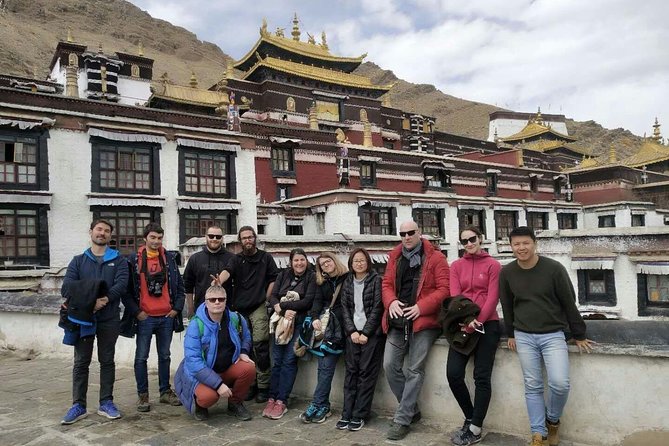
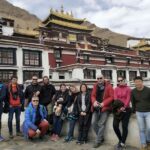
In Shigatse, the spotlight is Tashilunpo Monastery, described as the home of the Panchan Lama. It’s a key Gelug institution, and you’ll see why it draws people who care about lineage, learning, and the public face of Tibetan Buddhism.
There’s also a practical step in Shigatse involving an Alien’s travel permit, which is part of keeping your travel permissions aligned as you move deeper into the route. That matters because Tibet travel depends on paperwork and timing, not just maps.
After Shigatse, the trip moves onward toward Lhatse for lunch. One travel truth: “small town lunch” in Tibet can be surprisingly useful, because it breaks up the day before the next long stretch of roads and scenery.
One note on a confusing detail: the plan text includes Qomolangma National Nature Preserve but the day description repeats earlier elements. Since this is about what you can expect on the ground, don’t assume every label will match what you’ve seen on other similar tours. Your guide’s explanations will be the real constant.
Toward the Everest Base Camp Zone: Rongbuk Sunrise and High-Peak Views
This is where the route starts playing in the “Everest region” sandbox.
In the morning, you may see sunrise of Everest Peak if weather allows, from the lodging area near Rongbuk Monastery. Rongbuk is described as the unique highest monastery with nuns and monks living together. That’s an important detail: it’s not only a view point. It’s a working monastery presence in one of the most demanding settings on the route.
Your stops here are also timed around the season and weather reality. Sunrise is not guaranteed. But even if the sky doesn’t cooperate, the monastery setting and approach still tend to feel powerful.
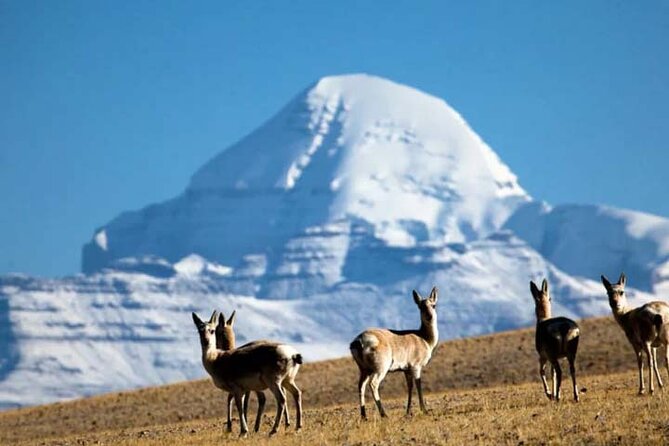
Later, as you head toward Saga, you get views of Mt. Shishapangma (around 8,012m) and stops near Turquoise Lake Peiku tso (about 4,590m). The tour also notes the possibility of seeing wild animals like wild donkey and wild antelope. That’s not something you can plan for, but it’s a reminder that this route runs through living country, not only scenery sets.
Also, entrance fees and the eco-bus cost in the Everest base camp area are included. That’s good value because eco-bus tickets can add up fast if you’re piecing your own trip together.
Saga to Manasarovar: Passes, Wetlands, and the Holy Lake Mood
As you go deeper, the route shifts from monastery stops to high-altitude nature and holy-land rhythm.
On the way to Darchen, you pass through the Saga valley area between the Gangdise Range and the Himalaya Range. You’ll see grasslands and local villages in the distance, plus a sequence of high passes like Mayomla Pass (around 5,112m). From there, you can get views of Mt. Naimonanyi (about 7,694m).
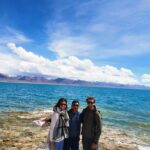
Then you reach Lake Manasarovar, described as a holy lake. The route includes a stop for Manasarovar Wetland, with time to take in the long, open feel of the region. You’ll arrive at the southern foot of Mt. Kailash in Darchen, which sets up the Kora trek days with a “ready now” feeling.
This is also a good time to watch your pace. Manasarovar days are not about rushing photos; they’re about feeling the scale and staying calm with the altitude.
Mt Kailash Kora: Eco-Bus to Sarshung, Then High Pass Days
The Kailash portion is the soul of this trip, and the walking is real.
Early on day eight, you take an eco-bus from Darchen to Sarshung valley. Then you meet yaks and porters at Sarshung village. Here’s a key line: the cost of hiring yaks, horses, and porters is not included. If you need them for your comfort, you should expect to pay extra.
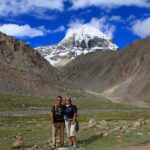
The trek itself is described as about 13km from Sarshung to Drirapuk Monastery along the Lachu valley and rivers. You’ll see both west and north faces of Kailash today. Even if your body is tired, that variety of angles is a big part of why the Kora feels different each day.
Day nine is another step up. You trek over Dromala Pass (around 5,630m), described as the highest pass of the Kora. There’s a rest in a teahouse along the way, plus you may see locals prostrating along the Kora path. You’ll also find views of Kadoe Lake when the route walks downhill, and you might visit Zutulpuk Monastery if the schedule allows.
Day ten continues the Kora with a trek of about 7km to Zongto, after which you can take a bus back to Darchen. Along the way you see piles of mani stones—a line of prayer and a tradition you’ll notice more as your legs tire. There’s an optional idea here: taking a bath in Lake Manasarovar and enjoying hot springs. Since it’s optional, don’t build your whole day around it.
For hiking comfort, pack for cold plus sun. High passes can feel brutally bright, and the wind can be sharp even when the sky looks calm. And yes—move steadily. Altitude rewards patience.
Leaving Kailash: Mani Stone Country to Saga, Then Kyirong Border
After the Kora, you shift from prayer-focused walking into road travel and recovery time.
On day eleven, you drive from Darchen to Saga via Lake Manasorova. This is a long, scenic reset day. You’re back in the van/minibus zone, which is exactly what your legs want after passes and trekking.
Day twelve takes you from Saga to the Chinese Kyirong border (also called Rashuwaghadi), with driving time listed as about 5 to 6 hours. Then you wait for the Nepalese driver to pick you up in the morning.
The route description gives you a sense of changing geography: snow-land gives way to forest, waterfalls, and deeper gorges, with mountains behind the forest creating different scenery forms. That shift is part of why ending in Nepal often feels like leaving a different world.
Kathmandu Arrival Day: Border to Nepal Road Views
On day thirteen, you cross into Nepal travel time for about 8 to 9 hours driving to Kathmandu. The road between the border and Kathmandu is described as small, and you’re free to stop anywhere safe to park and enjoy the mountain views. Then the tour ends with the driver sending you to your reserved hotel.
This last day is not for rushing. It’s a “arrive, breathe, and sleep hard” day. If you’ve done the full Kora, you’ll probably appreciate any slow moments more than you expect.
Price and Value: What You’re Really Paying For
At $2,069 per person (double occupancy pricing), this is not a cheap trip. But it’s also not just sightseeing. You’re paying for a long-distance route, permits support, transportation, and the operational support that keeps altitude travel survivable.
Here’s what looks like strong value:
- Small-group size (2–12) plus an English-speaking Tibetan guide. That matters when you’re in places like Jokhang or during debate at Sera, where context changes everything.
- Oxygen cylinders in the car (4L or 7L). That’s not a luxury item in altitude travel; it’s a practical safety comfort.
- Entrance fees and eco-bus costs in key zones (Everest base camp area and Mt. Kailash). These costs add up if you DIY.
- In-the-route inclusions like drinking water and a first-aid kit approach for altitude risk.
But there’s also a place to be careful:
- Meal inclusions look inconsistent. The package details list dinner and lunch under Included, yet also lists lunch and dinner under Not Included. I’d confirm the exact meal plan before you commit. Don’t rely on the wording in one place.
- Extra costs are clearly outside the package for some parts, including yaks/horse/porters during the Kora area and visa application service charge by the travel agency in Nepal.
- The border-to-Kathmandu transfer is listed as $60/person not included.
My rule: when a trip crosses countries and borders, treat price as “fair for logistics,” then get clarity on the handful of items that can change your daily spending.
Who Should Book This Trip (and Who Might Want a Simpler Route)
This fits best if you want:
- A guided, structured journey across Lhasa, the Everest region, Kailash, Manasarovar, and Kathmandu.
- A route where cultural stops and holy landscape time are both included.
- A small-group feel, with oxygen support and a guide who can explain what you’re seeing.
You might reconsider if:
- You’re not comfortable with trekking passes and long drives at altitude.
- You want a fully flexible schedule. This is a guided plan, and the route depends on weather and conditions.
- You need everything to be low-effort. Kailash Kora is not “walk for an hour and snack.” It’s work.
Should You Book This Lhasa–Kailash–Kathmandu Trip?
I’d book it if you’re aiming for one of the clearest “big Tibet” routes: Lhasa’s sacred core, Everest-area awe, and the Kailash Kora that people travel for with serious meaning behind it. The strongest reason is simple: the route is built to connect the dots, not just collect photos.
Before you pay, do two things:
- Confirm the meal inclusions in writing, since the details conflict.
- Ask what you should budget for the Kailash trek support (yak/horse/porter) based on your comfort level.
If you handle those points and you’re ready for altitude plus trekking, this trip offers a rare mix of cultural depth and high holy-land travel in one package.
FAQ
How long is the tour?
It runs for about 13 days.
How big is the group?
It’s a small-group tour with a maximum of 12 travelers (typically 2–12 persons).
What language is the guide?
An English-speaking Tibetan guide is included.
Do you provide airport or train station pickup in Lhasa?
Yes. Pickup service from the airport or train station to Lhasa is included.
Is oxygen provided for altitude?
Yes. Oxygen cylinders are carried in the car (4L or 7L), and a first-aid kit is included.
Are entrance fees and eco-bus costs included?
Entrance fees for tourist sites are included, and eco-bus costs in the Everest base camp area and Mt. Kailash area are included.
Are lunch and dinner included?
The package details list dinner and lunch under Included, but lunch and dinner also appear under Not Included. Please confirm the exact meal plan with the operator before booking.
Is the Kailash trek support included?
You can meet yaks and porters at Sarshung village, but the cost of hiring yaks, horses, and porters is not included.
How does transfer from the border to Kathmandu work?
From Saga to the Chinese Kyirong border, you drive and then meet the Nepalese driver the next morning. The road continues to Kathmandu, but the transfer from Gyirong border to Kathmandu is listed as $60/person not included.
Can I cancel and get a refund?
You can cancel up to 6 days in advance for a full refund. If you cancel 2–6 days before, you get 50%. Less than 2 days before the start time isn’t refunded. Poor weather may trigger a date change or full refund.