REVIEW · LHASA
4 Days Lhasa City Essential Group Tour
Book on Viator →Operated by Great Tibet Tour · Bookable on Viator
Lhasa can feel like a lot at first. This 4-day group tour pulls the biggest stops into a tight plan, with guided visits and airport/train transfers that take the stress out of getting started. I especially like the smooth first day orientation and the way your sightseeing days build in time for acclimatizing. One possible drawback: you’re on a schedule, and only breakfasts are included, so you’ll still need to plan for lunch and dinner.
I also like that the group stays small, with a maximum of 12 people, so you’re not fighting a crowd for attention from your local English-speaking guide. The tour runs in all weather, so you should dress for wind and changing conditions and wear shoes that won’t complain after hours of walking.
In This Review
- Key things I’d watch before you book
- Lhasa in a group plan: what this tour is really good at
- Your first day: getting settled without the scramble
- Hotels and group vibe: comfortable enough, not fancy for the sake of it
- Day 2: Drepung Monastery, Tibet Museum, and Norbulingka’s royal garden mood
- Day 3: Potala Palace, Jokhang Temple, and Barkhor Street at real-world speed
- Potala Palace (winter palace of the Dalai Lama)
- Jokhang Temple: the center of Tibetan Buddhism
- Barkhor Street: where the stories are lived, not displayed
- Day 4: a free morning, then a scheduled exit
- What’s included (and why it can be good value)
- Price and logistics: the real trade-offs
- Altitude reality check: how to make the schedule feel easier
- Should you book this Lhasa city essential group tour?
- FAQ
- How long is the Lhasa City Essential group tour?
- How much does the tour cost?
- What’s included in the price?
- What is not included?
- Are transfers included from the airport or train station?
- What’s the group size limit?
- Is a Tibet permit included?
- Does the tour run in bad weather?
- What if I need to cancel?
Key things I’d watch before you book
- Small group size (max 12) keeps the pace manageable and questions easier to answer
- Permit help is included (Tibet Travel Permit and express service), so you’re not stuck arranging paperwork
- 4 days, 3 hotel nights (3- or 4-star) means you’re not moving beds every day
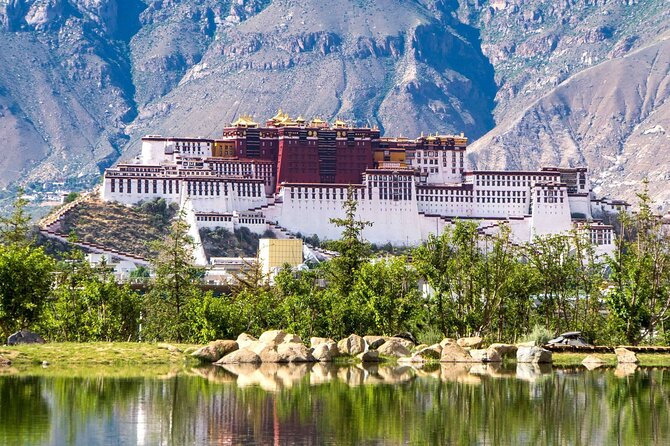
- Prime sites in 1 route: Drepung, Norbulingka, Potala, Jokhang, plus Barkhor Street
- Transfers are timed on arrival/departure with specific pickup/drop-off windows
- Admissions are selective: key monasteries/palaces are included, while Tibet Museum and Barkhor are free
Lhasa in a group plan: what this tour is really good at
This tour is built for people who want to see Lhasa’s core cultural and religious sites without doing the logistics puzzle while you’re already adjusting to high altitude. You get a guide, an air-conditioned vehicle, and the practical bits that usually slow travelers down: airport/train transfers, parking fees, and the Tibet Travel Permit service.
The pricing (listed at $605 per person) isn’t the cheapest way to “go to Lhasa.” But when you look at what’s bundled—three nights in a 3- or 4-star hotel, breakfasts every morning, a local English-speaking guide, and guided access to several major sites—it often starts to feel like a sensible deal rather than a splurge.
This is also a tour that uses a human pace. Your sightseeing plan spreads the big hitters across Day 2 and Day 3, and the tour schedule explicitly accounts for acclimatizing before the most intense religious sites.
You can also read our reviews of more tours and experiences in Lhasa.
Your first day: getting settled without the scramble
Day 1 is mostly about landing and getting your head on straight. You’re picked up at Lhasa airport or the train station and transferred to your hotel.
- From the airport: about 90 minutes
- From the train station: about 20 minutes
The transfer part matters more than it sounds. Lhasa logistics can be tricky—especially when you’re tired, jet-lagged, or already feeling the altitude. Having a scheduled pickup reduces the usual first-day chaos and helps you focus on settling in.
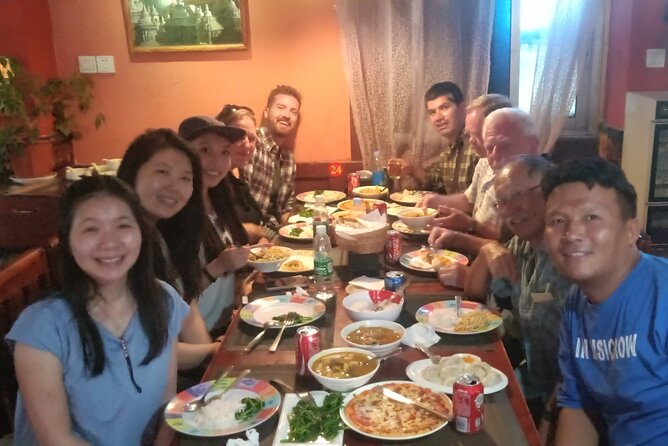
On the practical side, the tour includes hotel coverage for three nights, and you’re not stuck hunting down food or transport right away. Your welcome dinner is also included, which is a nice way to start without immediately having to decide everything on your own.
Hotels and group vibe: comfortable enough, not fancy for the sake of it
You choose between 3-star and 4-star hotels, and you get breakfast included each morning. For many visitors, that sweet spot matters: you want a clean, comfortable place to sleep, because altitude can make sleep quality important.
The tour runs with a maximum of 12 travelers, which keeps it from turning into a “herding cats” situation. Smaller groups usually mean:
- More time to ask questions
- Less waiting around
- Easier communication with your guide
A small-group approach also helps on days that involve several stops in one day, like Day 3.
One more personal touch from a recent team setup: I saw that host Beatrice and guides Tenzin and Dorji have been part of this operator’s experience. That kind of support network usually makes the first full day go smoother, because you’re not translating everything on your own.
Day 2: Drepung Monastery, Tibet Museum, and Norbulingka’s royal garden mood
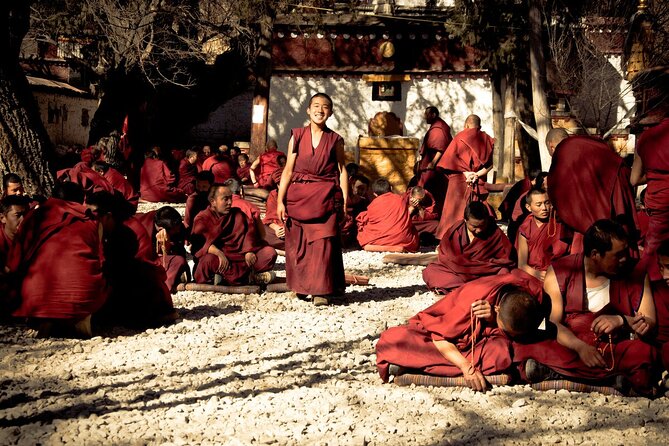
Day 2 is your first full sightseeing day on the plateau. It starts with Drepung Monastery (Zhebang Si), listed as the largest Tibetan monastery in its traditional era, and it’s the kind of place where scale becomes part of the meaning. You’ll get about 2 hours there, with admission included.
Why Drepung hits you differently in a group tour
Even if you’re not a hardcore monastery nerd, Drepung is the sort of site that benefits from context. A guide can help you notice details you’d otherwise miss—how the place fits into Tibetan religious history and daily ritual life.
After that, you pivot to a more grounded cultural stop: the Tibet Museum. Admission is free and you get around 2 hours. It’s designed for everyday understanding: life scenes, clothing, house architecture, and festival customs. Think of it as the “pause button” between two more spiritual spaces.
Then comes Norbulingka, a Tibetan-style royal garden and described as the summer retreat of the Dalai Lama. You’ll spend about 2 hours there, with admission included.
What I like about this sequence is the rhythm:
- Big spiritual site (Drepung)
- Learning and context (Tibet Museum)
- Calm visual reset (Norbulingka)
Day 3: Potala Palace, Jokhang Temple, and Barkhor Street at real-world speed
Day 3 is your main “Lhasa spotlight” day. The tour schedule is built so you should feel more acclimatized by then, and that’s not just marketing language—it’s practical pacing.
Potala Palace (winter palace of the Dalai Lama)
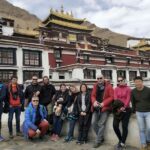
You’ll spend about 2 hours exploring Potala Palace, and admission is included. This is one of the most recognizable symbols of Tibet, and seeing it with a guide helps you avoid turning it into just a photo stop.
Even if you’ve seen pictures, plan for this to feel intense. The height, the symbolism, the sheer visual weight. I’d treat it like a slow walk with lots of breaks, not a sprint.
Jokhang Temple: the center of Tibetan Buddhism
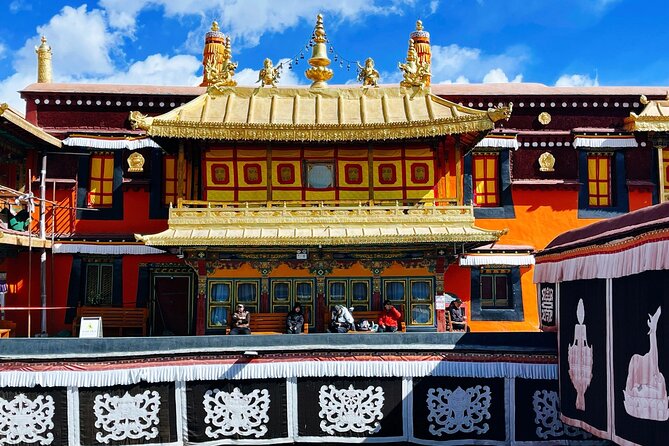
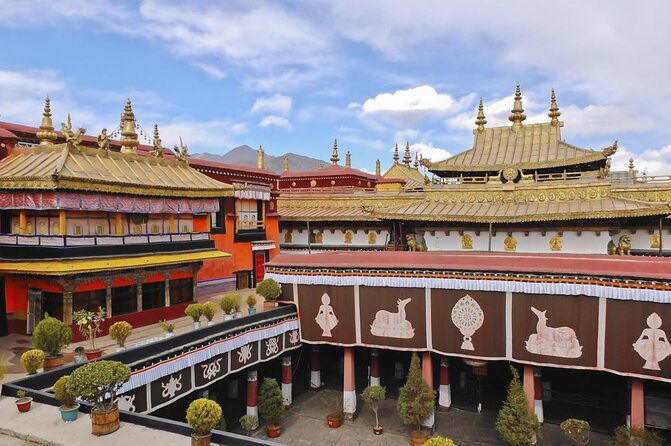
In the afternoon, you go to Jokhang Temple, again about 2 hours with admission included. It’s described as the center of Tibetan Buddhism and includes details like prayer wheels and golden elements that visitors often notice first.
From a practical angle, temple visits can involve moving between spaces and changing viewpoints quickly. Wear comfortable shoes. Keep water handy. And if you’re feeling wind or headaches, ask your guide for a slower pace.
Barkhor Street: where the stories are lived, not displayed
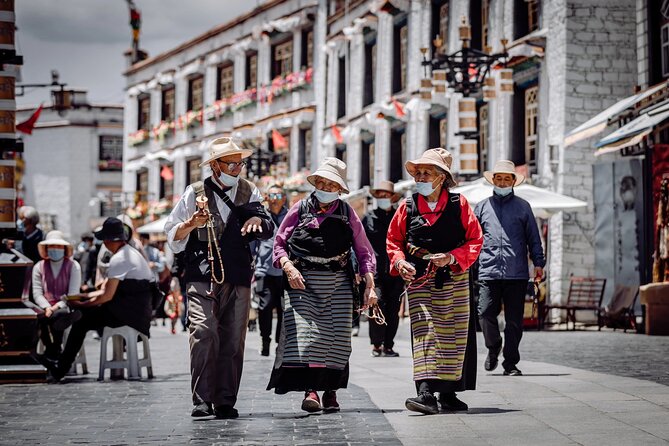
After Jokhang, you stroll Barkhor Street for about 2 hours. Admission is free here, and the tour frames it as a place to drink sweet tea, chat with locals, and even bargain with street vendors.
This is the part where the day becomes more human. You’ll see everyday Lhasa life around the religious center—less museum, more street. It’s also a good time to pick up small items you can actually use at home, rather than only souvenirs aimed at postcards.
Day 4: a free morning, then a scheduled exit
Day 4 is intentionally lighter. After breakfast, you have free time in the morning. Then the tour ends and you transfer to the airport/railway station.
The drop-off is scheduled with specific windows:
- 8:30 am, 12:30 pm, 2:30 pm to Lhasa Gonggar Airport
That matters if you’re planning your own extra activity on the last morning. Build in buffer time. Altitude can slow you down at the end of the trip too, not just at the start.
What’s included (and why it can be good value)
Here’s what you’re not fighting for yourself:
- 3 nights in a 3- or 4-star hotel
- Airport/train transfers
- Air-conditioned vehicle
- Tibet Travel Permit and express service
- Experienced local English-speaking guide
- Parking fees
- Guide/driver food and lodging
- 2 bottles of mineral water per person per day
- One welcome dinner
- Breakfast (3)
- Admissions for key guided stops:
- Drepung Monastery
- Norbulingka
- Potala Palace
- Jokhang Temple
You’re also not guessing about paperwork. The tour includes the Tibet Travel Permit service, which is a big deal for many visitors. Booking at least 12 working days ahead is recommended so the local operator can handle the permit work.
Now, the part you need to plan for:
- Lunch and dinner are not included
- Personal expenses are not included
- Single supplement applies if you need your own room
- International flights and transport to/from Lhasa are not included
This is why I think the tour is best as a “core sightseeing engine.” You let the tour handle the big pieces, then you spend your own money on meals and whatever optional extras you want.
Price and logistics: the real trade-offs
At $605 per person for about 4 days, you’re paying for:
- Hotel nights
- Guide time across multiple major sites
- Permit service
- Transport and parking
- A structured route that hits the top spots
So the value depends on your travel style. If you like wandering on your own and you’re comfortable arranging permits and transport, you might spend less elsewhere. But if you want a smooth start and a guided route through Lhasa’s most important locations, the packaged approach often saves time, stress, and on-the-ground confusion.
The main trade-off is that this is a guided group route. You’ll have a set order of sites and time windows. That can be a big plus if you’re short on days, and a downside if you want total flexibility.
Altitude reality check: how to make the schedule feel easier
This tour is designed with acclimatizing in mind. Day 2 is intense, but Day 3 is the real centerpiece day, and the plan notes that by then you should be more acclimatized.
Still, altitude doesn’t obey schedules. My practical tips:
- Keep your pace slow, especially on first full day
- Drink water often (you’ll have bottled water daily)
- If you feel rough, tell your guide early so they can help manage breaks
- Bring comfortable walking shoes and dress for changing weather, since the tour runs in all conditions
Also, remember you need to provide passport details (name, number, birthday, expiry, and country) at booking time for the permit service.
Should you book this Lhasa city essential group tour?
Book it if you want a guided, organized way to see Lhasa’s key religious and cultural stops in just 4 days, and you’d rather spend your energy adapting to altitude than figuring out permits, transfers, and day-to-day transport.
I’d skip or reconsider if:
- You’re mainly looking for unstructured time and don’t want a fixed route
- You’re trying to minimize extra spending, since lunch and dinner aren’t included
- You need special support beyond what’s described (the tour does state it works in all weather and includes standard guidance, but doesn’t list detailed accessibility features)
If your goal is Lhasa essentials—Drepung, Potala, Jokhang, and Barkhor—with logistics handled and a small group size, this is a strong match.
FAQ
How long is the Lhasa City Essential group tour?
It’s listed as 4 days (approx.), with sightseeing across Days 2 and 3 and a lighter final day after breakfast.
How much does the tour cost?
The price is $605.00 per person.
What’s included in the price?
You get 3 nights in a 3- or 4-star hotel, airport/train transfers, an air-conditioned vehicle, Tibet Travel Permit and express service, parking fees, an experienced local English-speaking guide, welcome dinner, and all breakfasts. Admissions are included for Drepung Monastery, Norbulingka, Potala Palace, and Jokhang Temple.
What is not included?
Lunch and dinner are not included, and neither are personal expenses, international flights to and from China, or domestic flights/train to and from Lhasa. There is also a possible single supplement if you need a solo room.
Are transfers included from the airport or train station?
Yes. Pick-up is provided on the first day and drop-off is provided on the last day, with scheduled pickup/drop-off times listed in the tour details.
What’s the group size limit?
The tour has a maximum of 12 travelers.
Is a Tibet permit included?
Yes. Tibet Travel Permit and express service are included, but you must provide passport details at booking. The operator asks that you book at least 12 working days ahead for permit processing.
Does the tour run in bad weather?
It operates in all weather conditions, so dress appropriately.
What if I need to cancel?
You can cancel up to 6 days in advance for a full refund. If you cancel 2–6 days before, you receive a 50% refund, and cancellations less than 2 days before start time are not refunded.