REVIEW · LHASA
Tibet Tour 8 Days Lhasa to Everest Base Camp Small Group Tour
Book on Viator →Operated by Tibet Vista · Bookable on Viator
Tibet’s high-country route feels far less scary when the logistics are handled. This small-group 8-day run is built to move you efficiently between Lhasa and the Everest region, with an English-speaking Tibetan guide to cut through the language friction. You’ll also get that classic Tibet mix: big spiritual sites in Lhasa, then long-road mountain scenery.
I particularly like how much is folded into the trip up front: Tibet permits, transport, hotels, and site entry fees are listed as included, plus drinking water and a handy map. On the practical side, you’re not guessing about altitude support either—there’s an oxygen cylinder kept in the vehicle.
One thing to double-check before you pay attention: the itinerary notes that admission tickets for Potala Palace and Jokhang Temple show as Not Included, while the package also says entrance ticket fees are included. That mismatch is easy to resolve by asking the operator to confirm what you’ll actually pay on site.
In This Review
- Key points before you book
- Lhasa to Everest Base Camp, without the headache
- Permits and the paperwork that decides everything
- Acclimatization support you can actually feel
- Day 1 in Lhasa: set up your rhythm
- Day 2 in Lhasa: Potala, Jokhang, and Barkhor’s pulse
- Potala Palace (the winter palace of the Dalai Lama)
- Jokhang Temple and the Twelve-Year-Old Buddha statue
- Barkhor Street: kora and tea time
- Day 3: villages and monastery energy (Drepung and Sera)
- Drepung Monastery and Dadong Village
- Sera Monastery and monk debate
- Day 4: lakes, glaciers, Gyantse Kumbum, and long views
- Yamdrok Yumtso Lake and Gampala Pass
- Karo La Glacier and Simila Mountain Pass
- Gyantse: Pelkor Chode Monastery and the Kumbum
- Day 5: Everest Base Camp day starts with permits and high passes
- Day 6: Rongbuk sunrise and the Everest pyramid view
- Day 7: Tashilunpo Monastery, Panchen Lama seat, then back to Lhasa
- Day 8: leaving Tibet by air or train
- What you’re paying $949 for (and what it covers)
- Who this tour is a good fit for
- Should you book this 8-day Lhasa to Everest Base Camp tour?
- FAQ
- What is the tour duration and start time?
- How big is the group on this tour?
- What does the tour include for permits and visas?
- Are meals included?
- Is oxygen provided during the Everest portion?
- Do you provide pickup and drop-off in Lhasa?
- What level of fitness do I need?
- What is the cancellation timeline for a refund?
Key points before you book
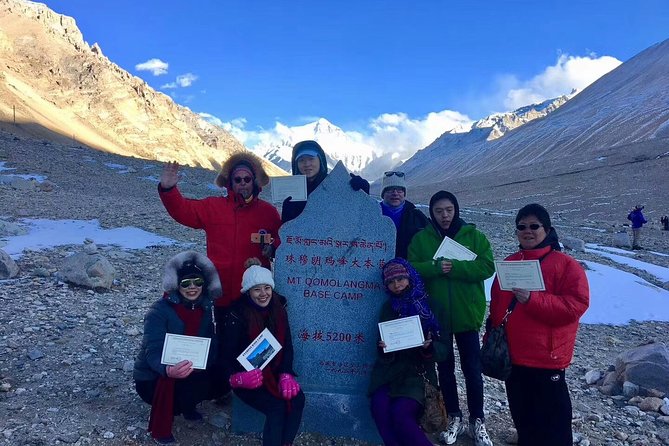
- Max 12 travelers means less crowding and more chances to ask your guide real questions
- English-speaking Tibetan guide helps with temple etiquette, context, and wayfinding
- Oxygen cylinders in the car and winter warmth items (Nov 15–Feb 15) address altitude and cold in a practical way
- Site entry, transport, and accommodation are packaged together so you spend your time traveling, not planning
- Everest Base Camp Echo bus is included, saving you from extra scheduling steps once you arrive in the area
Lhasa to Everest Base Camp, without the headache
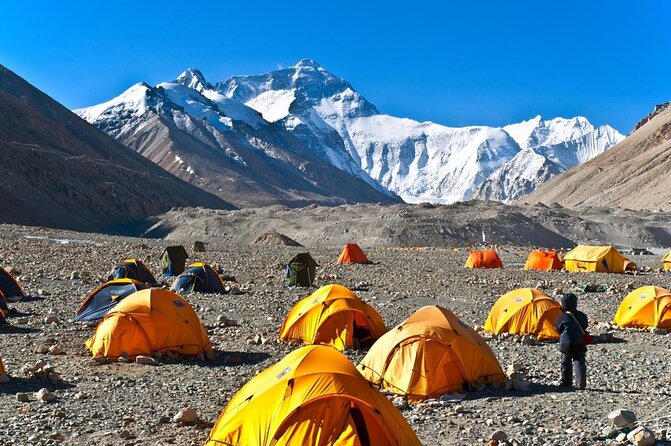
This is the kind of trip that works because it’s designed like a route, not a list. You’re moving between widely separated stops, often with big altitude changes and long drives. With a small group (up to 12), you’re less likely to feel rushed, and your guide can adapt the pace when someone needs a breather.
What I like most is the focus on reducing “invisible” friction. Tibet travel involves paperwork, language hurdles, and altitude reality. Here, you get a single team handling transport with an experienced local driver, an English-speaking Tibetan guide, and a schedule that’s packed but not random.
The other value is straightforward: you’re not left holding a clipboard of tasks. The package includes pick-up and drop-off in Lhasa, drinking water, and liability travel insurance. Even the mobile ticket is included, which helps when check-in days come fast.
You can also read our reviews of more tours and experiences in Lhasa.
Permits and the paperwork that decides everything
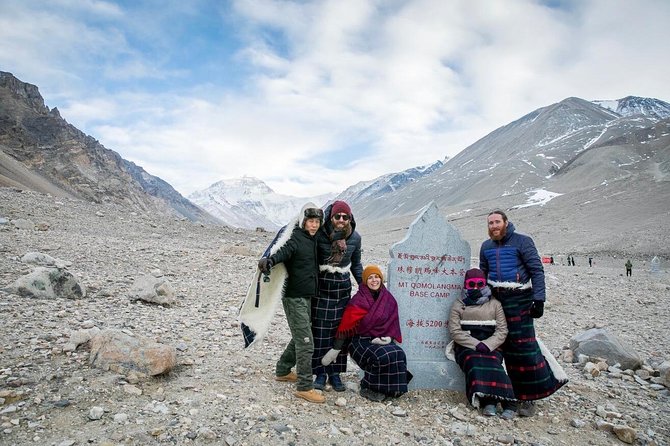
The biggest gate in Tibet travel is permission. This tour includes the Tibet Travel Permit and other necessary permits (it specifically excludes the Chinese L visa). You also get a Chinese visa invitation letter if you need it.
The practical takeaway is timing. You’re required to provide photocopies of passports and the China L visas at least 20 days prior to travel. The Tibet permit is delivered to your specified delivery address or hotel address in one city of China, after the booking is confirmed.
There’s also an important note about how you apply depending on where you’re coming from:
- If you’re flying to Lhasa from Kathmandu, the guidance says not to apply for the China L visa in advance for that scenario. Instead, you apply for a Tibet Group Visa from the China Embassy in Kathmandu via a travel agency, using an invitation letter requested from the tour supplier.
- If you arrive from within China by flight or train, the note says you apply for the China L visa from the China Embassy in your country.
I’m glad the tour spells this out. For you, it means the best move is simple: start your document work early and keep a timeline. If your passports or visas are cutting it close, that’s when trips turn stressful.
Acclimatization support you can actually feel
Altitude isn’t a “maybe” on this route. You’re going to drive over high passes, and the Everest Base Camp area sits at serious elevation. The tour doesn’t pretend this is effortless, and it lists a moderate physical fitness level requirement for travelers.
What helps is the support built into the day-to-day:
- An oxygen cylinder in the car, sized at 4L or 7L
- Drinking water provided during the trip
- Winter care service (Nov 15 to Feb 15) at Rongpuk Guest House, including a hot water bottle and an electric blanket to keep warm
Now, oxygen doesn’t make you immune to altitude. But for most people, it makes the difference between tough and doable—especially on the driving days when you’re stopping, starting, and getting out for short viewpoints.
Also worth noting: one portion of the schedule is long. Day 5 is listed as about 12 hours, with high passes including Tsola Pass (4600m) and Gyatsola Pass (5248m). That’s where good endurance matters more than speed.
Day 1 in Lhasa: set up your rhythm
Your tour starts with a simple welcome. After you arrive at the airport or train station, a Tibetan guide greets you and transfers you into downtown Lhasa. You’re not asked to immediately do a long temple run after travel. Instead, you get a hotel check-in and time to settle.
This matters because Lhasa can feel like a shock your body needs time to accept. Even if you’re excited, the smart play is to take Day 1 slow: hydrate, eat lightly, and don’t overdo walking. This tour’s structure gives you that first buffer.
Day 2 in Lhasa: Potala, Jokhang, and Barkhor’s pulse
Day 2 is the classic Lhasa trio: Potala Palace, Jokhang Temple, and Barkhor Street.
Potala Palace (the winter palace of the Dalai Lama)
Potala Palace is listed as the winter palace of the Dalai lama, with use dating back to the 7th century. It’s a must-see because it’s not just a building—it’s a symbol. The sheer scale and the way the complex dominates the city are why most first-time visitors remember this day for years.
One practical note: the itinerary shows admission ticket not included for Potala. But the package says entrance tickets are included. Before your trip, I’d confirm exactly what you’ll pay at the gate.
Jokhang Temple and the Twelve-Year-Old Buddha statue
Jokhang Temple is also framed as a 7th-century foundation tied to Tibet’s early religious power. Inside, you can see the statue of Buddha Sakyamuni at age twelve. That specific detail matters because it gives you something concrete to look for instead of just wandering.
Again, the itinerary shows admission not included, so the same “confirm inclusions” advice applies.
Barkhor Street: kora and tea time
After Jokhang, you’ll walk around Barkhor Street, where pilgrims do a kora (a religious circle) and locals share the daily flow of the area. The tour also mentions tasting Tibetan tea with locals in tea houses.
This is one of the more authentic-feeling parts because you’re not only viewing monuments. You’re watching how the city practices its faith, minute by minute.
Day 3: villages and monastery energy (Drepung and Sera)
Day 3 mixes a calmer morning with a monastery afternoon.
Drepung Monastery and Dadong Village
You start with Drepung Monastery (Zhebang Si), then head to Dadong Village, described as 25 kilometers southwest of Lhasa and a well-protected ancient Tibetan village. The attraction here is the sense of place: you’re stepping out of the dense city core and into a more protected, traditional environment.
The tour lists about 3 hours total for this morning block. That’s long enough to absorb it without turning it into a rushed drive-by.
Sera Monastery and monk debate
In the afternoon, you visit Sera Monastery, one of the “great three” Gelug monasteries. The hot moment is the monk debate around 3–5 in the afternoon. If you’re even slightly into how religions teach and train, this is the kind of scene you remember—people arguing with discipline, not chaos.
The itinerary says about 2 hours here. Give yourself a little patience for weather and timing, since debates don’t always run like a movie schedule.
Day 4: lakes, glaciers, Gyantse Kumbum, and long views
Day 4 is where you start feeling the distance between Tibet’s major towns. You’ll drive from Lhasa toward Shigatse, then into Gyantse, and then keep rolling to Shigatse.
Yamdrok Yumtso Lake and Gampala Pass
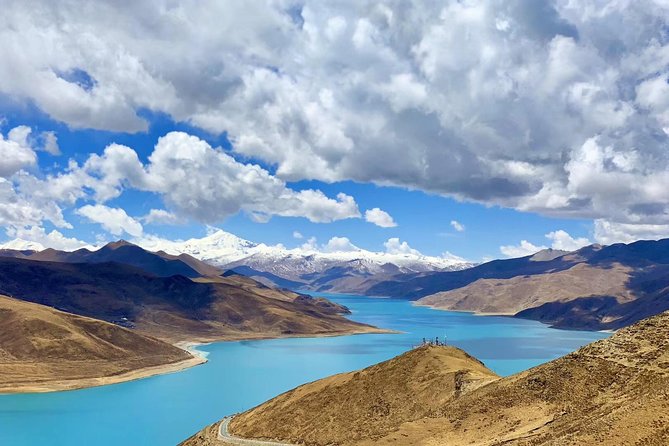
You drive over Gampala pass (4790m), then get a glimpse of Yamdrok-tso (4400m). The route framing here is useful: you’re not just arriving at a viewpoint. You’re passing high terrain that gradually opens into the lake view.
Short stop time (about 30 minutes) means you should be ready with your layers and phone camera battery. This is one of those “you’ll blink and miss it” moments if you arrive unprepared.
Karo La Glacier and Simila Mountain Pass
Next you stop for Karo La Glacier on the roadside. You also pass Manak Dam Lake and hang prayer flags at Simila Mountain Pass. These roadside moments can be surprisingly powerful because they feel less staged than the big-city attractions.
Gyantse: Pelkor Chode Monastery and the Kumbum
In Gyantse, you visit Pelkor Chode Monastery and Gyantse Kumbum, plus a far view of Gyangtse Fortress. Kumbum-type sites are visually busy in the best way—stacked layers, niches, and small details that reward slow looking.
Then you drive about 1.5 hours to reach Shigatse. It’s an active day, so keep expectations realistic: you’re moving, not lounging.
Day 5: Everest Base Camp day starts with permits and high passes
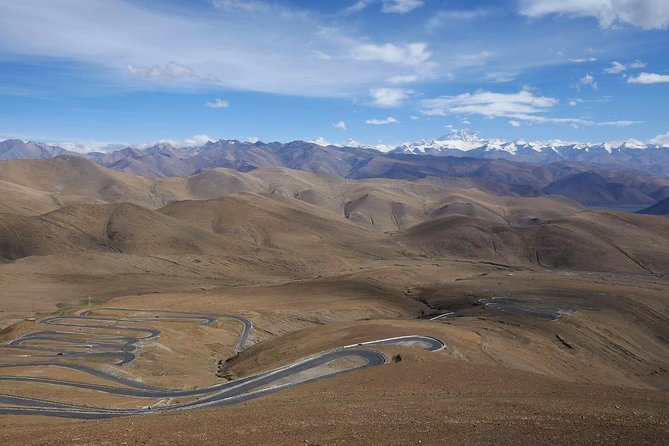
Day 5 is a full-day push. It’s the longest and most intense day of the trip, about 12 hours.
You start by getting your Alien’s travel permit (the tour specifically mentions this step), then you drive to Lhatse for lunch. After that, you pass Tsola Pass (4600m) and Gyatsola Pass (5248m).
Soon after entering the Everest area, your day becomes about distance and endurance. This is where your oxygen support and good hydration matter most, because you’ll likely spend time in vehicle and at stops.
It’s also helpful to know what’s included here. The package includes Everest Base Camp Echo bus, plus entrance ticket fees for sites listed in the itinerary. That’s meant to simplify the last-mile logistics once you’re already at the Everest region.
Day 6: Rongbuk sunrise and the Everest pyramid view
Day 6 focuses on a classic vantage: Rongbuk Monastery and sunrise on the mountain.
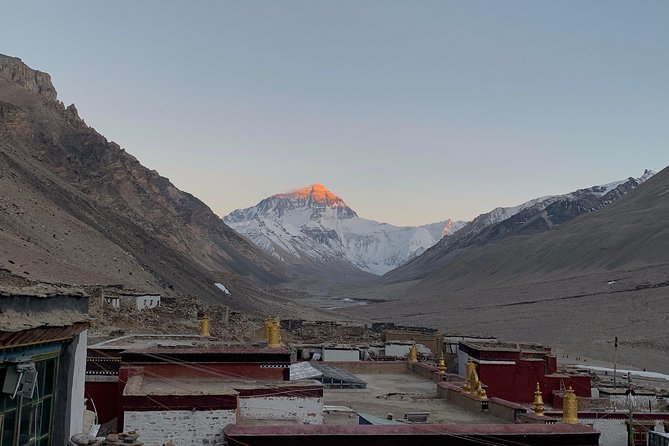
The tour says that in the morning you can see sunrise appear on top of Mount Everest from Rongpuk, described as a vantage point with a snow-capped pyramid view in front of you. Then you’re scheduled for about 1 hour at the monastery viewpoint area.
Two realities here:
1) Weather matters. Sunrise scenes are never guaranteed, especially in high-altitude regions.
2) Timing and cold matter. Even if the schedule is short, your body will feel the altitude. Dress like you’re going outside longer than the listed viewing time.
If you want value out of this day, focus on the moment, not the perfect photo. The experience is the scale.
Day 7: Tashilunpo Monastery, Panchen Lama seat, then back to Lhasa
On Day 7, you head to Tashilunpo Monastery, known as the seat of Tibet’s second highest incarnation, the Panchen Lama. This adds a different spiritual flavor than what you saw in Lhasa earlier. Instead of the Dalai Lama’s winter palace focus, here you’re seeing another key center.
Then you drive about 175 miles (280 km) back to Lhasa by foot—or rather, the tour’s wording indicates you’ll be driven. The time block here is about 2 hours in the itinerary summary, so you’ll likely have a comfortable ride back rather than a long-day walking trek.
Day 8: leaving Tibet by air or train
Day 8 is departure-focused. Your Tibet permit is limited for this tour, so you’ll need to leave Tibet by air or flight (the note says air or by flight, which reads redundant, but the meaning is clear). If you want to stay longer, the operator can assist with arranging airport/railway drop-off service.
The tour ends back at the meeting point. Start time is listed as 9:00 am, but the departure day timing depends on your flight or train.
What you’re paying $949 for (and what it covers)
At $949 per person, this isn’t a budget backpacking trip. It’s priced like a managed program. And the value is easiest to see in the included items:
Included highlights:
- Tibet Travel Permit and other necessary permits (excluding the Chinese L visa)
- Chinese visa invitation letter if needed
- Comfortable van or minibus with an experienced local driver, with gasoline included
- English-speaking Tibetan guide
- Welcome dinner in a local restaurant when the group meets in Lhasa
- Oxygen cylinder in the vehicle
- Accommodation with breakfast in twin-sharing rooms in Lhasa and Shigatse
- Entrance ticket fees for listed sites (and the Everest Base Camp Echo bus, plus platform service fee)
- Liability travel insurance
- Drinking water, and a Tibet Handy Map
- Winter warmth support at Rongpuk Guest House (Nov 15–Feb 15)
Not included:
- Tips for driver and tour guide
- Lunches and dinners (the note says only 1 welcome dinner and 1 lunch are included)
- Your flight/train ticket to Lhasa (though the operator can help if you need it)
So the real benefit isn’t just “everything is included.” It’s that you’re paying to remove the big stress points: permits, seat-time logistics, and daily coordination. For a first Tibet trip, that’s a serious money-saver in time and hassle.
One more value signal: the tour is rated 4.9 with 98% recommended in the feedback summary, and the strongest praise centers on safe, joyful experiences and solid organization by the guide and driver. That doesn’t guarantee your weather or altitude outcome, but it does suggest the operating team is doing the basic things right.
Who this tour is a good fit for
This route fits best if you want to see the top sites with less planning and more local guidance.
It’s especially good for:
- First-timers in Tibet who want temples plus Everest without stitching the trip together yourself
- People who prefer a small group pace (up to 12) over large buses
- Travelers who want oxygen support and packaged comfort items if traveling in winter
It may not fit as well if:
- You hate long driving days. Day 5 is about 12 hours, and Day 4 also involves multiple stop-and-drive segments.
- You’re on a tight budget for meals. Lunches and dinners are not included beyond that single lunch and welcome dinner.
- You’re sensitive to uncertainty about weather—especially on the sunrise-focused Everest day.
Should you book this 8-day Lhasa to Everest Base Camp tour?
If you want a well-structured Tibet route where the heavy lifting is handled, I think this is a good booking. The strongest reasons are practical: permits + transport + guide + altitude support are packaged together, and the itinerary hits the core Lhasa sites plus Everest Base Camp without feeling scattered.
Before you commit, do one smart move: confirm the admission ticket inclusions for Potala Palace and Jokhang Temple. The data you have shows a mismatch between the itinerary notes and the included package description. A quick written confirmation prevents surprise costs.
Also, line up your expectations for food. You’re covered for breakfasts and a welcome dinner, but you should budget for lunches and dinners on most days. And pack for cold: even if you aren’t in winter season, this route includes high passes and early-morning sunrise.
If that all sounds manageable, book it and focus on what matters: the kora around Barkhor, Sera’s debate, the lake-and-pass driving day, and the Everest day where the scale can feel unreal.
FAQ
What is the tour duration and start time?
The tour is approximately 8 days, and the start time is listed as 9:00 am.
How big is the group on this tour?
This tour has a maximum of 12 travelers.
What does the tour include for permits and visas?
It includes a Tibet Travel Permit and other necessary permits for Tibet, excluding the Chinese L visa. It can also provide a Chinese visa invitation letter if needed.
Are meals included?
Breakfast is included (6 breakfasts). Lunches and dinners are excluded, with only 1 welcome dinner and 1 lunch included.
Is oxygen provided during the Everest portion?
Yes. Oxygen cylinders are provided in the car (4L or 7L).
Do you provide pickup and drop-off in Lhasa?
Yes, there is pick-up/drop-off service from the airport or train station to Lhasa, and arrival-day transfers are arranged as part of the tour.
What level of fitness do I need?
The tour states travelers should have a moderate physical fitness level.
What is the cancellation timeline for a refund?
You can cancel up to 6 days in advance for a full refund. Changes made less than 6 days before the start time are not accepted, and shorter notice follows a 50% refund window down to 2–6 days before, with no refund under 2 days.
If you want, tell me your travel month and where you’re flying from (Kathmandu or within China), and I’ll flag the main paperwork steps you’ll need to watch for on this exact route.