REVIEW · LHASA
10 Days Tibet Everest Base Camp and Namtso Small Group Tour
Book on Viator →Operated by Tibet Vista · Bookable on Viator
Everest is close here, even by bus. This 10-day small-group route strings together Lhasa’s biggest sacred sights, a real crack at Everest Base Camp, and a calmer day at Lake Namtso.
I like how much of the heavy lifting is taken care of: permits, ground transport by comfortable minibus, English-speaking local guidance, and even an oxygen cylinder kept in the vehicle. I also like the pacing choices—starting with Lhasa acclimatization, then hitting Everest with an early-morning sunrise option, and finishing with a low-stress lakeside walk. One thing to consider: the schedule can change if bad weather or closed monastery access affects timing, and some entrance fees are marked as not included, so you should confirm what you’ll pay on the ground.
In This Review
- Key Things You’ll Notice on This Tibet to Everest to Namtso Tour
- Why This 10-Day Lhasa–Everest Base Camp–Namtso Route Feels Efficient (and Not Rushed)
- Day 1 in Lhasa: Get Your Bearings, Then Let Your Body Adjust
- Day 2: Potala Palace, Jokhang Temple, and Barkhor’s Pilgrim Scene
- Potala Palace (Winter Palace of the Dalai Lama)
- Jokhang Temple (The 7th-Century Magnet)
- Barkhor Street Kora (Walking With the City)
- Day 3: Dadong Village for Real Rural Life, Then Sera Monastery Debates
- Dadong Village (A Protected Ancient Village Experience)
- Sera Monastery (Gelug Monks Debate in the Afternoon)
- Day 4: Yamdrok-tso and Gyantse Views, Plus the Road-Trip Feel of Tibet
- Days 5 and 6: Everest Base Camp by Minibus—Plus Rongbuk Sunrise
- Day 5: Toward Everest Base Camp (around 5,200m)
- Day 6: Rongbuk Monastery and Sunrise Views
- Day 7: Tashilunpo Monastery and the Long Ride Back to Lhasa
- Day 8: Lake Namtso (Holy, Saline, and High) With a Lakeshore Walk
- Day 9: Chubu/Nunnery Peace, Then Tsurphu Monastery and Kagyupa Traditions
- Day 10: Homeward Bound (Or a Longer Tibet Add-On)
- Price, Value, and What You Should Confirm Before You Go
- Who This Tour Suits Best (and Who Might Feel Frustrated)
- Should You Book This Tibet Vista Everest Base Camp and Namtso Tour?
- FAQ
- How large is the group on this tour?
- Are airport or train transfers in Lhasa included?
- Does the tour include oxygen support for altitude?
- Who handles Tibet permits?
- Does the itinerary include Potala Palace, Jokhang Temple, and Barkhor Street?
- Do you visit Everest Base Camp and Rongbuk?
- Is Lake Namtso included, and do you do walking there?
Key Things You’ll Notice on This Tibet to Everest to Namtso Tour
- Small group (up to 12) by minibus, so the days feel organized without feeling crowded
- Permits handled (Tibet travel permit and other necessary permits), plus an invitation letter if you need a China L visa
- Altitude support via an oxygen cylinder in the car (4L or 7L) and built-in acclimatization in Lhasa
- Everest Base Camp reach using the New zigzag road, plus sunrise viewing from Rongbuk
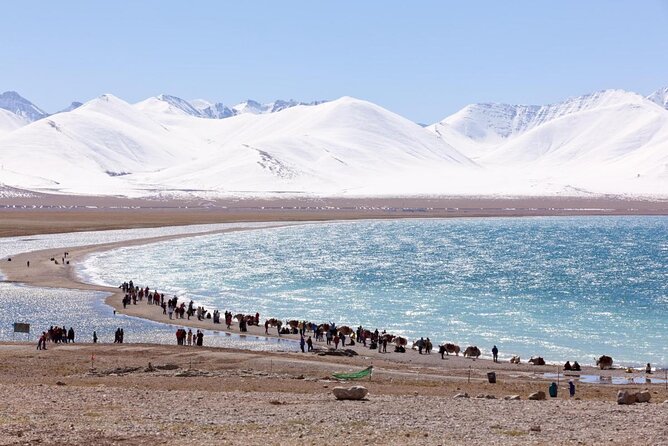
- Lake Namtso is the reset button, with a leisurely walk around Tashi Dor Island and time near the lakeshore views
- Lhasa is covered properly with Potala Palace, Jokhang Temple, and the Barkhor kora loop
Why This 10-Day Lhasa–Everest Base Camp–Namtso Route Feels Efficient (and Not Rushed)
This is the kind of Tibet trip that works best when you want big sights, but you do not want to spend your vacation fighting logistics. You’re paying for the planning muscle: permits, tickets where listed, accommodation, and a driver who knows the rhythm of long plateau days.
The value angle is simple. If you’ve tried to DIY Tibet permits before, you already know how time-consuming it can be. Here, your Tibet travel permit and necessary approvals are handled in advance, and your pickup/drop-off in Lhasa is included. That matters because Tibet trips often fail for reasons that have nothing to do with scenery—wrong documents, missed timing, or just too much stress at 3,600m+.
That said, the price only feels right if you’re realistic about travel style. This is not a luxury, stop-everywhere-freely itinerary. It’s a structured route with long road segments and early starts when you’re chasing sunrise views.
You can also read our reviews of more tours and experiences in Lhasa.
Day 1 in Lhasa: Get Your Bearings, Then Let Your Body Adjust
Your first day is built for a common mistake: rushing attractions straight after arriving. After you land (by flight or train), you’re transferred to your hotel and told to rest and acclimatize. That’s smart, because the air in Lhasa can make even simple walking feel harder.
If you do feel up to it, you’ll have an easy option for orientation: Potala Square for photos, fountain color views, and a quick look back at the palace’s presence above the city. The key tip here is not the sightseeing—it’s the mindset. Take the first day slow. You’ll thank yourself later when the itinerary gets higher and longer.
Day 2: Potala Palace, Jokhang Temple, and Barkhor’s Pilgrim Scene
Lhasa days can be either chaotic or meaningful. This one is built to give you both: the big-state monuments first, then the lived-in spiritual center.
Potala Palace (Winter Palace of the Dalai Lama)
You’ll visit the Potala Palace, described as the winter palace used since the 7th century. The highlights are practical to know before you go inside: the gilded burial stupas of past Dalai Lamas and the meditation cave linked to the 33rd great king of Tibet. Those details help you look past the walls and actually understand what you’re seeing.
Note: admission is listed as not included, so plan for on-the-ground payment depending on how the operator finalizes ticketing.
Jokhang Temple (The 7th-Century Magnet)
After lunch, Jokhang Temple is next. It’s a 7th-century foundation and a major destination for pilgrims. Inside, you can see the Buddha Sakyamuni statue as a twelve-year-old figure; outside, you’ll likely notice pilgrims doing prostrations in front of the temple.
This stop is where you really feel Tibet as a place where belief is still practiced daily, not just displayed for visitors.
Barkhor Street Kora (Walking With the City)
Then you circle out to Barkhor Street, where you can do the kora—a religious walking loop around the sacred area. You’ll also have time around the old market and can even taste Tibetan tea in a tea house.
Tip that saves time: bring small cash for snacks and tea, and wear clothing you can layer. Temperatures can swing, even if the day starts bright.
Day 3: Dadong Village for Real Rural Life, Then Sera Monastery Debates
Day 3 mixes two flavors of Tibetan culture: village life and monastic practice.
Dadong Village (A Protected Ancient Village Experience)
Instead of going to Drepung Monastery, the plan shifts to Dadong Village, located about 25 km southwest of Lhasa. You’ll see a well-protected ancient Tibetan village surrounded by valleys, visit Nyimatang Monastery (built in the 11th century), and take a light walk through village life.
The standout value here is the human piece: you’ll visit a local Tibetan family and enjoy lunch offered by them. That kind of meal isn’t just food—it’s context. You learn how daily routines and beliefs coexist in ways that city visits can’t explain.
Sera Monastery (Gelug Monks Debate in the Afternoon)
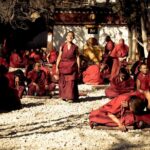
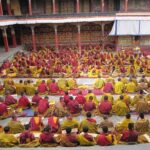
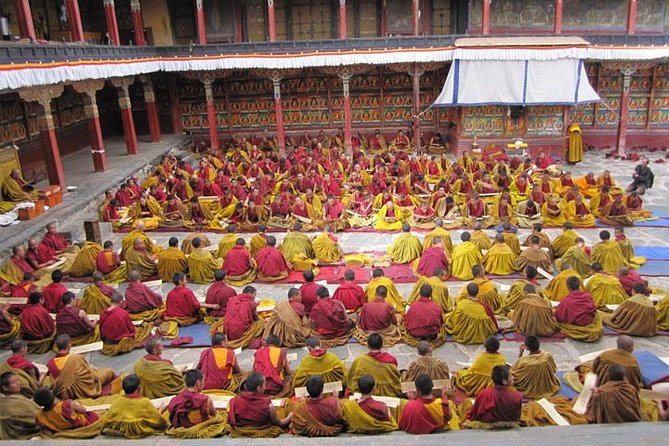
In the afternoon you go to Sera Monastery, one of the “great three” Gelug monasteries. The star attraction is the monks’ debate window in the afternoon (around 3–5). Even if you do not follow every word, the structure of debate is dramatic and readable: back-and-forth reasoning and formal responses.
You can also tour the Tibetan religious scripture printing house and see sand mandalas and colorful Buddha rock paintings. Admission for this monastery area is listed as included, which helps.
Day 4: Yamdrok-tso and Gyantse Views, Plus the Road-Trip Feel of Tibet
This day is about big scenery and historic stops, but it’s also about the journey itself.
You drive from Lhasa toward Shigatse with a sequence of passes and viewpoints. On the way you cross the Gampala pass (around 4,790m), then you get glimpses of Yamdrok-tso (about 4,400m) with snow-capped mountain surroundings and a view toward Holy Mount Nyenchen Khangsar (7,191m). Even if you just catch partial views, this is the kind of open horizon that makes Tibet feel different from everywhere else.
Then comes Karo La Glacier on the roadside, followed by a stop at Manak Dam Lake where you can hang prayer flags at Simila Mountain Pass. After that, you arrive in Gyantse, historically described as Tibet’s third largest city after Lhasa and Shigatse.
At Gyantse you visit Pelkor Chode Monastery, the Gyantse Kumbum, and get a far view of Gyangtse Fortress. If you’re traveling in summer, the itinerary notes possible views of barley fields and a traditional barley mill. That little seasonal detail matters because Tibet’s ground cover changes a lot through the year.
Days 5 and 6: Everest Base Camp by Minibus—Plus Rongbuk Sunrise
This is the part most people remember for years. And it’s also the part where your expectations have to be realistic.
Day 5: Toward Everest Base Camp (around 5,200m)
After obtaining an Alien’s travel permit, you drive to Lhatse for lunch, then pass Tsola Pass (around 4,600m) and Gyatsola Pass (about 5,248m). Shortly after you enter the Mt. Everest National Nature Reserve, you get a panorama from Gawula Pass (around 5,198m), then you head along the New zigzag road to Everest Base Camp (around 5,200m).
At the base camp area, you’ll have the chance to get closer for gazing toward Mount Everest’s peak. The plan also allows a sunset attempt—golden views—if time and weather permit.
This is important: Everest visibility is weather-dependent. The tour itself notes that itinerary items may change due to bad weather, so plan for the day to be “best effort,” not guaranteed perfection.
Day 6: Rongbuk Monastery and Sunrise Views
You start the day aiming for sunrise from Rongbuk (often called Rongpuk in some descriptions). The itinerary describes sunrise appearing over the top of Everest with a full view of the mountain’s snow-capped pyramid shape from this vantage point.
Then you drive back toward Shigatse. Even if you feel exhausted, sunrise viewing is the kind of memory that offsets the early start.
Day 7: Tashilunpo Monastery and the Long Ride Back to Lhasa
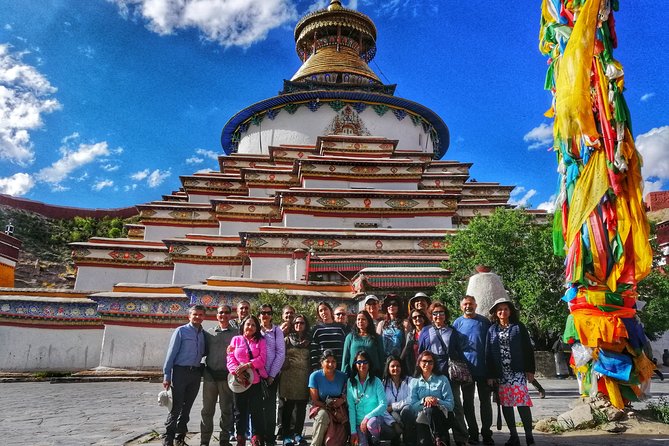
Day 7 slows slightly in the sense that you’re not driving to an even higher point, but you still have a big road day.
You visit Tashilunpo Monastery, described as the seat of Tibet’s second highest incarnation, the Panchen Lama. If you’ve already seen Potala and Jokhang, Tashilunpo helps round out the “who matters” side of Tibetan Buddhism by showing the Panchen Lama’s institutional role.
After the monastery visit, you follow Yalong Valley along the Friendship Highway back to Lhasa—about 175 miles (280 km) with roughly 6 hours driving time.
Day 8: Lake Namtso (Holy, Saline, and High) With a Lakeshore Walk
If Everest is the drama, Namtso is the reset.
You drive from Lhasa to Lake Namtso, one of Tibet’s four holy lakes and described as the highest saline lake in the world. On the way, you’ll pass views of snow-capped Nyenchen Thanglha Mountain ranges and see nomads with tents and grazing yak and sheep on the grassland in summer.
The itinerary also mentions views toward the Sky-Road Railway with snow mountain background and includes a key viewpoint: Lagenla Pass (around 5,190m). From there, you get a stunning vista of Namtso Lake.
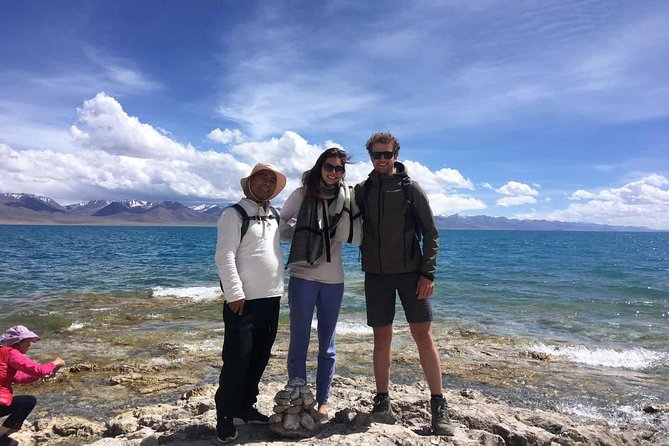
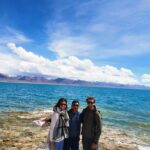
Then you do the gentler part of the day: a leisurely trek around Tashi Dor Island and along the lakeshore. One useful detail here is environmental protection—the lakeshore guesthouses are closed by government, so you’re less likely to deal with a heavy tourist build-out and more likely to get open, windswept quiet.
You overnight in Damxung.
After that, you also visit the Zhaxi Peninsula. The itinerary describes five holy islets inside the lake and notes that Tashi Island is the largest, offering a panoramic view.
Day 9: Chubu/Nunnery Peace, Then Tsurphu Monastery and Kagyupa Traditions
Day 9 is built for calmer sightseeing and cultural context.
You start with Chimelong Nunnery (spelled in the itinerary as Phyirmil Lung Nunnery) and spend time roaming a peaceful small nunnery. The plan notes you may also spot a sky burial site (Tibet funeral site) in the distance—something you should expect to encounter visually from afar rather than up close.
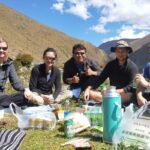
Then you visit Tsurphu Monastery, described as the seat of the Karmapa branch of the Kagyupa order. The itinerary specifically points to learning about the Black Hats and the Karma Kagyupa school. In summer (June to September), there may even be a Linka outing—a Tibetan-style picnic—near the foot of the hill of Tsurphu Monastery.
Finally, you drive back to Lhasa and spend the night there.
Day 10: Homeward Bound (Or a Longer Tibet Add-On)
Day 10 is basically closure. You’re told you’ve completed the full journey, and the operator offers help arranging airport/rail/transfer services if you want to extend.
It’s worth thinking about how you’ll travel afterward. Tibet days are long, roads are high, and even when you finish the sightseeing you’re still carrying altitude fatigue.
Price, Value, and What You Should Confirm Before You Go
At $1,299 per person, this tour is priced for people who want their Tibet trip handled end-to-end without the permit headaches. It’s also not cheap—but the cost makes sense when you consider that transport, an English-speaking guide, oxygen support, accommodation, and (as described) entrance fees are bundled.
That said, I’d do one cautious check because the details are slightly inconsistent in the provided information:
- The included section lists breakfasts, lunch, and dinner, while the not-included section also says lunches and dinners are not included.
- There’s also a note that all accommodations and breakfasts are included, yet lodging is listed again under not included.
So: contact the operator and confirm meal inclusions and what “not included” means in the final invoice. The easiest way to avoid stress is to get a written statement of what meals are covered each day.
Also confirm any on-the-ground admission tickets marked as not included (for example, Potala Palace and Jokhang Temple are listed that way in the itinerary). Even when major fees are said to be included overall, category-by-category ticketing sometimes shifts depending on the final booking arrangement.
Who This Tour Suits Best (and Who Might Feel Frustrated)
This tour fits you if:
- You want a small group (max 12) and a clear route between Lhasa, Everest Base Camp, and Namtso
- You prefer a guide to handle cultural context, temple etiquette, and the rhythm of long days
- You want an Everest experience without a multi-day trek
- You have at least moderate physical comfort with altitude and cold
You might feel frustrated if:
- You want total freedom to linger in places without schedule pressure
- You’re very sensitive to long road travel and early mornings
- You’re counting on perfect visibility for Everest and want it treated like a guaranteed photoshoot (weather can change plans)
Should You Book This Tibet Vista Everest Base Camp and Namtso Tour?
I’d book it if your priority list looks like this: Lhasa first-timer essentials, Everest Base Camp access by road, and a calmer Namtso day—all with logistics handled and altitude support included. The structure is practical, and the itinerary choices (Lhasa acclimatization day, Rongbuk sunrise option, lakeside walk at Namtso) show someone understands how Tibet works.
Before you say yes, do two quick checks: confirm meal and admission inclusions clearly, and be ready for the fact that Tibet’s weather and access rules can shuffle timing. If you can handle that, this is a strong way to experience some of Tibet’s biggest hits without trying to manage permits and transport alone.
FAQ
How large is the group on this tour?
The maximum group size is 12 travelers.
Are airport or train transfers in Lhasa included?
Yes. Pickup and drop-off in Lhasa city are included for the airport or train station.
Does the tour include oxygen support for altitude?
Yes. An oxygen cylinder is provided in the car (4L or 7L).
Who handles Tibet permits?
The tour includes the Tibet travel permit and other necessary permits for Tibet, but it excludes the Chinese L visa. An invitation letter for the China L visa is included if needed.
Does the itinerary include Potala Palace, Jokhang Temple, and Barkhor Street?
Yes. Potala Palace, Jokhang Temple, and Barkhor Street with kora are part of the Lhasa city portion.
Do you visit Everest Base Camp and Rongbuk?
Yes. You drive to Everest Base Camp around 5,200m and also have a sunrise viewing option from Rongbuk.
Is Lake Namtso included, and do you do walking there?
Yes. The tour includes driving to Lake Namtso, time around Tashi Dor Island and along the lakeshore, and a visit to Zhaxi Peninsula.